Protein Quantification Kit (Bradford Assay): Your Buyer's Guide for When BCA Isn't the Answer
The 30-Second Verdict
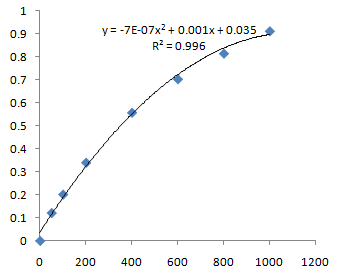
The Bradford assay isn't the newest method—but for certain samples, it's still the best. When your lysate contains reducing agents like DTT or β-mercaptoethanol, or when you need a rapid, one-reagent quantification with minimal hands-on time, Bradford outperforms BCA. Abbkine's Protein Quantification Kit (Bradford Assay, KTD3002) delivers the classic Coomassie Blue G-250 chemistry in an optimized format, with a working range of 50–1,000 µg/mL and a sensitivity of 25 µg/mL.
Pros
✅ Reducing-agent tolerant — Bradford is the method of choice when DTT or β-mercaptoethanol is present (BCA is compromised by these)[reference:21]
✅ Broad working range — 50–1,000 µg/mL (1–20 µg protein)[reference:22]
✅ Simple, rapid protocol — one reagent, short incubation, read at 595 nm
✅ Sensitivity — 25 µg/mL[reference:23]
✅ Coomassie Blue G-250 chemistry — the gold standard for Bradford-type assays[reference:24]
✅ No boiling or heating steps — ideal for heat-labile proteins
Cons
❌ Detergent sensitivity — requires SDS <0.1%, Triton X-100 <0.1%, Tween 20/60/80 <0.1%[reference:25]
❌ Non-linear standard curve — 标曲只能拟合为曲线形态,不支持做成直线(must be fitted as a curve, not a straight line)[reference:26]
❌ Narrower range than BCA (50–1,000 vs. 20–2,000 µg/mL)
❌ Not for clinical diagnosis (research use only)
Who Should Buy This Kit?
Ideal for:
- Labs whose samples contain DTT or β-mercaptoethanol—where BCA is unreliable
- Researchers quantifying heat-labile proteins that cannot tolerate BCA's 37–60°C incubation
- Labs needing a rapid, single-reagent workflow with minimal hands-on time
- Core facilities that want a complementary method to BCA for cross-validation
- Researchers working with samples that are detergent-free or can be diluted below the detergent tolerance threshold
Skip this if:
- Your samples contain SDS, Triton X-100, or Tween above 0.1% (use KTD3001 BCA instead)
- You need a linear standard curve for simplified calculations
- You require a range extending above 1,000 µg/mL
The Detergent Constraint: Plan Around It
The Bradford assay's Achilles' heel is detergent intolerance. If your samples are prepared in RIPA buffer (which typically contains 1% NP-40, 0.1% SDS, and 0.5% sodium deoxycholate), you cannot load them directly into a Bradford assay without dilution below the tolerance threshold[reference:27]. For these samples, BCA (KTD3001) is the pragmatic choice.
But if your samples are detergent-free—or if you can dilute them sufficiently—Bradford delivers a rapid, reducing-agent-tolerant alternative that complements BCA in any protein analysis toolbox.
The Bottom Line
For researchers whose samples contain reducing agents, who need a rapid single-reagent workflow, or who want a complementary method to BCA, KTD3002 delivers the classic Bradford performance with the convenience of a ready-to-use kit.
👉 Add Bradford to your quantification toolbox. View Product