ERα Polyclonal Antibody (ABP0086): Non-Phospho-Site Epitope Design for Clean Estrogen Receptor Alpha Detection
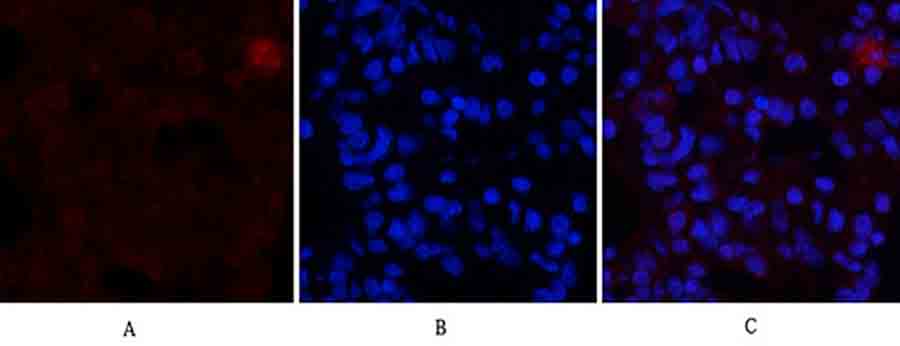
The ERα Detection Problem: One Receptor, Two Homologs, Three Phospho-States
Estrogen receptor alpha (ERα), encoded by ESR1, is a ligand-activated nuclear transcription factor that drives proliferation in roughly 70% of breast cancers and governs reproductive tissue development, bone homeostasis, and metabolic regulation. Its centrality to endocrine therapy response makes accurate ERα quantification a non-negotiable requirement in both research and clinical correlative studies.
The detection landscape, however, is structurally hostile. ERα shares substantial homology with ERβ (ESR2) in its DNA-binding domain—an 80%+ sequence identity that turns conserved-domain antibodies into ERα/ERβ pooled reagents. Worse still, ERα function is gated by phosphorylation at multiple serine residues, including S167 and Y537, meaning that an antibody targeting a phospho-adjacent epitope can report a functionally biased subset of the receptor rather than total ERα protein.
Strategic Immunogen Design: Non-Phosphorylation Site of S167
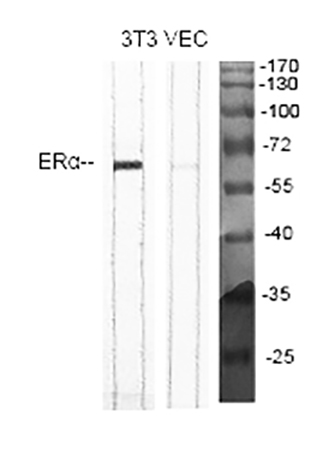
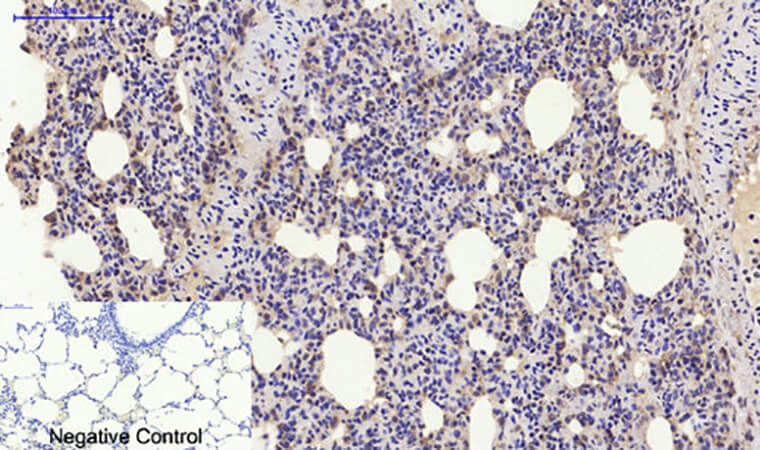
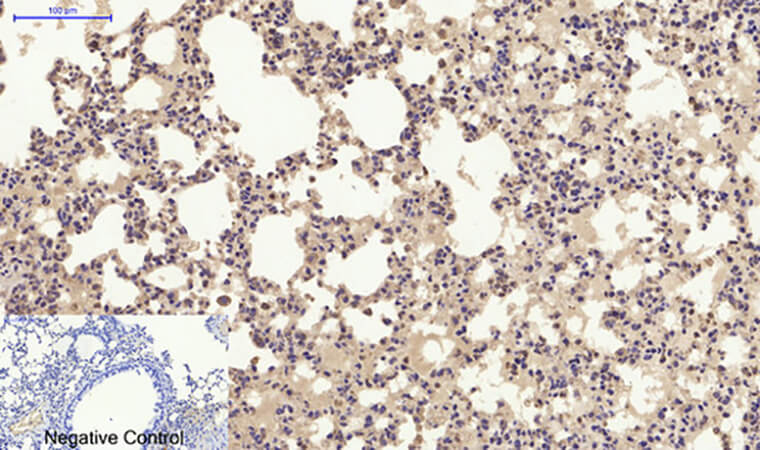
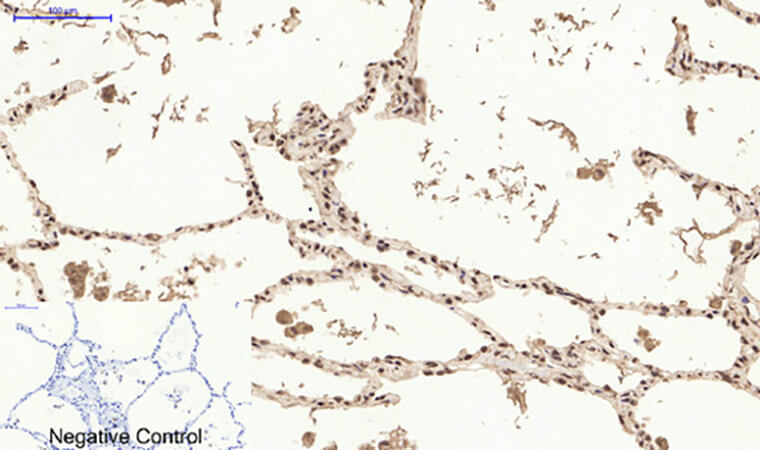
Abbkine's ERα Polyclonal Antibody (ABP0086) addresses both problems at the level of immunogen selection. The antibody is raised against a synthesized peptide derived from human ERα around the non-phosphorylation site of S167—an epitope positioned outside the highly conserved DNA-binding domain and designed to recognize total ERα irrespective of its S167 phosphorylation status[reference:0].
This is a meaningful design choice. Antibodies raised against the S167 phospho-peptide itself detect only the phosphorylated fraction; antibodies raised against the conserved DBD detect ERα plus ERβ. ABP0086 occupies the analytical middle ground: total ERα, with reduced ERβ cross-reactivity.
Validated Reactivity and Applications
| Parameter | ABP0086 |
|---|---|
| Target | ERα / ESR1 |
| Host | Rabbit |
| Reactivity | Human, Rat, Mouse (cross-validated)[reference:1][reference:2] |
| Applications | WB, IHC-P, IF, ELISA[reference:3][reference:4] |
| Immunogen | Synthetic peptide, human ERα, non-phospho-S167 context[reference:5] |
| Clonality | Polyclonal (affinity-purified) |
Suggested starting dilutions follow Abbkine's standard polyclonal framework: WB 1:500–1:2000; IHC 1:100–1:300; IF 1:50–1:200; ELISA 1:10,000–1:20,000.
Head-to-Head: ERα Antibody Comparison
| Feature | ABP0086 | Conserved-DBD Antibodies | Phospho-Specific Antibodies |
|---|---|---|---|
| Epitope | Non-phospho-S167 context, outside DBD[reference:6] | Conserved DNA-binding domain | S167 or Y537 phospho-peptide |
| ERβ Cross-reactivity | Reduced by design | Frequently significant[reference:7] | Variable |
| Phospho-State Bias | None (total ERα) | None | Reports only phosphorylated fraction |
| Species Reactivity | Human, Rat, Mouse[reference:8] | Variable | Variable |
| Applications | WB, IHC-P, IF, ELISA[reference:9] | Often WB/IHC only | Often WB/IP only |
The Bottom Line
For breast cancer researchers stratifying ERα expression across endocrine-sensitive and endocrine-resistant tumors, for reproductive biologists mapping ERα across the estrous cycle, and for anyone who has been burned by an ERα antibody that secretly binds ERβ—ABP0086 delivers a non-phospho-site, DBD-avoiding epitope that makes "ERα" mean total ERα and nothing else.
📎 Reference: ERα Polyclonal Antibody (ABP0086)