p21 Polyclonal Antibody (ABP0108): Non-Phospho-Site Epitope Targeting for Reliable CDKN1A Detection
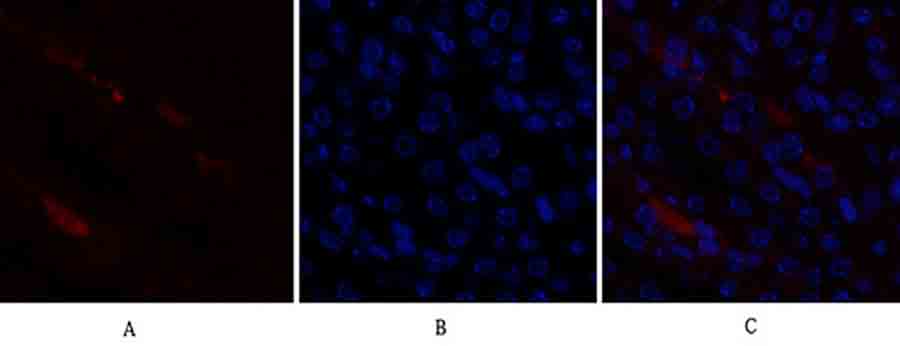
The p21 Specificity Crisis: A Small Protein in a Family of Inhibitors
p21 (CDKN1A, WAF1/CIP1) is the archetypal cyclin-dependent kinase inhibitor—a 21-kDa protein that binds and inactivates cyclin-CDK2 and cyclin-CDK4 complexes, enforcing G1 cell-cycle arrest downstream of p53. Its expression is the canonical readout of p53 pathway activation, senescence, and DNA damage response.
But p21 detection carries a specificity burden that is rarely acknowledged. p21 belongs to the Cip/Kip family of CDK inhibitors, which includes p27 (CDKN1B) and p57 (CDKN2C)—proteins that share the conserved N-terminal CDK-inhibitory domain and populate the same low-molecular-weight region on SDS-PAGE. Antibodies raised against family-conserved regions produce a "p21" band that is partially p27, an error that compounds across every figure reporting p21 induction.
A second layer of complexity: p21 is phosphorylated at multiple sites, including T145, and its stability and subcellular localization are phospho-regulated. An antibody targeting a phospho-adjacent epitope can report a stabilized subpopulation rather than total p21 protein.
Epitope Strategy: Non-Phosphorylation Site of T145
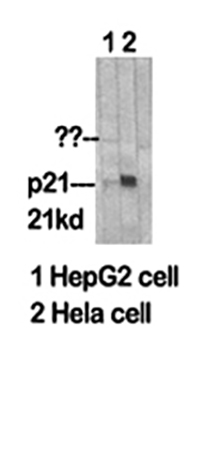
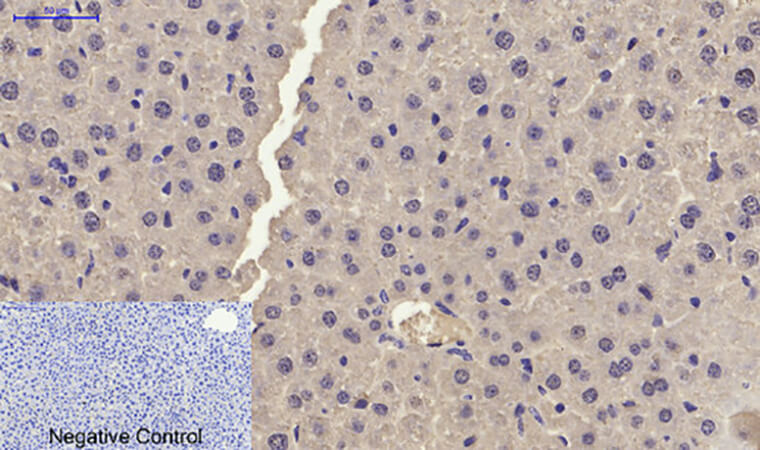
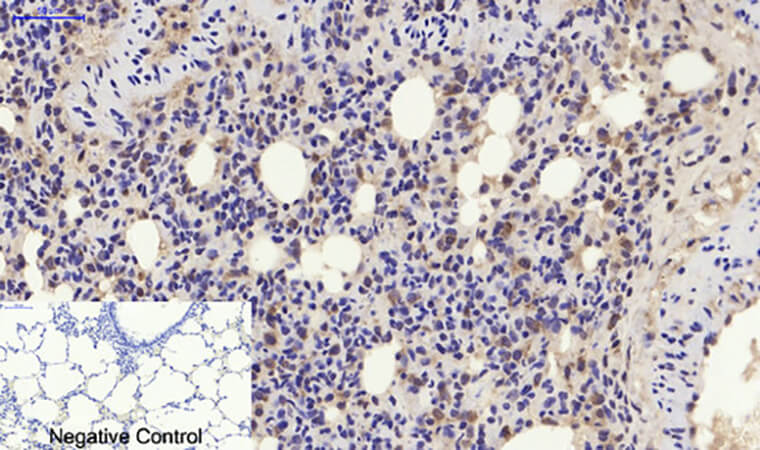
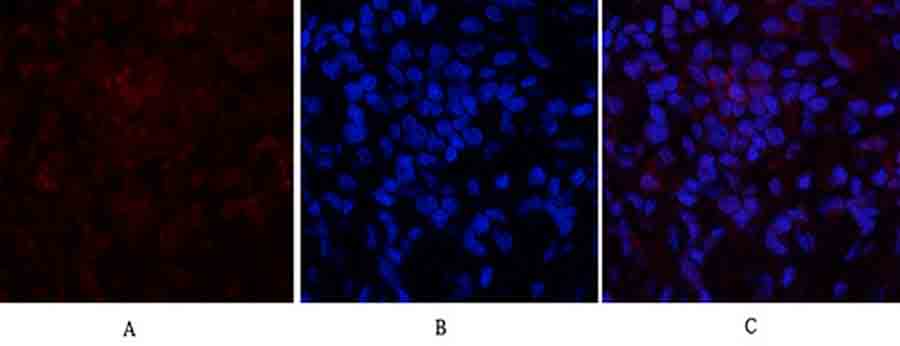
Abbkine's p21 Polyclonal Antibody (ABP0108) is raised against a synthesized peptide derived from human p21 around the non-phosphorylation site of T145[reference:10][reference:11]. This immunogen design serves two purposes: it positions the epitope outside the family-conserved CDK-inhibitory domain, and it reports total p21 independent of T145 phosphorylation status.
The antibody is affinity-purified from rabbit antiserum by epitope-specific affinity chromatography, enriching for p21-specific clones and depleting non-specific immunoglobulins[reference:12].
Validated Performance and Specifications
| Parameter | ABP0108 |
|---|---|
| Target | p21 / CDKN1A / WAF1 |
| Host | Rabbit |
| Reactivity | Human, Mouse, Rat[reference:13] |
| Applications | IF, WB, IHC, ELISA[reference:14] |
| Immunogen | Synthetic peptide, human p21, non-phospho-T145 context[reference:15] |
| Clonality | Polyclonal (epitope-affinity purified) |
| Application | Suggested Dilution |
|---|---|
| Western Blot | 1:500–1:2000 |
| IHC | 1:100–1:300 |
| Immunofluorescence | 1:50–1:200 |
| ELISA | 1:10,000–1:20,000 |
Head-to-Head: p21 Antibody Comparison
| Feature | ABP0108 | Family-Conserved Antibodies | Phospho-Specific Antibodies |
|---|---|---|---|
| Epitope | Non-phospho-T145 context, outside CDK-inhibitory domain[reference:16] | Conserved Cip/Kip domain | T145 phospho-peptide |
| p27/p57 Cross-reactivity | Reduced by design | Frequently present | Variable |
| Phospho-State Bias | None (total p21) | None | Reports stabilized subpopulation only |
| Applications | IF, WB, IHC, ELISA[reference:17] | Often WB only | Often WB/IP only |
| Species Reactivity | Human, Mouse, Rat[reference:18] | Variable | Variable |
The Bottom Line
For p53 pathway researchers quantifying p21 induction after DNA damage, for senescence biologists tracking p21-dependent growth arrest, and for anyone who needs a p21 antibody that does not quietly sum p21 with p27—ABP0108 delivers non-phospho-site, family-divergent epitope specificity across four validated applications.
📎 Reference: p21 Polyclonal Antibody (ABP0108)