IL-6 Polyclonal Antibody (ABP0137): Internal-Region Epitope Targeting for Cytokine Storm and Inflammation Research
The IL-6 Detection Challenge: A Glycosylated Cytokine That Refuses to Run Clean
Interleukin-6 (IL-6) is the prototypical pleiotropic cytokine—an endogenous pyrogen that drives fever, B-cell maturation, acute-phase protein synthesis, and the cytokine storm pathology of sepsis and severe viral infection. Its dysregulation is implicated in diabetes susceptibility, systemic juvenile rheumatoid arthritis, and a growing list of inflammatory diseases[reference:19].
Western blot detection of IL-6 is compromised by two factors that most commercial antibodies handle poorly. First, IL-6 is variably glycosylated, and in natural cell products or body fluids, multiple IL-6 bands appear due to variable glycosylation—an antibody that recognizes a glycosylation-sensitive epitope reports a biased subset of the cytokine pool. Second, IL-6 is a small, secreted protein (theoretical ~23 kDa) present at low abundance in most lysates, demanding high signal-to-noise performance.
Internal-Region Immunogen Design
Abbkine's IL-6 Polyclonal Antibody (ABP0137) is raised against a synthesized peptide derived from the internal region of human IL-6[reference:20]—an epitope selection that avoids the glycosylation-variable extracellular domains and the signal peptide, positioning the antibody to recognize IL-6 across its glycosylation variants.
The antibody is affinity-purified from rabbit antiserum by epitope-specific affinity chromatography, and the product page documents that it detects endogenous levels of IL-6 protein[reference:21][reference:22].
Validated Performance: Western Blot and IHC Data
| Application | Documented Validation | Dilution |
|---|---|---|
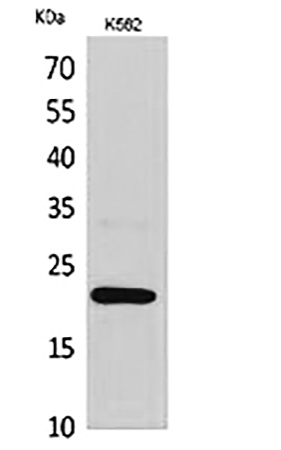
| Western Blot | K562 cells, 1:1000[reference:23] | 1:500–1:2000 |
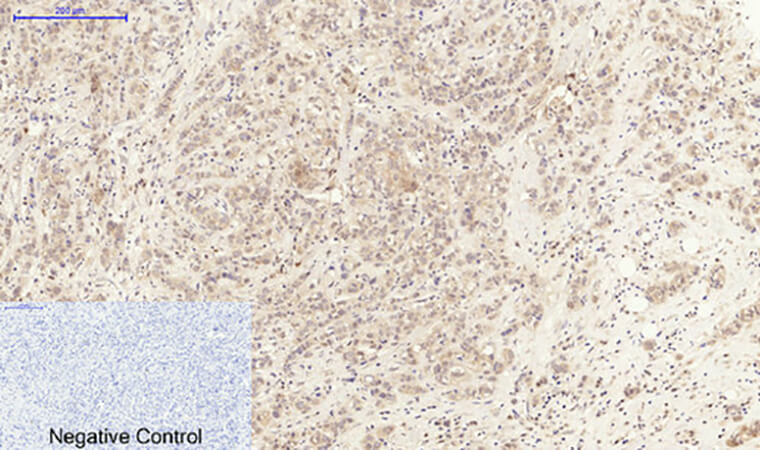
| IHC (paraffin) | Human breast cancer tissue, 1:200, citrate pH 6.0 retrieval[reference:24] | 1:100–1:300 |
| Immunofluorescence | Validated application[reference:25] | 1:100–1:300 |
| ELISA | Validated application[reference:26] | 1:20,000 |
| Parameter | ABP0137 |
|---|---|
| Target | IL-6 / IFNB2 / BSF-2 |
| Host | Rabbit |
| Reactivity | Human[reference:27] |
| Observed Molecular Weight | 23 kDa[reference:28] |
| Concentration | 1 mg/mL[reference:29] |
| Formulation | PBS, 50% glycerol, 0.5% BSA, 0.02% sodium azide[reference:30] |
Head-to-Head: IL-6 Antibody Comparison
| Feature | ABP0137 | Glycosylation-Sensitive Antibodies | Generic IL-6 Antibodies |
|---|---|---|---|
| Epitope | Internal region[reference:31] | Often extracellular/glycosylated domains | Variable |
| Glycosylation-Variant Coverage | Broad | Biased toward specific glycoforms | Variable |
| Documented IHC Validation | Breast cancer tissue, 1:200[reference:32] | Often absent | Variable |
| Applications | WB, IHC, IF, ELISA[reference:33] | Often WB only | Variable |
| Reactivity | Human[reference:34] | Variable | Often limited |
The Bottom Line
For inflammation researchers quantifying IL-6 in K562 lysates, for tumor immunologists mapping IL-6 in breast cancer stroma, and for anyone who has chased a "second band" that turned out to be a glycosylation variant rather than a cross-reactive protein—ABP0137 delivers internal-region epitope targeting with documented Western blot and IHC validation.
📎 Reference: IL-6 Polyclonal Antibody (ABP0137)