CD81 Polyclonal Antibody (ABP0138): Internal-Region Epitope Targeting for Tetraspanin and Exosome Research
The CD81 Detection Problem: A Tetraspanin in a Crowded Field of Four-Transmembrane Proteins
CD81 (TAPA1, TSPAN28) is a 26-kDa cell-surface glycoprotein of the tetraspanin family—a four-transmembrane protein that complexes with integrins, mediates signal transduction in cell development, activation, growth, and motility, and serves as a defining exosome surface marker for extracellular vesicle characterization[reference:35].
The detection challenge is family density. The tetraspanin superfamily comprises more than 30 members in humans, all sharing the characteristic four-hydrophobic-domain architecture and conserved transmembrane regions. An antibody raised against a conserved tetraspanin domain will bind CD9, CD63, CD151, and other family members—producing a "CD81" signal that is actually a pooled tetraspanin measurement.
A second practical challenge: CD81 is a small membrane protein (theoretical ~26 kDa) whose hydrophobic transmembrane domains cause aggregation and smearing in standard SDS-PAGE if the antibody recognizes a conformation-dependent epitope within the membrane-spanning region.
Internal-Region Immunogen Design: Avoiding Conserved Transmembrane Domains
Abbkine's CD81 Polyclonal Antibody (ABP0138) is raised against a synthesized peptide derived from the internal region of human CD81[reference:36]—an epitope positioned in a non-transmembrane, non-conserved segment of the tetraspanin, reducing both tetraspanin family cross-reactivity and membrane-domain aggregation artifacts.
The antibody is affinity-purified from rabbit antiserum by epitope-specific affinity chromatography, with documented detection of endogenous CD81 protein[reference:37][reference:38].
Validated Performance: Western Blot and Multi-Tissue Immunofluorescence
| Application | Documented Validation | Dilution |
|---|---|---|
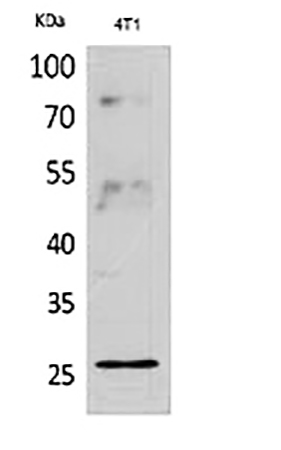
| Western Blot | 4T1 cells, 1:2000[reference:39] | 1:500–1:2000 |
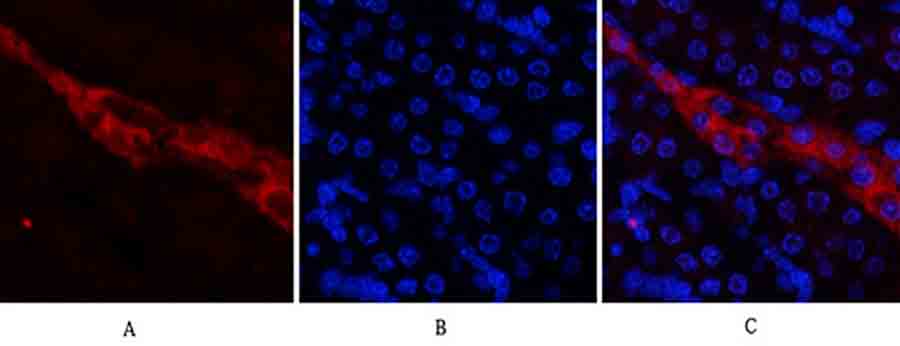
| Immunofluorescence | Mouse kidney tissue, 1:200, 4°C overnight; Cy3 secondary 1:300[reference:40] | 1:50–1:200 |
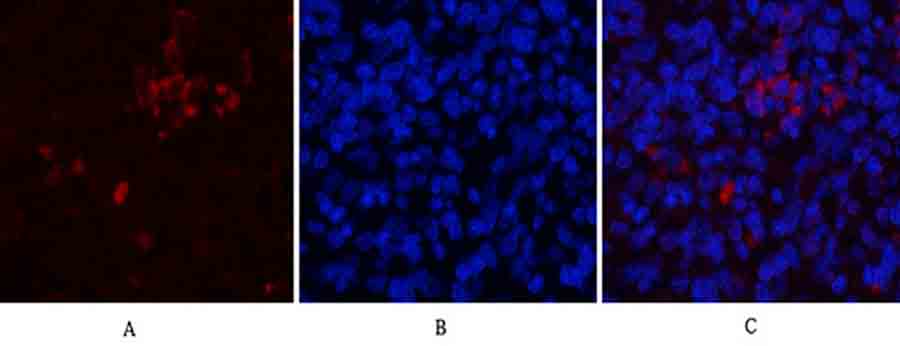
| Immunofluorescence | Rat spleen tissue (documented)[reference:41] | 1:50–1:200 |
| ELISA | Validated application[reference:42] | 1:20,000 |
| Parameter | ABP0138 |
|---|---|
| Target | CD81 / TAPA1 / TSPAN28 |
| Host | Rabbit |
| Reactivity | Human, Mouse, Rat[reference:43] |
| Observed Molecular Weight | 26 kDa[reference:44] |
| Concentration | 1 mg/mL[reference:45] |
| Formulation | PBS, 50% glycerol, 0.5% BSA, 0.02% sodium azide[reference:46] |
Head-to-Head: CD81 Antibody Comparison
| Feature | ABP0138 | Pan-Tetraspanin Antibodies | Generic CD81 Antibodies |
|---|---|---|---|
| Epitope | Internal region, non-transmembrane[reference:47] | Conserved tetraspanin domains | Variable |
| Tetraspanin Family Cross-reactivity | Reduced by design | Frequently present | Variable |
| Documented Multi-Tissue IF | Mouse kidney + Rat spleen[reference:48] | Often absent | Variable |
| Applications | WB, IF, ELISA[reference:49] | Often WB only | Variable |
| Species Reactivity | Human, Mouse, Rat[reference:50] | Variable | Often limited |
The Bottom Line
For exosome biologists who need to confirm CD81 enrichment without confusing it with CD9 or CD63, for immunologists mapping CD81+ tetraspanin networks in mouse kidney and rat spleen, and for anyone who has seen a "CD81" Western blot with more bands than expected—ABP0138 delivers internal-region, non-transmembrane epitope targeting with documented multi-tissue immunofluorescence validation.
📎 Reference: CD81 Polyclonal Antibody (ABP0138)