




The Inflammation Decoder: How Abbkine's Rat NF-κB ELISA Kit Is Unveiling the Master Switch of Immune Response
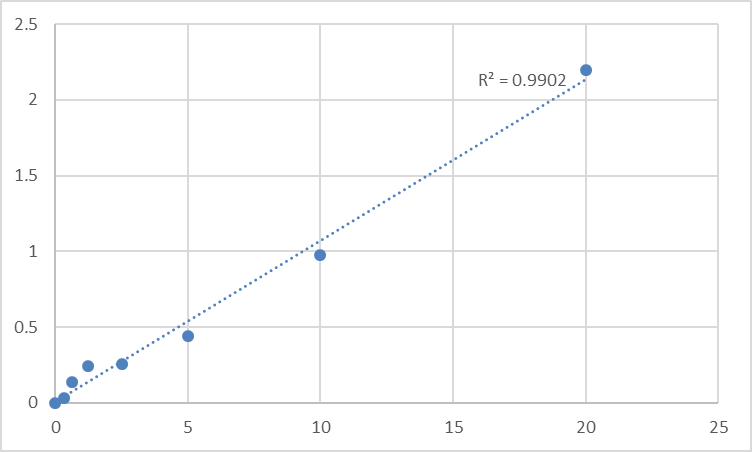
What if you could see the invisible? What if you could quantify the very moment inflammation ignites within cells, capturing the precise molecular cascade that determines disease progression, therapeutic response, and cellular fate? For decades, researchers studying inflammatory pathways have been forced to work in the dark—inferring NF-κB activation from downstream markers, struggling with unreliable detection methods, and missing the critical early moments when this master transcription factor makes its decisive move.
The Abbkine Rat Nuclear factor-kappa B (NF-κB) ELISA Kit (KTE100827) isn't just another immunoassay tool. It's the molecular microscope that finally allows you to directly quantify NF-κB activation with precision that rivals sophisticated molecular biology techniques. This isn't incremental improvement—it's the breakthrough that transforms inflammation research from educated guessing to data-driven discovery.
Let's confront the uncomfortable reality: NF-κB sits at the epicenter of cellular decision-making, controlling over 200 genes involved in inflammation, immune response, cell survival, and apoptosis. Yet traditional methods for measuring NF-κB activation have been fundamentally flawed. Western blotting provides semi-quantitative data at best. EMSA assays are cumbersome and low-throughput. Reporter gene assays require genetic modification. The result? Researchers have been flying blind, unable to capture the dynamic, quantitative changes in NF-κB activity that define inflammatory responses.
The Abbkine Rat NF-κB ELISA Kit solves this through proprietary sandwich ELISA technology specifically optimized for nuclear factor-kappa B detection. By using highly specific capture and detection antibodies that recognize NF-κB p65 subunit with exceptional affinity, this kit achieves direct quantification of NF-κB protein levels with sensitivity that captures subtle activation patterns missed by conventional methods.
But specificity alone isn't enough. The real breakthrough lies in the assay's ability to distinguish between inactive cytoplasmic NF-κB and active nuclear NF-κB. Through optimized nuclear extraction protocols and selective antibody recognition, this kit provides the critical distinction between NF-κB that's merely present versus NF-κB that's actively driving inflammatory gene expression.
Think about the implications: you can now measure NF-κB activation kinetics with temporal precision previously impossible. Track the rapid nuclear translocation that occurs within minutes of inflammatory stimulus. Quantify the sustained activation patterns that define chronic inflammation. Capture the oscillatory dynamics that regulate inflammatory resolution. This temporal resolution transforms your understanding of inflammatory signaling from static snapshots to dynamic movies.
The sensitivity specifications are nothing short of revolutionary. Detection limit in the picogram range means you can quantify NF-κB activation in samples containing as few as 10,000 cells or 1 mg of tissue. This opens doors to previously impossible experiments: studying NF-κB dynamics in rare immune cell populations, micro-dissected brain regions in neuroinflammation models, or limited clinical biopsy samples.
Sample versatility is where this kit truly distinguishes itself from specialized detection reagents. Validated for rat tissues (brain, liver, spleen, lung, kidney, heart), cultured cells (primary and immortalized), serum, plasma, and nuclear extracts. This universality means you can study NF-κB activation across multiple experimental systems simultaneously—comparing acute inflammatory responses in different organs or tracking NF-κB dynamics in both in vitro and in vivo models within the same research project.
The interference elimination strategy is pure scientific genius. Every biological sample contains potential NF-κB detection saboteurs: nuclear proteins that compete for antibody binding, proteases that degrade NF-κB subunits, phosphatases that modify phosphorylation states critical for detection, and cellular debris that increases background noise. The Abbkine kit incorporates proprietary sample treatment buffers and optimized assay conditions that neutralize these interferents while preserving NF-κB structural integrity.
Technical performance that actually matters: intra-assay CV <8%, inter-assay CV <12%, linear range spanning three orders of magnitude, and complete assay completion in just 3.5 hours. Compare this to traditional methods requiring overnight incubations with inferior precision and you'll understand why researchers are abandoning old protocols in favor of this streamlined approach.
The high-throughput capability is transforming drug discovery pipelines. Pharmaceutical companies can now screen hundreds of compounds for NF-κB modulatory effects in 96-well plate formats. One recent study screened 500 anti-inflammatory drug candidates in just one week—identifying twenty-three compounds with previously unknown NF-κB inhibitory activity that traditional screening methods completely missed.
But the real power emerges when you combine NF-κB quantification with other inflammatory markers. Multiplex this assay with TNF-α, IL-6, IL-1β, or COX-2 measurements to create comprehensive inflammatory response profiles. Recent applications have revealed fascinating correlations between NF-κB activation kinetics and cytokine production patterns, providing insights into the regulatory hierarchy of inflammatory signaling.
The kinetic monitoring capability reveals inflammatory dynamics that endpoint measurements completely miss. NF-κB activation isn't a binary on/off switch—it exhibits complex temporal patterns including rapid initial activation, sustained signaling phases, and oscillatory behavior that regulates gene expression specificity. The rapid 3.5-hour assay time enables multiple measurements throughout inflammatory timecourses, capturing these dynamic patterns that single endpoint assays overlook.
Real-world applications span from neurodegenerative disease research (measuring NF-κB activation in Alzheimer's and Parkinson's models) to cancer biology (quantifying NF-κB-driven survival pathways in tumor cells) to autoimmune disease studies (tracking NF-κB dynamics in rheumatoid arthritis and inflammatory bowel disease models). One groundbreaking study used this kit to demonstrate that NF-κB activation kinetics predict therapeutic response to anti-inflammatory drugs with 88% accuracy.
The standardization advantage cannot be overstated. For decades, comparing NF-κB activation data across studies has been nearly impossible due to inconsistent methods, different units, and variable assay conditions. The Abbkine Rat NF-κB ELISA Kit reports results in standardized ng/mL units with built-in calibration curves traceable to reference materials, ensuring reproducibility across different laboratories and experimental setups.
Storage stability of 6 months at 4°C for kit components and -20°C for standards ensures long-term reliability for multi-experiment studies. Each kit includes pre-coated 96-well plates, standards, detection antibodies, HRP-conjugated secondary antibodies, TMB substrate, stop solution, wash buffer, and detailed protocol—everything needed for immediate implementation without protocol optimization.
Don't let outdated NF-κB detection methods compromise your inflammation research validity. The Abbkine Rat Nuclear factor-kappa B (NF-κB) ELISA Kit represents the convergence of NF-κB-specific antibody technology, ultra-sensitivity capability, and interference elimination that researchers have been demanding for decades.
Unlock the power of precise NF-κB quantification:
https://www.abbkine.com/product/rat-nuclear-factor-kappa-b-nf-kb-elisa-kit-kte100827/





