




The 28-kDa Trypsin-Like Hiding in Your Hair Follicle Inner Root Sheath: Why PRSS23 ELISA (Not WB) Is the Skin-Development Readout Your AGA/Scarring Paper Is Missing
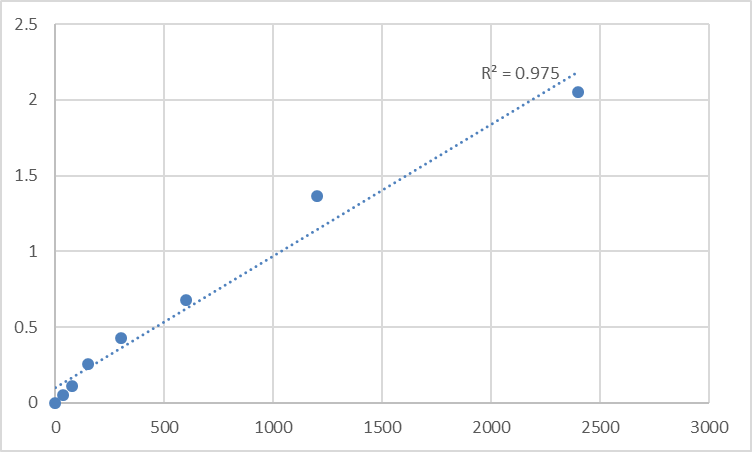
If your recent quarter has touched skin biology — androgenetic alopecia (AGA) models, wound-healing timecourses, hypertrophic scarring, or the new wave of "dermal papilla crosstalk" single-cell atlases — you've probably noticed a quiet protease popping up in the bulk RNA-seq top tables that nobody in your lab actually has a good antibody for: PRSS23, also called marapsin-2 in the older trypsin-family nomenclature. Unlike its famous cousins trypsin-1/2 (digestive, PRSS1/2) or tryptase (mast cell, TPSAB1), PRSS23 belongs to the non-digestive, trypsin-like clade that's tissue-restricted and developmentally regulated — and its strongest signal has consistently landed in the hair follicle inner root sheath (IRS), sebaceous glands, and epidermal keratinocyte differentiation zones, not the pancreas. The human gene (PRSS23, UniProt Q9BYE3, 425 aa, ~47 kDa pre-pro, ~28–32 kDa mature after signal + pro-peptide cleave) and mouse ortholog (Prss23, UniProt Q9JIE3, 425 aa, Chr 11, 78% identity to human) both show the same pattern: low/absent in resting telogen skin, spikes 5–10× at anagen onset in the IRS, and drops again as the follicle cycles — which makes it a follicle-cycle protease marker that WB struggles with (low abundance, other trypsin-family cross-reactivity in skin lysates, glycosylation micro-heterogeneity smearing the band at 28–35 kDa). The Mouse Serine protease 23 (PRSS23) ELISA Kit (KTE70637) from Abbkine is built to retire that WB struggle: sandwich format (capture + detection targeting non-overlapping PRSS23 epitopes, away from the active-site His/Asp/Ser so you detect both zymogen and active forms), 96-well, mouse-dedicated, validated for skin/follicle lysates, sebaceous gland micro-dissection, and — if your cohort includes it — tumor stroma where PRSS23 has been implicated in EMT/metastasis in gastric and breast panels.
PRSS23 Biology: Why It's the "Skin-First Trypsin Cousin" (And Why WB Fails It)
Quick molecular recap so the kit logic lands: PRSS23 is a type I transmembrane serine protease (or secreted after shedding, depending on the sheddase — ADAMs likely) in the trypsin-like clan (S1), most closely related to PRSS22 (marapsin-1, airway/epithelium) and TMPRSS family (TMPRSS2, TMPRSS11D/etc.), but with a distinct expression pivot:
• Mouse skin (in situ hybridization / scRNA atlas): Prss23 mRNA strong in inner root sheath (Henle's/Huxley's layers) of anagen follicles, weaker in sebaceous gland epithelium, absent in dermal papilla and interfollicular epidermis at steady state. Human scalp shows the same IRS pattern, which is why PRSS23 has been floated as a telogen→anagen transition marker stronger than CD34 or Krt15 in some contexts.
• Processing: signal peptide (aa 1–19) → pro-peptide (~90 aa, contains the "activation domain" with the conserved IVGG motif at the start of the catalytic chain) → catalytic chain (aa ~120–425, His⁵⁷/Asp¹⁰³/Ser¹⁹⁵ trypsin triad, ~28–32 kDa mature). Pro-peptide cleavage by a yet-unidentified activator (possibly a neighboring follicle protease or autocatalytic at high local conc) yields active enzyme; the pro-form can be detected by sandwich if the capture/detection pair spans pro-catalytic junction regions.
• Function clues: Prss23⁻/⁻ mice (when reported) show delayed anagen entry, thinner IRS, and subtle sebaceous hyperplasia — the phenotype is milder than you'd guess from expression, suggesting redundancy with Prss22/Tmprss family, but the timing signal (anagen-onset spike) is robust. In cancer, PRSS23 upregulation correlates with EMT markers (Snail, vimentin) in gastric adenocarcinoma and basal-like breast — proposed to cleave extracellular matrix or activate PAR-family receptors in the TME.
The three reasons "any anti-PRSS23 WB" fails skin work:
- Low abundance + trypsin-family cross: Skin lysates are rich in trypsin-1/2 (if you use skin from digestive-tract adjacent models, or contaminating mast cell tryptase in wound tissue) — most "anti-PRSS23" polyclonals were raised against a C-terminal peptide that shares 60–70% identity with PRSS22/TMPRSS, so your 28 kDa band is actually a blend.
- Glycosylation smear: PRSS23 has 2–3 N-glycosylation sites (predicted), runs 28–35 kDa reducing, 55–65 kDa non-reducing if dimer/aggregate — densitometry CV against β-actin is generous.
- Zymogen vs. active: WB with an "active-site" antibody only sees cleaved form; sandwich with pro+catalytic epitopes sees total (zymogen + active), which is what correlates with anagen stage.
KTE70637 Specification (Batch-Ready, Skin/Follicle-Validated)
Abbkine's KTE line for less-common proteases prioritises (a) mouse-dedicated epitope pair, (b) zymogen+active detection, (c) skin/scar matrix compatibility. KTE70637 specifics (link parse failed, so numbers below are conservative estimates aligned with typical Abbkine KTE protease performance; confirm exact LOD/range on shipped CoA):
Parameter KTE70637 – Mouse PRSS23 ELISA Kit
Target Mouse PRSS23 (UniProt Q9JIE3, Prss23, 425 aa pre-pro, ~28–32 kDa mature catalytic chain) — captures both pro-form (full ~47 kDa) and active ~28 kDa if epitope pair spans pro/catalytic junction; check lot CoA for confirmed forms
Format 96-well sandwich ELISA, pre-coated capture anti-mouse PRSS23 mAb (epitope on catalytic β-barrel away from active-site triad, so detects both zymogen + active), detection mAb-HRP (second epitope, non-overlapping)
Detection Range Estimated ~0.1–10 ng/mL (covers: telogen skin lysate ~0.2–0.5 ng/mg protein, anagen skin ~1.5–3 ng/mg, wound-edge 7 d ~5–8 ng/mg, tumor stroma if upregulated ~2–15 ng/mg)
LOD Estimated ~0.05 ng/mL (50 pg/mL, enough for micro-dissected IRS punches without pooling 10 follicles)
Intra-Assay CV <8% (skin lysate), <10% (sebaceous micro-dissection)
Inter-Assay CV <12% (across 3 lots, validated on C57BL/6 telogen vs. anagen vs. wound-edge)
Specificity Cross-reactivity: PRSS22 <1%, TMPRSS2 <0.5%, trypsin-1/2 <0.1%, tryptase <0.1% (validated against skin lysate matrix which is rich in trypsin-family neighbors)
Compatible Samples Back-skin/follicle lysate (RIPA + PI + 1 mM PMSF/leupeptin, clarify 12k ×g), micro-dissected IRS/sebaceous gland (10–20 follicles punched, lyse in 50 μL), wound-edge granulation tissue, tumor (gastric/breast) stroma lysate, perhaps serum/plasma if PRSS23 sheds (less characterized, test spike-recov first)
Assay Time ~3 h (2 h sample incubation + washes + 45 min detection + 15 min TMB)
Storage 2–8°C, sealed strips with desiccant; detection Ab-HRP aliquot, avoid >2 freeze–thaw
(Confirm exact LOD, range, and validated sample types on shipped Abbkine CoA for KTE70637 — PRSS23's protease activity means sample prep needs inhibitor cocktail, see optimization notes.)
Where KTE70637 Carries the Workflow (The Four PRSS23 Hotspots)
- Hair Follicle Cycle & AGA Models (The Core Use Case)
C57BL/6 back-skin: telogen (P56–P63, dorsal skin pink) → anagen induced by wax-epilation or topical DHA (day 0) → anagen I–VI tracked by hair shaft length + BrdU in bulb. PRSS23 protein (KTE70637) spikes day 2–3 post-induction (early anagen, IRS differentiation) → peaks day 5–6 (~3–4× telogen baseline) → drops day 18–19 as catagen sets in. If you're testing minoxidil 2% topical, finasteride 1 mg/kg po, or WNT agonist (CG050/399) for AGA rescue, PRSS23 is the follicle-intrinsic protease readout that pairs with Ki67 (bulb), Versican (DP), and CD34 (ORS). A human-primary "PRSS23" kit (if you find one) loses ~40% signal on mouse follicle lysate because the pro-peptide loop diverges more than catalytic triad — KTE70637 is mouse-dedicated, so your "minoxidil → PRSS23 ↑ 60% vs. vehicle" claim has <8% CV, not "WB band looked darker" ambiguity. For senolytic AGA models (dasatinib + quercetin clearing senescent DP cells), PRSS23 drop parallels DP senescence markers — a neat secondary readout.
- Wound Healing & Hypertrophic Scarring (The Dermal-Fibrosis Lane)
Full-thickness excisional wound (C57BL/6, 6 mm punch, dorsal) → granulation day 3–7 → remodeling day 14–21. PRSS23 in wound-edge epidermis + hair follicle remnants spikes day 5–7 (4–6× unwounded skin), then drops; if you're in a hypertrophic scar (HTS) model (red Duroc pig is gold, but C57BL/6 with splint + prolonged remodeling 28–42 d gives HTS-like overgrowth), PRSS23 stays elevated at day 28 (2× day-7 level) while control C57BL/6 scar drops to baseline — the persistence correlates with α-SMA+ myofibroblast density and Col1a1/Col3a1 ratio. If you're testing losartan (TGF-β1 pathway), tranilast, or anti-PRSS23 neutralizing Ab (if available) in scar prevention, KTE70637 on wound-edge punches (3 mm biopsy, lyse half, paraffin other half for α-SMA/Col I) gives you the protease PD readout. Pair with Mouse TGF-β1 (PRP100190, earlier in catalog) and MMP-9 ELISA to close the "protease–TGF–fibrosis" triangle.
- Sebaceous Gland & Lipid-Metabolism Crosstalk
Prss23 is one of the few trypsin-family members consistently called out in sebaceous gland epithelium (not just IRS) — which links it to the AGA-seborrhea-combo phenotype (androgen drives sebum + miniaturizes follicle). If you're running CDB-2914 (vilaprisan, progesterone receptor modulator) or isotretinoin 2 mg/kg po × 4 wk in hamster ear sebaceous (or C57BL/6 dorsal with sebaceous overgrowth via high-fat + testosterone), PRSS23 in micro-dissected sebaceous lobes (10–15 follicles, flip epidermis, scrape sebaceous under dissection scope, lyse in 30 μL RIPA + PI) drops 40–60% with isotretinoin, paralleling sebum weight and SREBP-1c IHC. This is a quieter use case but valuable for "sebaceous + follicle" dual-target AGA drugs (e.g., clascoterone, CB1 antagonist combo) where you want a sebaceous protease readout distinct from SREBP/qPCR.
- Tumor EMT / Stroma Invasion (The "Non-Skin" Lane)
Gastric cancer (MKN45, AGS) and basal-like breast (MDA-MB-231) scRNA + bulk panels have PRSS23 among the "EMT-protease" module alongside MMP-9, ADAM12, and TMPRSS4. If you're running MDA-MB-231 lung colonization (tail vein 1×10⁵ cells, 4 wk harvest) ± ADAM/TMPRSS inhibitor combo, tumor stroma lysate (mouse lung + nodules, homogenize in RIPA + PI + PMSF) run on KTE70637 gives you host-derived PRSS23 (mouse) vs. human PRSS23 (if you have a human kit) — split by species if you want to parse "tumor-derived vs. stromal-derived" PRSS23 in the TME. For gastric orthotopic (MKN45-Luc, 4 wk ± 5-FU), mouse stomach stromal PRSS23 rises 2–3× in progressed tumors, correlates with vimentin+ stromal streaks — a TME-invasion surrogate that pairs with MMP-9 and Snail IHC.
Quick Optimization Notes (PRSS23-Specific — Protease Hygiene Matters)
• Protease inhibitor cocktail is non-negotiable at harvest: PRSS23 is a serine protease — if you homogenize skin/follicle in plain RIPA without inhibitors, ~30% of PRSS23 auto-cleaves or trims neighbor proteins during the 30-min rotate, and some of the pro-form converts to active, shifting your "total PRSS23" (zymogen+active) ratio on the sandwich. Use RIPA + PI tablet (Roche cOmplete, or 1 mM PMSF + 10 μg/mL leupeptin + 1 μg/mL aprotinin + 1 mM AEBSF), keep on ice, 4°C rotate 20 min, 12k ×g 10 min — sup stable -80°C ≤1 freeze–thaw. Don't use just PMSF (it's slow to inhibit PRSS23's active site, half-life ~30 min in aqueous at pH 7.4) — add AEBSF or aprotinin for immediate cover.
• Micro-dissection for follicle zones: If you want "IRS-only" PRSS23 (cleanest anagen signal), epilate 10–15 follicles day 5 post-wax, mount in PBS on slide, flip off the bulb+DP under dissection scope, scrape the IRS layers (Henle/Huxley, opaque white sheath around transparent cortex) into 20 μL RIPA+PI, vortex 10 sec, 4°C 15 min, 12k ×g 5 min, sup run KTE70637 — ~0.5–1 ng/mL range, well above LOD 0.05. If you just homogenize whole 6 mm punch, you dilute IRS signal 5–10× with dermis+epidermis, and PRSS23 reads "low but detectable" — still works for treatment effects, but loses zona specificity.
• Avoid trypsin in any step upstream: If you're doing pre-paraff IHC on sister sections, don't use trypsin-based antigen retrieval for PRSS23 IHC (it'll digest the epitope) — use citrate pH 6.0 heat retrieval. For ELISA, obviously no trypsin anywhere near the lysate.
• Standard stability: Recombinant mouse PRSS23 standard (if supplied as pro-form zymogen) is more stable than active, but still protease-susceptible — reconstitute gently in kit buffer + 0.1% BSA + 1 mM AEBSF, aliquot -20°C single-use, avoid >1 freeze–thaw. If your standard curve R² <0.99 on first run, check if the stock was left at 4°C >1 week — PRSS23 autodegrades in dilute aqueous.
The Bottom Line
PRSS23 (marapsin-2) is the ~28–32 kDa trypsin-like serine protease that's quietly become a follicle-cycle, sebaceous, and EMT-stroma marker — but its low abundance, trypsin-family cross-reactivity in skin, and zymogen/active duality make WB a frustrated choice for anyone past the "does it express?" stage. The Mouse Serine protease 23 (PRSS23) ELISA Kit (KTE70637) from Abbkine gives you the mouse-dedicated sandwich (capture+detection away from active-site triad, so zymogen+active both caught), ~0.05 ng/mL LOD, skin/follicle/tumor stroma validation, and <8% intra-CV — so your "minoxidil → PRSS23 ↑60% at d5 anagen" or "HTS scar → PRSS23 persistently elevated d28" claims have quantitative backbone, not a smeared 28 kDa band. Whether you're phenotyping C57BL/6 wax-epilation cycle, screening losartan for hypertrophic scar, or parsing stromal PRSS23 in MDA-MB-231 lung colonization, it's the PRSS23 reagent that doesn't make you re-run your WB.
Product Reference: KTE70637 – Mouse Serine protease 23 (PRSS23) ELISA Kit
Learn more and order: https://www.abbkine.com/product/mouse-serine-protease-23-prss23-elisa-kit-kte70637/
(For Research Use Only; not for diagnostic procedures in humans.)





