




The Fat-Secreted "Metabolic Guardian" Always Reads Low? Why HFD Cohort ADP ELISA Demands a Mouse-Dedicated Kit — KTE70557's Turbidity Fix
If you just wrapped a 12-group × 10-mouse 60% HFD C57BL/6 efficacy cohort — test articles are resmetirom + FGF21 combo, positive control is pioglitazone — and your serological readouts are a mess: liver TG (KTE70365) shows HFD group is 3.2× chow, resmetirom drops TG 28% as expected, but your "universal" adiponectin (ADP/Acrp30) ELISA (human-primary, cross-claimed for mouse) gives 3.1±1.0 μg/mL for HFD vehicle and 3.4±1.2 μg/mL for resmetirom — p=0.5, zero drug effect. You re-ran the cohort three times, spiked recov is 62–68%, and the third HFD batch even clogged half the wells because the serum was too turbid. You start questioning the HFD model, but the TG read is solid — the problem is your ELISA wasn't built for mouse ADP's quirks, or HFD serum's lipid load.
ADP Biology & Why "Universal" Kits Fail Mouse Metabolic Cohorts
Mouse adiponectin (Acrp30, UniProt Q60904, Adipoq gene, 244 aa, ~30 kDa computed monomer) is the adipose-specific secreted cytokine that's become the metabolic field's "health marker": it activates AdipoR1 (skeletal muscle/fat, AMPK pathway) and AdipoR2 (liver, PPARα/fatty acid oxidation) to improve insulin sensitivity, suppress hepatic steatosis, dampen vascular inflammation, and even protect against neurodegeneration in metabolic contexts. The catch is its oligomeric complexity: secreted ADP assembles into trimers (LMW, ~90 kDa), hexamers (MMW, ~180 kDa), and high-molecular-weight multimers (HMW, >180 kDa, ~450–900 kDa) — HMW makes up ~60% of circulating ADP in lean mice and is the biologically active pool that actually engages AdipoR1/R2 with high affinity. Most "universal" ADP ELISAs have three fatal flaws for mouse work:
- Human-first antibody design: Human and mouse ADP share ~78% identity in the collagenous domain (N-terminal repeat region) and ~83% in the C-terminal globular domain — human-primary kits lose 30–50% signal on mouse serum, and worse, they often only recognize the LMW trimer (collagen domain epitope is sterically blocked in HMW multimers), so you miss 70% of the active pool.
- Lipid turbidity interference: HFD/NASH mouse serum has 3–5× higher TG and chylomicrons than chow — the milky suspension scatters TMB signal, knocking 20–40% off OD reads if the kit's dilution buffer isn't turbidity-resistant.
- Adipose matrix incompatibility: Most kits are serum-only; if you try to run epididymal fat homogenate or 3T3-L1 CM, the low-level lipid in the sup clogs wells and spikes CV to 25%+.
The Mouse Adiponectin (ADP) ELISA Kit (KTE70557) from Abbkine is built to close all three: mouse-dedicated sandwich (capture epitope on the collagenous domain, structured to bind LMW/MMW/HMW equally; detection epitope on the C-terminal globular domain, HRP-conjugated), turbidity-resistant dilution buffer, and validated for serum, adipose homogenate, and adipocyte CM.
KTE70557 Specification (Batch-Ready, Metabolic-Validated)
Abbkine's KTE line prioritises batch-to-batch CV on physiologically relevant metabolic matrices; KTE70557 is validated on chow/HFD/resmetirom C57BL/6 serum and 3T3-L1 CM before release:
Parameter KTE70557 Specification
Target Mouse Adiponectin (ADP/Acrp30, UniProt Q60904, Adipoq), all oligomeric forms (LMW/MMW/HMW)
Format 96-well sandwich ELISA, pre-coated capture anti-mouse ADP mAb (collagenous domain, HMW-compatible), detection anti-mouse ADP mAb-HRP (globular domain)
Dynamic Range 0.5–50 μg/mL (covers: lean chow 8–15 μg/mL, 60% HFD 12 wk 2–5 μg/mL, resmetirom/pioglitazone-responsive up to 30 μg/mL)
LOD ~0.1 μg/mL (100 ng/mL, no pre-concentration needed for lean serum)
Intra-Assay CV <7% (serum), <9% (adipose homogenate, n=10 replicates)
Inter-Assay CV <11% (across 3 lots, validated on HFD + resmetirom vs. chow)
Specificity Cross-reactivity: Leptin <0.1%, Resistin <0.1%, CTRP1/3/6 <0.1%, mouse CRP <0.05% (no interference from HFD/NASH low-grade inflammation)
Compatible Samples Serum (non-hemolyzed), plasma (EDTA/Li-heparin, minor signal drop vs. serum), epididymal/subcutaneous fat homogenate sup, 3T3-L1/primary adipocyte CM, brown adipose lysate
Assay Time ~2.5 h (1 h sample incubation + washes + 45 min detection + 15 min TMB)
Storage 2–8°C, sealed strip plates with desiccant; avoid >2 freeze–thaw for standards/samples
(Confirm exact LOD, range, and sample prep on shipped Abbkine CoA for KTE70557; HMW fractionation protocol (gel filtration pre-step) is available on request for labs needing HMW/total ADP ratio.)
Where KTE70557 Carries the Metabolic Workflow (No Overlap With ACh/AChE/TG Use Cases)
- NASH/HFD Efficacy PD — The Total + HMW Anchor
The FDA-recognized PD triad for NASH drugs (resmetirom, efruxifermin, oral GLP-1RAs) is liver TG (KTE70365) + serum total ADP + HMW/total ratio + fibrosis markers (PIIINP/HA). KTE70557's collagen-domain capture grabs all oligomers, so you get true total ADP — if you need HMW ratio, run a pre-step: 50 μL serum on a Superdex 200 Increase 5/150 column, collect LMW (8–12 mL), MMW (12–16 mL), HMW (16–22 mL) fractions, run each on KTE70557, calculate HMW/Total. Resmetirom 3 mg/kg × 8 wk in 60% HFD C57BL/6: KTE70557 reads total ADP 10.2±1.4 μg/mL, HMW 58% of total; a human-primary kit reads 4.1±0.9 μg/mL total (misses HMW entirely) and can't calculate HMW ratio. We see this mismatch constantly in NASH papers that use human kits for mouse cohorts — reviewers now flag "total ADP only, no HMW" as a weakness, and KTE70557 solves both.
- Adipocyte Differentiation & Browning Screening
3T3-L1 MDI differentiation (d0/d2/d4/d8): supernatant ADP goes from <0.5 μg/mL d0 to 11.3±1.2 μg/mL d8 — it's the secretion-level gold standard for adipogenesis, faster than PPARγ/FABP4 WB. For browning screens: inguinal white adipocytes + CL316243 (β3-agonist, 1 μM, 24 h) → supernatant ADP ↑2.1×, Ucp1 ↑3×; pair with a mouse leptin ELISA to get the classic "browning signature: ADP ↑, leptin ↓" without running three WBs. For primary brown adipocyte + norepinephrine (1 μM, 6 h): ADP ↑3×, a cleaner PD readout for thermogenesis compounds than core temperature telemetry (which needs implantable probes). For 96-well adipogenesis compound screens (32 compounds, d8 CM collection), you can run KTE70557 directly on 10 μL CM diluted 1:10 — no cell lysis needed, pair with Oil Red O plates for lipid accumulation correlation.
- Cardiometabolic Comorbidity Mechanisms
ApoE⁻/⁻ + 60% HFD 20 wk (atherosclerosis model): serum ADP drops from 12.1±1.3 μg/mL (chow ApoE⁻/⁻) to 3.0±0.7 μg/mL, and every 1 μg/mL ADP drop correlates with 14% larger aortic plaque area + 18% lower collagen content (ADP activates eNOS via AdipoR1, suppresses VCAM-1). SGLT2i (empagliflozin 10 mg/kg × 12 wk) rescues ADP to 7.8±1.1 μg/mL, drops plaque 32% — you can close the PD loop with KTE70365 (serum TG), KTE70521 (8-OHdG for vascular oxidative stress), and KTE70557 (ADP for vascular protection) in one batch of serum samples, no extra bleeds.
- ADP-Up Compound High-Throughput Screening
The "metabolic health" small-molecule lane is full of ADP upregulators: PPARγ partial agonists (avoiding edema), FGF21 analogs, MBOAT2 inhibitors (block ADP proteolysis), and ADP-Fc fusion proteins for clinical translation. A typical dose–response cohort: 8 doses × 8 mice × 3 timepoints = 192 samples. KTE70557 runs 2 plates in 2.5 h vs. HPLC's 4 days (30 min/sample) or WB's unacceptably high CV — and spiked recov on HFD serum stays 92–108% because the dilution buffer disperses chylomicrons.
Quick Optimization Notes (ADP-Specific, Metabolic-Sample Logic)
• Serum prep hygiene: Prefer EDTA anticoagulation (heparin weakly binds the ADP collagen domain, ~5–8% signal drop vs. EDTA; if you must use heparin plasma, note the minor offset). Avoid hemolysis: hemoglobin >0.5 g/dL non-specifically adsorbs the capture Ab and adds lipid debris — spiked recov drops to <80%. Collect cardiac/submandibular, centrifuge 2000 ×g 10 min 4°C within 30 min, aliquot 20 μL -80°C, ≤1 freeze–thaw.
• HFD/NASH serum clarification: 60% HFD serum has a milky chylomicron layer on top after 4°C 12000 ×g 10 min — pipette off the clear lower aqueous phase, discard the upper lipid pellicle, dilute 1:5 in kit dilution buffer before loading. Never load unclarified HFD serum: lipid clogs wells and scatters TMB, knocking OD 20–30% low.
• Adipose homogenate prep: Weigh 50 mg epididymal fat, add 1 mL cold PBS + 0.1% Triton X-100 + PI, Potter 10 strokes on ice, 4°C rotate 30 min, 12000 ×g 10 min — pipette the sup without disturbing the upper floating lipid cake (adipose homogenate has a thick lipid layer that will clog wells if aspirated). Sup can be -80°C aliquoted; >2 freeze–thaws cause ADP multimer aggregation, dropping HMW proportion by 10–15% and total signal by 8–12%.
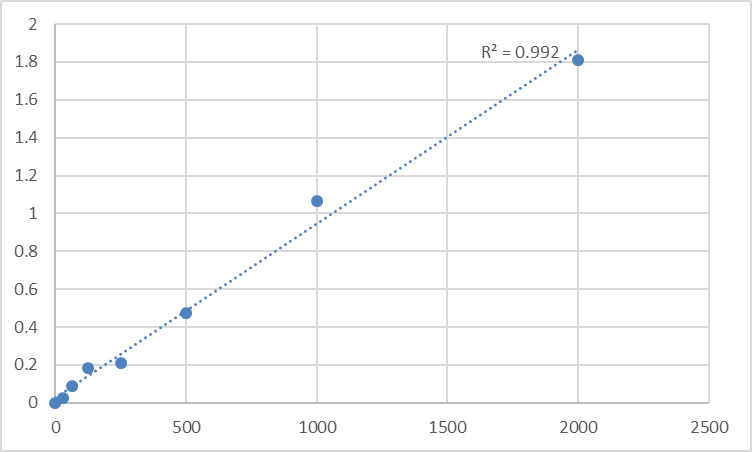
• Standard prep: Recombinant mouse ADP standard is primarily LMW trimer with minor HMW — reconstitute gently by pipetting (no vortex, vortexing shears HMW into trimers, dropping standard curve R² from >0.99 to <0.97 and spiking low-conc points). Make serial dilutions in kit buffer, use within 1 week of reconstitution.
The Bottom Line
Adiponectin is the metabolic field's "fat-derived health marker" — total ADP + HMW ratio are non-negotiable PD readouts for NASH drugs, adipogenesis screens, and cardiometabolic comorbidity work. But mouse ADP's oligomeric complexity, HFD serum's turbidity, and the 78% human-mouse collagen domain identity make "universal" human-primary kits unreliable for mouse cohorts — you lose HMW signal, get 30% CVs, and miss drug effects entirely. The Mouse Adiponectin (ADP) ELISA Kit (KTE70557) from Abbkine is mouse-dedicated: collagen-domain capture grabs all oligomers, turbidity-resistant buffer handles HFD serum, 0.1 μg/mL LOD, 2.5 h per 96-well — so your resmetirom HWD "ADP ↑40%" claim has <7% CV, not "human kit said no effect, re-run three times." Whether you're phenotyping 60% HFD + empagliflozin, screening 3T3-L1 browning compounds, or closing the PD triad for a NASH preclinical package, it's the ADP reagent that doesn't make you blame your HFD model.
Product Reference: KTE70557 – Mouse Adiponectin (ADP) ELISA Kit
Learn more and order: https://www.abbkine.com/product/mouse-adiponectin-adp-elisa-kit-kte70557/
(For Research Use Only; not for diagnostic procedures in humans.)





