




CheKine™ Micro Reducing Sugar Assay Kit: The Gold Standard for Reducing Sugar Quantification
Reducing Sugars: The Foundation of Carbohydrate Metabolism
Reducing sugars are widely distributed in animals, plants, microorganisms, and cultured cells[reference:121]. In plants, reducing sugars mainly include glucose, fructose, and maltose—which are not only the main substrates of respiration, but also the monosaccharide components of sucrose, starch, and cellulose[reference:122]. Accurate reducing sugar quantification is fundamental to understanding carbohydrate metabolism, food science, and plant physiology.
Why Abbkine KTB1360 Leads the Field
| Feature | Abbkine KTB1360 | Traditional Reducing Sugar Assays |
|---|---|---|
| Detection Principle | 3,5-dinitrosalicylic acid (DNS) colorimetry (540 nm)[reference:123] | Variable; often less sensitive |
| Sample Types | Animal/plant tissues, bacteria, cells, serum/plasma[reference:124] | Limited compatibility |
| Sensitivity | High; detects low reducing sugar levels | Variable |
| Specificity | Detects all reducing sugars (glucose, fructose, maltose)[reference:125] | Often glucose-specific only |
| Protocol | Simple, convenient, rapid[reference:126] | Complex, time-consuming |
| Publications | 1 publication in Nature (IF: 65)[reference:127] | Varies |
The DNS Colorimetry Advantage
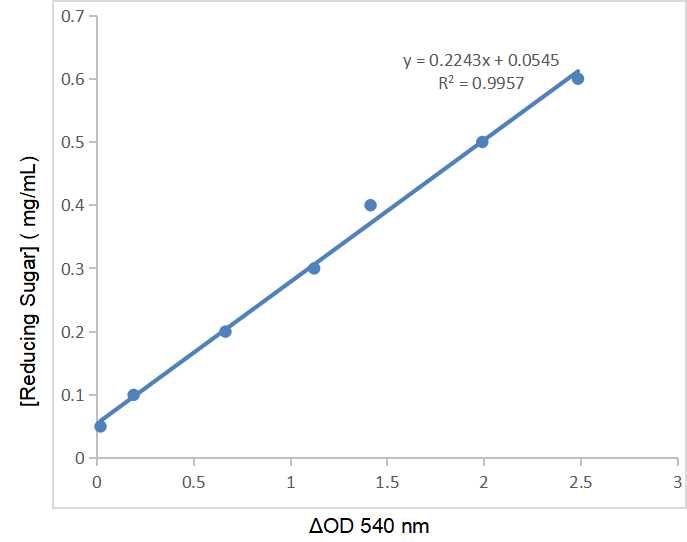
The kit is based on the well-established DNS (3,5-dinitrosalicylic acid) method: 3,5-dinitrosalicylic acid is reduced to brown-red amino compounds by reducing sugars in alkaline solution[reference:128]. There is a characteristic absorption peak at 540 nm[reference:129]. In a certain concentration range, the reducing sugar content is linearly related to the absorbance at 540 nm[reference:130], and reducing sugar content is calculated according to the standard curve[reference:131].
Validated in the World's Top Journal
The kit has been cited in a study published in Nature (IF: 65) on the structural and mechanistic insights into fungal β-1,3-glucan synthase FKS1[reference:132]. This level of validation speaks to the kit's reliability and performance in high-impact research.
Applications Across Research Fields
- Plant Physiology — measuring reducing sugars as markers of metabolic activity and stress responses
- Food Science — quantifying reducing sugars in foods, beverages, and fermentation products
- Microbiology — tracking sugar utilization in bacterial and fungal cultures
- Clinical Research — measuring glucose in serum and plasma samples
- Enzyme Assays — quantifying reducing sugar release in glycosidase activity assays
Critical Sample Handling Tips
- Do not mix components between different batch numbers and manufacturers[reference:133]
- Avoid bubbles while mixing or redissolving components[reference:134]
- Change pipette tips frequently to avoid cross-contamination[reference:135]
- Ensure all components and equipment are at the appropriate temperature before use[reference:136]
- Do a pre-experiment with 1-2 samples to guarantee accuracy[reference:137]
- If the sample value is higher than the maximum standard value, dilute with distilled water[reference:138]
- DNS reagent is toxic—take protective measures when operating[reference:139]
The Bottom Line
For researchers who need reliable, reproducible reducing sugar quantification across diverse sample types—from plant extracts to serum to microbial cultures—KTB1360 delivers the sensitivity, simplicity, and high-impact validation that modern research demands. With a Nature (IF: 65) publication backing its performance[reference:140], this kit is trusted by the world's leading scientists.
👉 Quantify reducing sugars with confidence. View Product





