EliKine™ Free Thyroxine (fT4) ELISA Kit (Cat. No. KTE0005): Range, Format, Specificity Compared
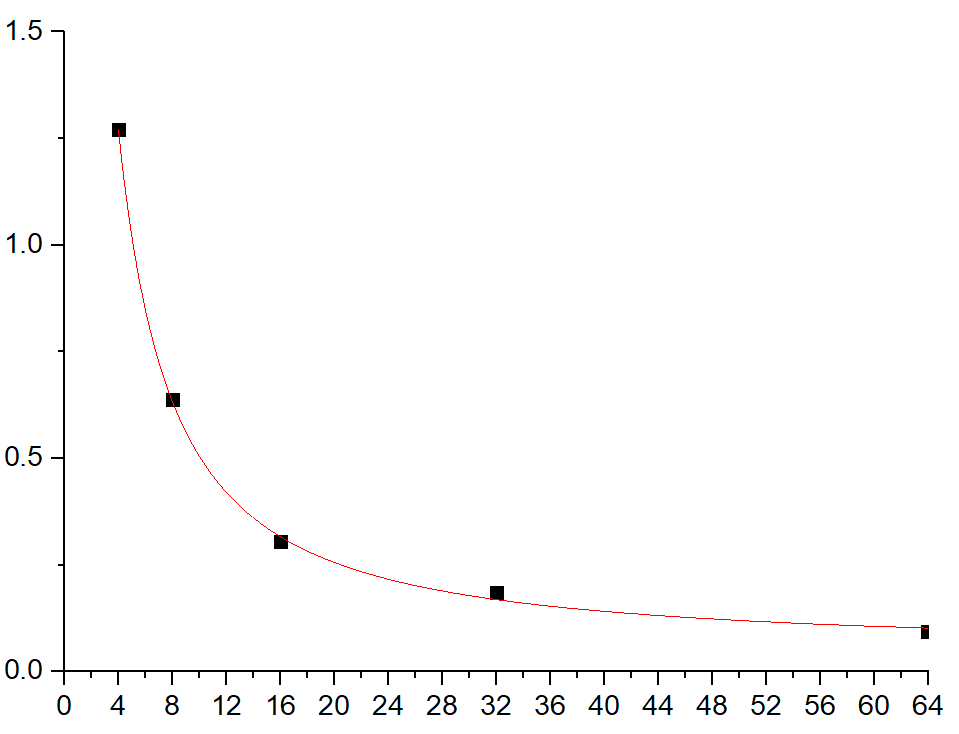
Thyroxine circulates mostly in bound form, which makes total hormone a moving target when carrier proteins shift. Measuring the free fraction needs an assay whose lower limit and curve are stated clearly.
The reference page notes that over 99% of T4 circulates in blood bound to carrier proteins including thyroxine-binding globulin (TBG), and that only the free portion is biologically active. Carrier-protein concentrations change in states such as pregnancy, so total T4 can move while free T4 stays comparatively constant. The EliKine™ Free Thyroxine (fT4) ELISA Kit (Cat. No. KTE0005) is a quantitative competitive ELISA with a colorimetric readout. A plate pre-coated with an fT4-specific antibody is used with biotin-conjugated fT4 and avidin-HRP; color develops in the opposite direction to the fT4 concentration. The listed calibration range is 4 pmol/L–64 pmol/L, the limit of detection is 4.0 pmol/L, and the working time is 3–4 hours.
A 4–64 pmol/L Curve for Free T4
The calibration range is 4 pmol/L–64 pmol/L. The limit of detection is listed separately as 4.0 pmol/L.
Since the analyte is the unbound hormone, the values are small and the standard curve has to start low. Giving the detection limit alongside the calibration range lets you judge whether a low sample is measurable before running it. Listed sample types are serum, plasma, and other biological fluids. Reactivity covers ten species: bovine, chicken, dog, goat, human, monkey, rabbit, rat, sheep, and swine.
Competitive Biotin–Avidin Format With Reverse Color Development
Signal runs opposite to the amount of fT4 in the well. The detection step uses biotin-conjugated fT4 followed by avidin-conjugated HRP.
Standards or samples compete with biotin-conjugated fT4 for the antibody pre-coated on the microplate. The more fT4 present, the less biotin conjugate is bound; after washing, avidin-HRP is added and substrate color is allowed to develop before the reaction is stopped. The listed components are the fT4 microplate, fT4 standard, biotin conjugated fT4, avidin-HRP, HRP substrate A and B, stop solution, wash buffer, and plate covers. Unopened kits are stored at 2–8 °C and shipped with a gel pack and blue ice.
Ten Species Listed and a Sample-Matching Caution
Reactivity is listed for ten species, with mouse absent from the list. The product page includes a note about sample species matching.
Abbkine advises that the antibody reactivity species should match the sample species after verification, and does not recommend trying species outside the listed range because sample mismatch may affect results. The same notes suggest aliquoting the antibody, storing it at -20 °C, and avoiding repeated freezing and thawing. Reagents should be warmed to room temperature for at least 30 minutes before opening, and components from different kit lots should not be mixed.
| Feature | This Product | Conventional / typical approach |
|---|---|---|
| Assay format | Competitive ELISA, quantitative, colorimetric | commonly requires a labeled competitor of its own |
| Calibration range | 4 pmol/L–64 pmol/L | varies by assay and protocol |
| Limit of detection | 4.0 pmol/L | varies by assay and protocol |
| Detection chemistry | Biotin-conjugated fT4 with avidin-HRP | direct HRP conjugates are also used |
| Reactivity | Ten listed species | sample-species compatibility still needs checking |
If your samples are serum, plasma, or other biological fluids and expected free T4 values sit inside 4 pmol/L–64 pmol/L, this kit provides a published curve and detection limit for planning. Check the product page before ordering: https://www.abbkine.com/product/elikine-free-thyroxine-ft4-elisa-kit-kte0005/
Reference: https://www.abbkine.com/product/elikine-free-thyroxine-ft4-elisa-kit-kte0005/
For research use only. Not for diagnostic or therapeutic use.