




Rat FSH ELISA Kit (KTE100733) by Abbkine: Precision Gonadotropin Quantification for Uncompromising Reproductive Research—Where Sensitivity Meets Specificity in Every Microliter
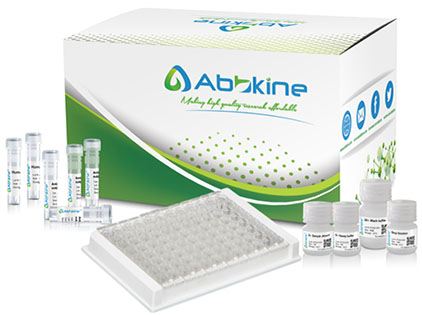
The FSH Quantification Conundrum: Why Your Current Assay Is Sabotaging Your Data Before the First Standard Curve Point
Any endocrinologist who has spent years untangling the hypothalamic-pituitary-gonadal axis knows one immutable truth: if you cannot trust your gonadotropin numbers, you have nothing. Follicle-stimulating hormone sits at the very heart of reproductive physiology—it is the master regulator of granulosa cell proliferation and antral follicle maturation in females, the indispensable driver of Sertoli cell function and spermatogenesis in males, and the biomarker that endocrinologists track obsessively through every estrous cycle, every toxicology study, and every fertility experiment. Yet for decades, researchers have been forced into an impossible compromise: accept the radioactive waste, regulatory headaches, and multi-day turnaround times of radioimmunoassay, or gamble on ELISA kits that promise convenience but deliver high backgrounds, narrow dynamic ranges, and that sinking moment when you realize your duplicate wells disagree by 20% and your n=12 study is now statistically meaningless. The rat model—the workhorse of reproductive biology—deserves better than hand-me-down human assay chemistry poorly retrofitted for rodent physiology.
Abbkine KTE100733: The Two-Site Sandwich Architecture That Lets You Stop Worrying About Cross-Reactivity Forever
Abbkine's Rat Follicle-stimulating hormone (FSH) ELISA Kit (KTE100733) is not merely another entry in an overcrowded catalog. It is a deliberate, antibody-engineering-driven solution to the fundamental problem of gonadotropin quantification: the glycoprotein hormone family shares a common alpha subunit, and the difference between detecting FSH versus LH, TSH, or hCG comes down entirely to the quality of the antibodies raised against that unique beta subunit. KTE100733 employs a rigorously validated two-site sandwich ELISA format: a capture antibody specific for rat FSH is pre-coated onto the microplate, standards and samples are introduced and any FSH present is bound by the immobilized antibody, and after washing away unbound material, an HRP-conjugated rat FSH detection antibody is added, followed by a chromogen substrate that develops color in direct proportion to the amount of FSH captured in the initial binding step. This is not a competitive assay with its inverted dose-response curves and high-end compression artifacts. This is a true sandwich—the geometry that immunochemists prefer when they want linearity, low background, and reproducibility that holds across independent runs.
The detection antibody pair has been optimized to eliminate meaningful cross-reactivity with rat LH, TSH, and other glycoprotein hormone family members—a critical consideration given that LH surges during proestrus can reach concentrations orders of magnitude above basal FSH levels, and even 1% cross-reactivity in that context translates into physiologically misleading signal. With a detection limit of 0.1 IU/L and a calibration range spanning 1.5–24 IU/L, KTE100733 comfortably captures the entire biologically relevant FSH concentration spectrum in rat serum, plasma, cell culture supernatants, and other biological fluids without requiring sample dilution gymnastics that introduce pipetting error and matrix effects.
The specifications deserve to be read slowly: 0.1 IU/L sensitivity; 1.5–24 IU/L dynamic range; colorimetric detection; pre-coated, ready-to-use 96-well format. For context, legacy competitive ELISA protocols in the literature report rat FSH sensitivities in the 0.8–1.25 ng/mL range, with the added disadvantage of requiring multiple overnight incubations and generating radioactive waste streams when RIA is used as the comparative standard. KTE100733 eliminates all of that—no radioisotopes, no self-coating of plates at 4°C overnight, no anti-rabbit IgG secondary detection layers that introduce additional variability. Just a pre-coated plate, ready-made standards, and a protocol that respects the reality that your postdoc has 80 rats to bleed tomorrow morning.
Sample Compatibility: Because Your Experiment Does Not Produce a Single Matrix
KTE100733 is validated for serum, plasma, cell culture supernatants, and other biological fluids. This matrix versatility is not a marketing bullet point—it is an operational necessity in reproductive research laboratories. One day you are measuring FSH in trunk blood collected after rapid decapitation for a GnRH pulse study. The next day you are profiling FSH secretion from primary pituitary cell cultures treated with kisspeptin or neurokinin B. The day after that you are analyzing follicular fluid aspirated from PMSG-stimulated ovaries. A kit that demands a different dilution factor, a different standard diluent matrix, or a different incubation protocol for each sample type is a kit that burns through your time and your patience. KTE100733 maintains consistent performance across these matrices, obviating matrix-specific optimization.
Why ELISA Over RIA in the Modern Reproductive Lab
The historical gold standard for rat FSH measurement has been radioimmunoassay—the rFSH RIA kits developed by the National Hormone and Peptide Program that served the field admirably for decades. But irreplaceable does not mean unimprovable. RIA carries intrinsic burdens that modern laboratories increasingly refuse to accept: radioactive iodine labeling, short shelf-life tracers, dedicated radiation safety infrastructure, disposal costs that compound annually, and total assay times that can stretch to two days for the mouse FSH RIA analogs. ELISA-based methods have been demonstrated to perform equivalently to RIA techniques across the same concentration ranges while offering practical advantages in safety, convenience, and economy—advantages that compound with every additional plate you run. The Abbkine KTE100733 kit, with its colorimetric readout readable on any standard 450 nm microplate reader, fits seamlessly into the workflow of a laboratory that has already modernized its cytokine and steroid hormone measurements. No dedicated gamma counter. No lead shielding. No isotope inventory logs. Just a plate, a reader, and data you can publish without a Geiger counter clicking in the background.
Practical Wisdom from the Protocol Bench: Why Methodology Details Are Not Afterthoughts
The instructions packed with KTE100733 reflect the accumulated experience of technicians who have troubleshot every conceivable failure mode in sandwich ELISA methodology. The mandate is clear: do not mix components from different kit lots or use reagents beyond the kit expiration date. Allow all reagents to warm to room temperature for at least 30 minutes before opening—this is not negotiable when you want well-to-well temperature uniformity and consistent binding kinetics across the plate. Pre-rinse the pipette tip with reagent, use fresh tips for every sample, standard, and reagent transfer to avoid carryover contamination—simple habits that separate publication-quality standard curves from the jagged disasters that force a Friday afternoon repeat. Unused wells must be kept desiccated at 4°C in the sealed bag provided; humidity is the silent enemy of pre-coated ELISA plates, slowly degrading the immobilized capture antibody through hydrolysis. Mix thoroughly—the protocol recommends a low-frequency oscillator or gentle hand shaking every 10 minutes to ensure homogeneous reagent distribution and prevent edge effects. And crucially: assay all standards and samples in duplicate or triplicate—because any single well, no matter how carefully pipetted, can be an outlier, and your statistical power depends on replication at the most fundamental level.
Storage is straightforward: the unopened kit is stable at 2–8°C, shipped on gel pack with blue ice, and the pre-coated plates maintain their integrity for 18 months under proper storage conditions. The product is designated for research use only and is not intended for human or clinical diagnostic applications—a standard disclaimer that nonetheless reflects the kit's positioning in the preclinical research ecosystem where rat models dominate reproductive toxicology and endocrine disruption studies.
The FSH-LH Axis: Why You Cannot Study One Gonadotropin in Isolation
To quantify rat FSH is to open a window onto the entire hypothalamic-pituitary-gonadal axis. FSH, in concert with luteinizing hormone—for which Abbkine offers the complementary KTE100699 Rat LH ELISA Kit—orchestrates folliculogenesis, ovulation, and luteinization in the female, and spermatogenesis and androgen production in the male. Reproductive toxicologists screening endocrine-disrupting chemicals need both gonadotropins measured from the same small-volume serum sample to distinguish hypothalamic from pituitary from gonadal sites of action. Fertility researchers tracking the estrous cycle need FSH profiles that resolve the peri-ovulatory rise with confidence. Veterinary endocrinologists managing breeding colonies need cost-effective, high-throughput assays that do not require outsourcing to a reference laboratory with a two-week turnaround. KTE100733—paired with the broader Abbkine ELISA ecosystem—provides a unified platform for these diverse applications, with consistent assay formats, compatible reagents, and a shared protocol logic that reduces training burden and operator error.
What Abbkine Brings to the Bench
Abbkine has built its reputation on antibody development expertise and rigorous quality control, translating years of protein detection experience into ELISA kits that prioritize sensitivity, specificity, and lot-to-lot consistency. The EliKine series of ELISA kits—of which KTE100733 is a representative member—delivers high-quality antibody pairs and protein standards, ensuring reproducible standard curves and reliable quantification across independent experiments. For the reproductive biologist who has been burned by kit variability before—who has watched a promising time-course experiment collapse because Lot #C0714 did not perform like Lot #B1123—this commitment to quality control is not a luxury. It is the entire point.





