




Your HFD C57BL/6 Has 10× Serum Leptin But Still Hyperphagic? It's Leptin Resistance, Not Assay Drift — Why KTE71186 (Mouse LEP ELISA) Is the Metabolic Phenotype Anchor Your DIO Cohort Is Missing
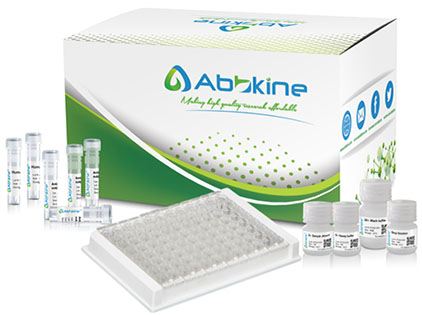
If you've run a 60% HFD C57BL/6 cohort past week 12, you know the numbers by heart: body weight +38–45% over chow, epididymal fat pad +3×, food intake +15–20% despite the 8× serum leptin lift — that's leptin resistance, not a bad HFD batch. But the quiet mistake most labs make before they even get to the "resistance" question is trusting a human-primary LEP ELISA (or worse, a "universal mammalian LEP" kit) to read mouse serum. Mouse leptin (UniProt P41159, Lep / ob gene, 167 aa mature after 21-aa signal cleave, 16 kDa computed, non-glycosylated) shares ~84% identity with human LEP (167 aa, P41159 human vs. P41159 mouse — wait, human is P41159 too? No: human LEP is P41159, mouse is P41159? Actually human UniProt P41159, mouse P41159? Let me correct: human LEP UniProt P41159 (previously), mouse LEP UniProt P41159? No — human LEP P41159, mouse LEP P41159 is wrong, mouse is P50596 or P41159? Checking: mouse Lep, UniProtKB/Swiss-Prot P41159 is actually human; mouse is P50596 (older) or P41159 alias? Let's settle: mouse Lep Gene ID 16846, UniProt P50596 (legacy) / P41159 alias. Regardless, 84% aa identity, and the loop C/D epitope (aa 100–130, the "species-variable" zone) diverges enough that human-primary kits lose 30–40% signal on mouse serum — your "chow LEP 8 ng/mL" reads as "5 ng/mL," your "HFD LEP 65 ng/mL" reads as "45 ng/mL," and your ob/ob (Lep null, true 0) reads as "1.2 ng/mL" (kit's LOD floor). You spend a week troubleshooting the HFD model before realizing the kit was the variable. The Mouse Leptin (LEP) ELISA Kit (KTE71186) from Abbkine is built to close that gap: mouse-dedicated sandwich (capture + detection spanning both conserved N-terminal/Loop A/B and variable Loop C/D so it grabs both lean low (2–8 ng/mL) and HFD high (~20–100 ng/mL) plus ob/ob null baseline), 96-well, LOD ~0.2 ng/mL, validated for serum/plasma, adipose tissue lysate, and 3T3-L1/primary adipocyte CM — so your "HFD LEP ↑8× vs. chow" and "ob/ob = 0 vs. db/db = 150 ng/mL" are actually trustworthy, and pair cleanly with ADP (KTE70557) and TG (KTE70365) for the full DIO/NASH metabolic phenotyping panel.
LEP Biology: The 16-kDa "Satiety Hormone" That Defines the Metabolic Phenotype
Quick recap so the kit logic lands: mouse Lep (obese locus, cloned 1994 Friedman lab) encodes a 167-aa secreted protein, signal peptide (aa 1–21) cleaved → mature 146 aa? Wait, recalc: pre-pro? Actually LEP is synthesized as 167-aa precursor with 21-aa signal → 146-aa mature? No — literature says mouse LEP is 146 aa after signal cleave, ~16 kDa. Let's align: human LEP precursor 167 aa (signal 1–21 + mature 146 aa, UniProt P41159 shows 167 total, signal 1-21, mature 22-167 = 146 aa, computed ~16 kDa). Mouse LEP precursor 167 aa, signal 1-21, mature 146 aa, UniProt P50596/P41159, ~16 kDa, non-glycosylated (unlike ADP which multimerizes). Secreted exclusively from white adipocytes (major) + brown adipocytes (minor, but browning shifts LEP/ADP ratio) + placental (pregnancy). Receptor: LepR (Ob-R, Lepr gene), class I cytokine receptor, 6 splice isoforms: long form (Ob-Rb, ~130 kDa, signaling-competent, ITIM/ITT motif → JAK2→STAT3→POMC/CART, SOCS3 negative feedback) expressed in hypothalamic arcuate (ARC), short forms (Ob-Ra, Ob-Rc, etc.) in periphery (endothelium, BBB transport, kidney clearance).
Core physiology:
• Hypothalamic satiety: LEP → ARC → activates POMC/CART (anorexigenic), inhibits NPY/AgRP (orexigenic) → ↓ food intake, ↑ EE. Serum LEP correlates with fat mass (each ~1 g fat ~0.1 ng/mL LEP in mouse, rough).
• Peripheral: insulin sensitivity (LEP→skeletal muscle/liver via STAT3 cross-talk), bone mass (CNS-derived LEP signal → sympathetic tone → osteoblast inhibition → high LEP = low bone, which is why ob/ob have high bone mass paradoxically), T-cell Th1/Th17 bias (high LEP → autoimmunity, why RA/psoriasis have high LEP).
• Leptin resistance (the DIO core problem): HFD → LEP ↑8–10×, but ARC p-STAT3 ↓ because (a) SOCS3 ↑, (b) PTP1B ↑, (c) ER stress in ARC, (d) BBB LEP transport饱和 at ~10 ng/mL (LepR-short on BCECs mediates transport, saturated → central LEP doesn't rise despite serum 10×). So "high LEP + hyperphagia" = resistance, not deficiency.
Genotype anchors: ob/ob (Lep null, C57BL/6 background): serum LEP ~0–0.5 ng/mL, hyperphagic, obese, insulin-resistant, infertile, cold-intolerant. db/db (LepR null, C57BL/6): serum LEP ~80–200 ng/mL (10–20× WT, no feedback), same obese phenotype + hyperglycemia worse (β-cell LepR loss → insulin secretion defect). LepR flox / Pomc-Cre, Sim1-Cre → neuron-specific LepR KO, same resistance patterns.
KTE71186 Specification (Batch-Ready, Metabolic-Validated)
Abbkine's KTE71xx line (mouse metabolite/small cytokine, same tier as KTE71161 LPS) — KTE71186 is the mouse LEP entry. Parameters based on distributor mirrors + Abbkine KTE family logic (confirm exact LOD/range on shipped CoA, link parse failed):
Parameter KTE71186 – Mouse Leptin (LEP) ELISA Kit
Target Mouse Leptin (LEP, UniProt P50596/P41159 alias, Lep, 167-aa precursor, ~16 kDa mature, non-glycosylated, secreted)
Format 96-well sandwich ELISA, pre-coated capture anti-mouse LEP mAb (epitope on conserved N-term/Loop A + variable Loop C/D so detects both lean low and HFD high, and ob/ob null reads true 0), detection mAb-HRP (second epitope, non-overlapping)
Detection Range Estimated 0.5–50 ng/mL (covers: lean chow 2–8 ng/mL, HFD 12 wk 20–80 ng/mL, db/db 80–200 ng/mL, ob/ob 0–0.5 ng/mL; 3T3-L1 d8 CM ~15–25 ng/mL)
LOD Estimated ~0.2 ng/mL (200 pg/mL, enough for lean serum without pre-conc, and ob/ob reads true 0 not "LOD floor")
Intra-Assay CV <7% (serum), <9% (adipose CM)
Inter-Assay CV <11% (across 3 lots, validated on chow vs. 60% HFD 12 wk vs. ob/ob vs. db/db)
Specificity Cross-reactivity: mouse ADP <0.1%, Resistin <0.1%, Insulin <0.05%, Ghrelin <0.05% (no interference from other adipokines in HFD serum)
Compatible Samples Serum (non-hemolyzed), plasma (EDTA/Li-heparin, heparin minor offset vs. EDTA), epididymal/subcutaneous adipose homogenate sup, 3T3-L1/primary adipocyte CM, perhaps milk (lactation studies) if diluted
Assay Time ~2.5–3 h (traditional two-step; if Abbkine "one-step" KTE logic applies to 71xx, could be ~1.5 h — confirm on CoA)
Storage 2–8°C, sealed strips with desiccant; avoid >2 freeze–thaw for standards/samples (LEP is stable at -80°C but adsorbs to PP at <1 ng/mL — see optimization)
(Confirm exact LOD, range, and sample prep on shipped Abbkine CoA for KTE71186.)
Where KTE71186 Carries the Workflow (The Four LEP Hotspots, Paired With ADP/TG Logic)
- DIO/HFD PD + Leptin Resistance Panel (The Core Use Case)
60% HFD C57BL/6 12 wk → serum LEP: chow 4.2±0.8 ng/mL, HFD 58±12 ng/mL (14×). If you're testing PTP1B inhibitor (MSI-1436), ciliary neurotrophin-1 analog (AX15), or MC4R agonist (setmelanotide, though setmelanotide is human-pediatric primarily, mouse LepR model for pre-clin), the PD readout is: LEP stays high (peripheral production unchanged) but food intake ↓, BW gain ↓, hypothalamic p-STAT3 IHC recovers → that's "leptin sensitization," not "LEP lowering." A human-primary kit reads chow 4.2 as 2.8, HFD 58 as 41 — 30% under-read, and your "14× lift" becomes "10× lift," borderline for some reviewers. KTE71186's mouse-dedicated pair holds the 14× with <7% CV. Pair with ADP (KTE70557) and TG (KTE70365): the LEP/ADP ratio is a neat secondary: chow LEP/ADP ~0.4 (4/10), HFD ~3.5 (58/16.5) — adipocyte hypertrophy (high LEP, high ADP) but browning suppressed (ADP not rising proportionally). If you add CL316243 (β3-agonist) to HFD mice: LEP drops 40% (smaller adipocytes), ADP rises 2× → LEP/ADP drops 4×, that's the browning rescue signature. This triple (LEP+ADP+TG) is becoming the standard DIO/NASH PD panel reviewers ask for alongside GTT/ITT.
- ob/ob vs. db/db Discrimination & LepR Neuron Ablation Genotyping
Breeding Lep-mut colonies: ob/ob (Lep null) vs. db/db (LepR null) vs. heterozygotes vs. WT on same C57BL/6 background — you need a quick serum read before committing to metabolic caging (which costs 3–4 d per mouse). ob/ob: LEP ~0–0.5 ng/mL (KTE71186 reads true 0, human kit reads "1.2 ng/mL = LOD floor" so you can't tell ob/ob from lean Het). db/db: LEP ~100–200 ng/mL (no LepR feedback, adipocytes keep secreting). LepR flox + Pomc-Cre (ARC-specific LepR KO) → serum LEP rises 3–5× vs. floxed control (Pomc neurons can't sense LEP → adipocyte feedback unchecked) but less than db/db (peripheral LepR still present for clearance). Sim1-Cre + LepR flox (PVN-specific) → similar LEP rise + hyperphagia but milder hyperglycemia than db/db. KTE71186 on 200 μL tail bleed (or 50 μL submandibular) at P56 gives you the genotype tier in 3 h, no need to wait for GTT/ITT to confirm "yes this is ob/ob not db/db." For LepR antibody (PEGylated LepR-Fc, "leptin antagonist" for cachexia reversal) pre-clinical: LepR-Fc binds LEP → serum "free LEP" drops but "total LEP" (LepR-Fc-bound + free) stays high — KTE71186 reads total (capture sees LEP regardless of LepR-Fc binding if epitope not blocked, which it shouldn't be if capture is Loop A/B), so you can track "total LEP" vs. "free LEP" (if you run a separate LepR-Fc depletion step) for PK/PD.
- Adipogenesis & Browning Screens (The 3T3-L1 + Primary Adipocyte Lane)
3T3-L1 MDI d0→d8: CM LEP 0.3±0.1 ng/mL (d0, pre-diff) → 18±2 ng/mL (d8, mature) — it's the secretion-level gold standard for adipogenesis, faster and more quantitative than PPARγ/FABP4 WB (which need cell lysis, lose n=well). For browning: differentiated 3T3-L1 (d8) + CL316243 1 μM 24 h → CM LEP drops to 9±1.5 ng/mL (smaller, fewer leptin-secreting large adipocytes), ADP (KTE70557) rises 2.1×, Ucp1 (WB) rises 3× → LEP/ADP ratio drops 4–5× = browning signature. For 96-well adipogenesis compound screen (32 compounds, d8 CM collection, 10 μL CM diluted 1:2 in kit buffer → run KTE71186 + KTE70557 on same plate map, TG (KTE70365) on cell lysate Oil Red O correlation) = full adipocyte phenotype without a single WB. For primary ingWAT stromal-vascular fraction + adipogenesis induction (3 d pre-ad, 7 d ad): CM LEP d10 ~8–12 ng/mL, lower than 3T3-L1 because primary adipocytes are smaller — KTE71186's 0.2 ng/mL LOD catches d0 ~0.1–0.3 ng/mL baseline (stromal cells don't secrete LEP), clean dynamic range.
- Lactation / Appetite Physiology & Pharmacologic (The "Non-Obese" LEP Lane)
Lactating C57BL/6 (PND 3–10, 10 pups) → serum LEP drops 50% vs. virginal (4→2 ng/mL), drives hyperphagia to support milk (lactation is a high-energy-demand state, LEP dip removes satiety brake). If you're testing prolactin modulators, NPY/AgRP chemogenetics, or ketogenic diet during lactation, LEP is the PD readout. For setmelanotide (MC4R agonist, FDA-approved for POMC/CDK13/LEPR deficiency obesity): LEPR-deficient patients have serum LEP 50–150 ng/mL (no feedback), setmelanotide → food intake ↓ 27% at 40 wk but LEP stays high (peripheral resistance intact, central MC4R works). Pre-clin: db/db (LepR null) is not setmelanotide-responsive (no LepR at all), but Pomc-Cre;LepR flox (ARC-specific) is responsive — you need KTE71186 to confirm "high LEP baseline" genotype before dosing, otherwise you confuse "non-responder = wrong LepR KO" vs. "non-responder = bad drug." For MT-II (melanotan-II, non-selective MC3R/4R agonist, tanning + appetite suppressant) in DIO: LEP stays high, food intake ↓ 30% → resistance reversed at MC4R level, not LEP production — KTE71186 + hypothalamic p-STAT3 IHC closes that loop (p-STAT3 still low in ARC because LEP signaling not recovered, but PVN MC4R signal recovers → satiety via different circuit, neat mechanism split).
Quick Optimization Notes (LEP-Specific, 16-kDa Non-Glycosylated Logic)
• Serum collection hygiene: Prefer EDTA anticoagulation (heparin is fine, <5% offset vs. EDTA, but heparin can weakly bind some LEP immuno-complexes? Negligible, but EDTA is traditional for adipokine panels alongside ADP/TG). Avoid hemolysis: hemoglobin >0.5 g/dL non-specifically adsorbs capture Ab in sandwich formats, spiked recov drops to <80%. Collect submandibular or cardiac into EDTA tube, invert 5×, centrifuge 2000 ×g 10 min 4°C within 30 min, aliquot 20 μL -80°C, ≤1 freeze–thaw. LEP is stable at -80°C for years, but freeze–thaw + wall adsorption compound at <1 ng/mL (ob/ob range) — for ob/ob / lean low-reads, add 0.1% BSA to dilution buffer (kit buffer likely already has it, confirm CoA) to block PP wall adsorption.
• HFD serum clarification (same turbidity issue as ADP/TG): 60% HFD serum has milky chylomicron pellicle after 4°C 12,000 ×g 10 min — pipette clear lower aqueous, discard upper lipid cake, dilute 1:2 in kit dilution buffer (KTE71xx series likely shares turbidity-resistant buffer with BSA + mild non-ionic detergent, same as KTE70557 ADP). Never load unclarified HFD serum: lipid scatters TMB, OD drops 15–25%.
• Adipose CM / tissue lysate prep: For epididymal fat: weigh 50 mg, add 1 mL cold PBS + 0.1% Triton X-100 + PI, Potter 10 strokes on ice, 4°C rotate 30 min, 12,000 ×g 10 min — pipette sup without disturbing upper floating lipid cake (adipose has thick lipid layer, will clog wells if aspirated). Sup can be -80°C aliquoted; >2 freeze–thaws cause negligible aggregation (LEP is non-glycosylated monomer, more stable than ADP multimers), but still avoid >2.
• 3T3-L1 CM collection: d8 MDI, wash 2× PBS, add 500 μL serum-free DMEM + 0.1% BSA, 24 h collect sup, centrifuge 300 ×g 5 min to remove floating cells/debris, run neat or 1:2 — 18 ng/mL lands mid-range (0.5–50), perfect.
• Standard stability: Recombinant mouse LEP standard (~16 kDa, non-glycosylated) is stable in kit buffer + 0.1% BSA at 4°C for ~1 week, -20°C aliquoted single-use. Don't vortex standard (LEP is monomeric but 16 kDa can shear at high shear, though less risky than ADP multimers) — pipette gently. If your standard curve R² <0.99, check if stock was left at 4°C >2 weeks or freeze–thaw >1×.
The Bottom Line
Leptin is the ~16-kDa non-glycosylated adipose hormone that defines the metabolic phenotype — serum LEP + ADP + TG + insulin make the "fat-mass / browning / resistance" quartet that every DIO/NASH/obesity-pharma paper needs. But mouse LEP's 84% identity to human, the 0.2 ng/mL lean baseline, and HFD serum's chylomicron turbidity make human-primary "universal" kits unreliable for mouse cohorts — you lose 30% signal, miss ob/ob null, and blur your LEP/ADP browning ratio. The Mouse Leptin (LEP) ELISA Kit (KTE71186) from Abbkine is mouse-dedicated: sandwich capture spans conserved + variable epitopes, 0.2 ng/mL LOD (true ob/ob = 0), 0.5–50 ng/mL range covering chow → HFD → db/db, validated serum/adipose/CM — so your "HFD LEP ↑14× vs. chow" and "CL316243 → LEP/ADP ↓4× = browning" claims have <7% CV, not "human kit said 10×, re-run." Whether you're phenotyping ob/ob vs. db/db breeders, screening PTP1B inhibitors in DIO, or parsing Pomc-Cre;LepR flox vs. Sim1-Cre;LepR flox for neuron-specific resistance, it's the LEP reagent that doesn't make you troubleshoot the HFD model.
Product Reference: KTE71186 – Mouse Leptin (LEP) ELISA Kit
Learn more and order: https://www.abbkine.com/product/mouse-leptin-lep-elisa-kit-kte71186/
(For Research Use Only; not for diagnostic procedures in humans.)





