




Human PRKAR1B ELISA Kit — Application Scenarios for Neuroscience, Neuromuscular Disease, and Neuronal Tumor Research
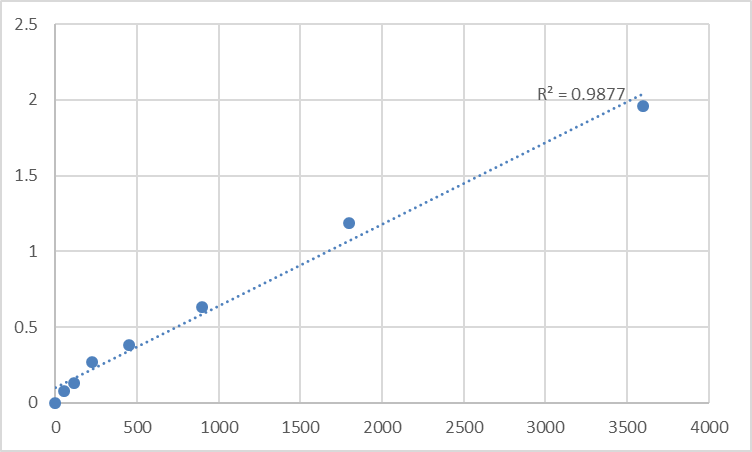
Article Type: Application Scenarios — showcasing the kit's value across different research fields investigating the brain-enriched PKA regulatory subunit
PRKAR1B: The Brain's Specialized cAMP Gatekeeper
PRKAR1B (cAMP-dependent protein kinase type I-beta regulatory subunit, RIβ) is the brain-enriched, neuron-specific regulatory subunit of PKA that holds the catalytic subunits in check at postsynaptic densities, dendritic spines, and neuromuscular junctions[reference:0]. Unlike the ubiquitously expressed PRKAR1A (RIα), PRKAR1B is not a redundant backup — it is the isoform that anchors PKA at neuronal structures via interactions with AKAPs (A-kinase anchoring proteins), creating local cAMP microdomains where the kinase phosphorylates substrates that diffusion-based signaling can't reach[reference:1].
When PRKAR1B drops, relocalizes, or gets co-opted by RNA toxicity, the consequences show up as cognitive deficits, synaptic plasticity collapse, and neuromuscular degeneration[reference:2]. The Human PRKAR1B ELISA Kit (KTE61151) from Abbkine is built to give you a calibrated, two-site sandwich ELISA readout of this neuron-specific scaffold — so you're measuring it like a quantitative variable, not a "brown band on a blot that sort of looks fainter"[reference:3].
Neuroscience: Synaptic Plasticity, Learning, and Memory
PRKAR1B knockout mice show spatial learning deficits, reduced long-term potentiation (LTP) , and altered striatal dopamine signaling[reference:4]. Neuroscientists use this kit to:
- Quantify PRKAR1B in hippocampal and cortical tissue lysates
- Monitor PRKAR1B expression in synaptosomal preparations and postsynaptic density (PSD) fractions
- Study the role of PRKAR1B in cAMP/PKA signaling at synapses
- Investigate PRKAR1B dynamics in learning and memory paradigms
The kit delivers quantitative data from serum, plasma, tissue lysates, and cell culture supernatants, with a dynamic range of 0.156–10 ng/mL and sensitivity of ~0.05–0.09 ng/mL[reference:5].
Neuromuscular Disease Research: From Synapse to Muscle
PRKAR1B is expressed not only in the brain but also in skeletal muscle[reference:6]. Neuromuscular researchers use this kit to:
- Quantify PRKAR1B in neuromuscular junction preparations
- Study PRKAR1B's role in motor neuron disease and neuromuscular degeneration
- Investigate the effects of RNA toxicity on PRKAR1B expression and localization
- Monitor PRKAR1B as a biomarker in neuromuscular disease models
Neuronal Tumor Research: PKA Signaling in Brain Tumors
cAMP/PKA signaling is dysregulated in many neuronal tumors. Neuro-oncology researchers use this kit to:
- Quantify PRKAR1B in glioma and neuroblastoma tissue lysates
- Study the role of PRKAR1B in tumor cell proliferation and differentiation
- Investigate PRKAR1B as a prognostic biomarker in brain tumors
- Monitor PRKAR1B levels in patient plasma for translational studies
Why Choose This Kit for Your PRKAR1B Research?
| Feature | Benefit |
|---|---|
| Two-site sandwich ELISA | Quantitative, specific detection |
| Human reactivity | Directly applicable to human samples |
| Brain-enriched specificity | Measures the neuron-specific RIβ isoform |
| High sensitivity | ~0.05–0.09 ng/mL LOD |
| Dynamic range | 0.156–10 ng/mL |
| Multiple sample types | Serum, plasma, tissue lysates, cell culture supernatants |
| Complete components | Ready-to-use — pre-coated plate, standards, detection antibodies, all buffers |
Kit Components at a Glance
- Human PRKAR1B microplate (pre-coated with capture antibody)
- Human PRKAR1B standard
- Human PRKAR1B detection antibody (biotin-conjugated)
- Streptavidin-HRP
- Standard diluent, assay buffer, HRP substrate, stop solution, wash buffer, plate covers
🔬 Which research field does your work belong to?
Neuroscience | Neuromuscular Disease | Neuro-Oncology | Cell Signaling | Other
Share your application with us — we'd love to hear how you're using this kit in your studies!
📌 Reference Link: Human CAMP-dependent protein kinase type I-beta





