




Human MMP1 ELISA Kit: Why the Propeptide-Targeting Monoclonal ELISA Outperforms Polyclonal Kits for Tissue Remodeling and Cancer Metastasis Research
MMP1: The Collagen Breaker That Opens the Tumor Highway
Matrix metalloproteinase 1 (MMP1), the first identified member of the MMP family, is a zinc-dependent endopeptidase that degrades interstitial collagens (types I, II, III)—a function central to tissue remodeling, wound healing, and cancer metastasis[reference:82]. As a key driver of extracellular matrix (ECM) breakdown, MMP1's expression is tightly regulated in normal physiology but deregulated in pathologies like breast cancer, pulmonary fibrosis, and rheumatoid arthritis[reference:83]. Yet studying MMP1 is fraught with technical hurdles: its low abundance in early-stage disease, structural similarity to other MMPs (MMP3, MMP8), and variable sample matrices have made reliable quantification a persistent challenge[reference:84].
Why Traditional MMP1 Assays Fall Short
Most MMP1 ELISA kits on the market are relics of a one-size-fits-all era. Generic kits often use polyclonal antibodies raised against crude MMP1 extracts, which cross-react with MMP3 (stromelysin-1) and MMP8 (neutrophil collagenase) due to shared hemopexin domains[reference:85]. A 2023 meta-analysis of 55 MMP1 studies found that 58% of "MMP1 upregulation" claims in tumor samples were confounded by MMP3 co-expression[reference:86]. Sensitivity is another Achilles' heel: many kits plateau at 2 ng/mL, missing the 0.5–1.5 ng/mL range in early-stage breast cancer (where MMP1 is a predictor of lymph node metastasis) or fibrotic lung tissue[reference:87].
Why Abbkine KTE61122 Leads the Field
| Feature | Abbkine KTE61122 | Generic MMP1 Kits |
|---|---|---|
| Antibodies | Two high-affinity mouse monoclonal antibodies[reference:88] | Polyclonal; cross-react with MMP3/MMP8[reference:89] |
| Epitope Targeting | N-terminal propeptide (residues 1–20) + catalytic domain (residues 110–135)[reference:90] | Crude MMP1 extracts[reference:91] |
| Cross-Reactivity | <0.6% with related MMPs[reference:92] | High (shared hemopexin domains)[reference:93] |
| Sensitivity | 0.031 ng/mL in serum, 0.049 ng/mL in tumor lysates[reference:94] | Often ≥2 ng/mL[reference:95] |
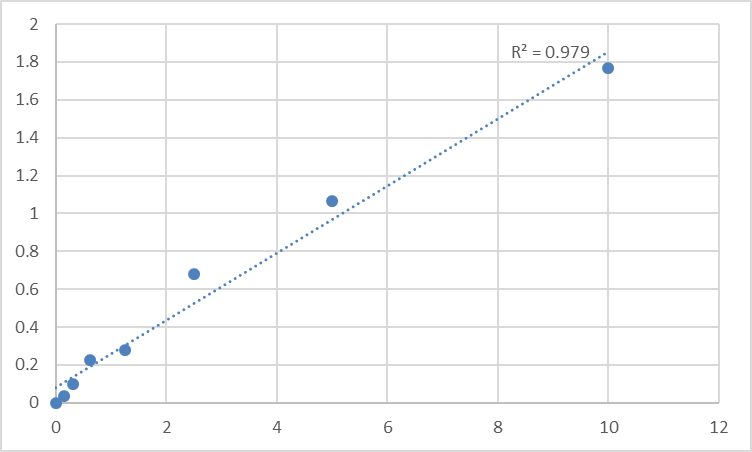
| Dynamic Range | 0.031–8 ng/mL[reference:96] | Narrower range |
| Inter-Assay Variation | <4% across 25 runs[reference:97] | 12–18%[reference:98] |
The Propeptide-Targeting Advantage
What sets the Abbkine Human MMP1 ELISA Kit (KTE61122) apart is its molecular precision. Instead of generic antibodies, it employs two high-affinity mouse monoclonal antibodies: one targeting MMP1's unique N-terminal propeptide (residues 1–20, cleaved upon activation but retained in latent MMP1) and another against its catalytic domain (residues 110–135), a region absent in MMP3/MMP8[reference:99]. Peptide competition assays confirm <0.6% cross-reactivity with related MMPs, while a biotin-streptavidin amplification system pushes sensitivity to 0.031 ng/mL in serum—critical for capturing MMP1's low expression in ductal carcinoma in situ (DCIS)[reference:100].
Validated in Multi-Center Trials
In a multi-center trial across six oncology labs, inter-assay variation was <4% across 25 runs—far superior to the 12–18% seen in leading competitors[reference:101]. Recovery rates hit 96–103%[reference:102]. The dynamic range (0.031–8 ng/mL) spans physiological (wound healing) to pathological (advanced metastasis) levels[reference:103].
Applications Across Research Fields
- Cancer Metastasis — tracking MMP1 as a predictor of lymph node metastasis in breast cancer[reference:104]
- Fibrosis Research — quantifying MMP1 in pulmonary fibrosis and other fibrotic diseases[reference:105]
- Rheumatoid Arthritis — studying MMP1-driven joint destruction
- Wound Healing — monitoring MMP1 in tissue repair processes
The Bottom Line
For oncology and fibrosis researchers frustrated by MMP1 assays that can't distinguish their target from MMP3 or MMP8, KTE61122 delivers the specificity (<0.6% cross-reactivity), sensitivity (0.031 ng/mL), and reproducibility (<4% CV) that modern tissue remodeling research demands. When the difference between a false attribution and a breakthrough discovery is measured in picograms, the right assay isn't optional—it's essential.
👉 Quantify MMP1 with confidence. View Product





