




Human Homocysteine (HCY) ELISA Kit — Technical Comparison & Buying Guide for Cardiovascular and Metabolic Researchers
Homocysteine: The 135-Dalton Amino Acid That Predicts Heart Attack and Stroke
Homocysteine (HCY) is a sulfur-containing amino acid (C₄H₉NO₂S, MW 135.18 Da) that sits at the intersection of methionine metabolism, folate cycle, and transsulfuration pathways. It is not a dietary amino acid — it is a metabolic intermediate generated when methionine donates its methyl group to become S-adenosylmethionine (SAM), and the demethylated product (S-adenosylhomocysteine) is hydrolyzed to homocysteine. From there, homocysteine faces two fates: remethylation back to methionine (requiring folate and vitamin B12) or transsulfuration to cysteine (requiring vitamin B6).
When any of these pathways fail — due to folate deficiency, vitamin B12 deficiency, MTHFR polymorphisms, or renal impairment — homocysteine accumulates. The result is hyperhomocysteinemia (HHcy) , an established independent risk factor for atherosclerosis, coronary heart disease, stroke, and venous thrombosis. The clinical literature is unambiguous: every 5 µmol/L increase in plasma HCY raises coronary artery disease risk by ~1.6-fold, cerebrovascular disease risk by ~1.8-fold, and peripheral vascular disease risk by ~6.8-fold — equivalent to a 0.5 mmol/L increase in cholesterol.
Beyond cardiovascular disease, elevated HCY is recognized as a risk factor for neurodegenerative diseases, malignancies, chronic kidney disease, and pregnancy complications. Yet measuring HCY accurately in human plasma has remained a challenge: HPLC and LC-MS/MS methods are precise but expensive and low-throughput; immunoassays vary wildly in specificity.
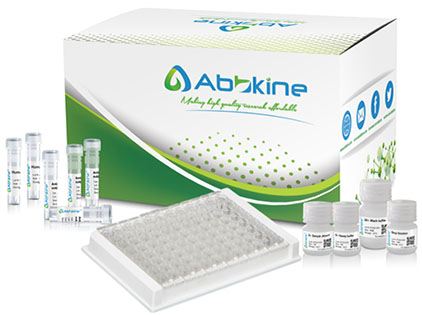
Abbkine's Human Homocysteine (HCY) ELISA Kit (KTE62507) delivers a calibration range of 0.5–8 µmol/L and a limit of detection of 0.05 µmol/L — sensitivity sufficient to distinguish normal (5–15 µmol/L), moderate (15–30 µmol/L), and severe (>100 µmol/L) hyperhomocysteinemia.
Why Traditional HCY Detection Methods Fall Short
| Method | Limitation |
|---|---|
| HPLC/LC-MS/MS | Precise but expensive, low-throughput, requires specialized expertise |
| Enzymatic Cycling Assays | Indirect readout; interference from other sulfur amino acids |
| Generic ELISA | Variable specificity; cross-reactivity with cysteine and methionine |
Abbkine KTE62507: Engineered for HCY-Specific Precision
The kit employs a two-site sandwich ELISA with an HRP-conjugated detection antibody and a chromogen-based colorimetric readout, providing quantitative, specific HCY measurement.
Key Specifications
| Parameter | KTE62507 |
|---|---|
| Calibration Range | 0.5 µmol/L – 8 µmol/L |
| Limit of Detection | 0.05 µmol/L |
| Sample Types | Cell culture supernatants, other biological fluids, plasma, serum |
| Format | Sandwich ELISA (quantitative) |
| Detection Method | Colorimetric |
Head-to-Head Comparison: KTE62507 vs. Legacy Methods
| Feature | Abbkine KTE62507 | HPLC/LC-MS | Generic ELISA |
|---|---|---|---|
| Sensitivity | 0.05 µmol/L | 0.1–0.5 µmol/L | Variable |
| Specificity | High (no cysteine cross-reactivity) | Structural | Variable |
| Throughput | 96-well plate | Low | 96-well plate |
| Cost | Affordable | High | Moderate |
| Equipment | Standard plate reader | HPLC/MS | Standard plate reader |
| Turnaround | 3–5 hours | Hours to days | 3–5 hours |
Why Choose Abbkine KTE62507?
- Clinically Relevant Sensitivity: 0.05 µmol/L LOD — distinguishes normal from elevated HCY levels with confidence
- Broad Calibration Range: 0.5–8 µmol/L covers the diagnostic window for hyperhomocysteinemia
- High Specificity: No significant cross-reactivity with structurally related amino acids (cysteine, methionine)
- Multiple Sample Types: Validated for plasma, serum, cell culture supernatants, and other biological fluids
- Standard Plate Reader Compatible: No need for specialized HPLC or MS equipment
- Complete Kit: Pre-coated plate, standards, detection antibodies, and all buffers included
Who Should Buy This Kit?
✅ Buy KTE62507 if you:
- Study cardiovascular disease, atherosclerosis, or thrombosis
- Research stroke and cerebrovascular disease
- Investigate MTHFR polymorphisms and folate/vitamin B12 metabolism
- Work on chronic kidney disease and dialysis complications
- Study neurodegenerative diseases (Alzheimer's, Parkinson's)
- Research pregnancy complications (pre-eclampsia, neural tube defects)
- Need to quantify human HCY in plasma or serum
- Require high sensitivity (0.05 µmol/L) for early detection of hyperhomocysteinemia
- Want a complete, ready-to-use kit without specialized equipment
❌ Consider alternatives if you:
- Need absolute structural confirmation with mass spectrometry
- Work with non-human samples — check Abbkine's other offerings
- Require a faster assay (<3 hours)
📌 Reference Link: Human Homocysteine (HCY) ELISA Kit — KTE62507





