




The Nuclear Loading Control Your Cytoplasmic Markers Keep Failing to See
A postdoctoral fellow in a chromatin biology lab once confessed that she had spent four months normalizing her nuclear protein blots against β-actin before a reviewer pointed out what should have been obvious from the start. Her treatment condition—a DNA-damaging agent that triggered apoptosis in roughly thirty percent of her cell population—was selectively destroying the cytoplasmic compartment while leaving nuclear pellets variably enriched. Every lane on her membrane contained a different ratio of nuclear to cytoplasmic protein, and β-actin, a cytoplasmic protein, was reporting loading for a compartment it did not inhabit. The normalization was not merely imprecise. It was systematically biased in a direction that inflated her treatment effect, and the reviewer, to their credit, caught it. The lab now uses lamin B1 as their nuclear loading control, and the postdoctoral fellow has since defended her thesis. But the episode raises a question that should have been answered decades ago: why did it take a reviewer's intervention for a chromatin biology lab to adopt a nuclear internal control?
The answer, unsatisfying as it is, has less to do with ignorance than with the antibody market's historical underinvestment in nuclear-specific loading controls. Cytoplasmic markers—GAPDH, β-actin, α-tubulin—benefit from extraordinary economies of scale. Every lab stocks them. Every vendor optimizes them. Every protocol assumes them. Nuclear markers, by contrast, occupy a neglected corner of the catalog where specificity problems go unresolved for years. Polyclonal anti-lamin antibodies cross-react with lamin A/C, which shares extensive sequence homology with lamin B1 in the coiled-coil rod domain and co-migrates at a similar molecular weight. Non-specific nuclear antibodies bind chromatin-associated proteins, generating background bands that obscure the loading control signal. A 2025 Abbkine technical article notes that the adoption of nuclear-specific internal controls has increased by 38% over the past five years, a statistic that reflects growing awareness of the problem rather than its resolution. More researchers now know they need a proper nuclear loading control. Fewer know which antibody to trust.
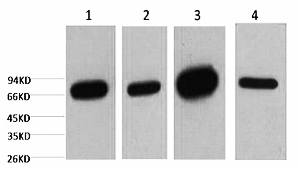
Abbkine's Anti-Lamin B1 Monoclonal Antibody (clone 15T1, ABL1090) enters this gap with specifications that reward the kind of close reading most antibody datasheets do not invite. The antibody was raised in mouse against a recombinant lamin B1 immunogen and affinity-purified from ascites by affinity-chromatography using the specific antigen. The 15T1 clone targets a conserved epitope on the lamin B1 protein, producing a single band at approximately 68 kDa in western blot without detectable cross-reactivity with other lamin isoforms—including lamin A/C, the most structurally homologous family member—or with cytoplasmic proteins. This is not a generic disclaimer about specificity. It is a monoclonal architecture that requires the antibody to recognize a single defined epitope absent from lamin A, lamin C, and all other intermediate filament proteins that populate the nuclear lamina and the cytoplasmic cytoskeleton. When the band appears at 68 kDa on a membrane loaded with whole-cell lysate, it reflects lamin B1 abundance, not a pooled lamin family signal.
The rationale for selecting lamin B1 specifically—rather than lamin A, lamin C, or a pan-lamin antibody—as a nuclear loading control deserves explicit articulation because it explains why the 15T1 clone exists at all. Lamin B1 is a core component of the nuclear lamina with stable expression across human, mouse, and rat, the three most widely used model organisms in biological research. Unlike lamin A/C, which is developmentally regulated and absent from embryonic stem cells and certain hematopoietic lineages, lamin B1 is expressed in essentially all somatic cells from embryogenesis onward. Vertebrate lamins consist of two types, A and B, with B-type lamins being the ancestral form present in all metazoans, and lamin B1 in particular functions as the structural scaffold upon which the inner nuclear membrane assembles. A loading control that is silent in your cell type of interest is not a loading control; it is a reagent valid only for the cell types the manufacturer chose to test. Lamin B1's near-universal somatic expression eliminates this variable.
The practical operational distinction between nuclear and cytoplasmic loading controls becomes visible the moment a nuclear fractionation step enters the experimental workflow. Cytoplasmic markers like β-actin or GAPDH fail to reflect nuclear protein loading in these contexts because they are depleted—by design—in the nuclear fraction. The result is a loading control that reports the efficiency of the fractionation rather than the protein content of the fraction being analyzed. For studies requiring nuclear-cytoplasmic fractionation or nuclear protein quantification, ABL1090 eliminates the risk of signal contamination from off-target binding, delivering accurate loading control data regardless of how the sample was fractionated. This is not a marginal improvement. It is the difference between normalization that validates the fractionation and normalization that confounds it.
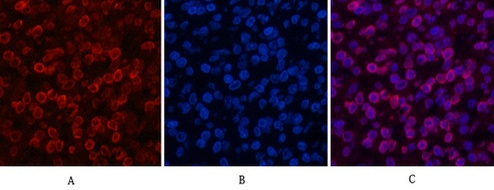
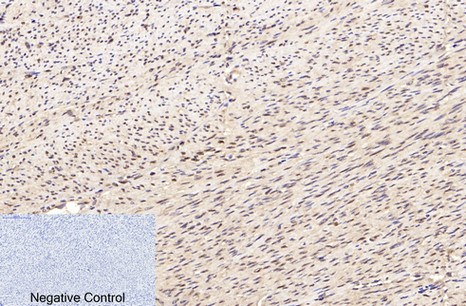
The application breadth of ABL1090 is specified as western blot, immunohistochemistry on paraffin-embedded tissue, immunofluorescence, and immunoprecipitation—four core immunoassay modalities spanning denaturing, native, cross-linked, and solution-phase antigen presentation. The recommended starting dilutions reflect genuine optimization rather than marketing optimism: 1:5,000–1:8,000 for western blot, 1:200–1:400 for immunofluorescence with overnight incubation at 4°C, EDTA buffer (pH 8.0) antigen retrieval for IHC on formalin-fixed paraffin-embedded tissue, and 1:50 for immunoprecipitation. An antibody that performs in denaturing western blot and native immunofluorescence has been tested against two fundamentally different antigen presentation states—linear epitope on membrane and conformational epitope in fixed cells—and the fact that clone 15T1 functions in both tells the user something about the accessibility of its epitope that a western-blot-only validation cannot provide.
Species reactivity spans human, mouse, and rat, the three mammalian species that account for the overwhelming majority of cell biology and preclinical research publications. The conserved epitope targeted by clone 15T1 ensures that the antibody recognizes lamin B1 across these species without requiring separate lot numbers or protocol adjustments for each organism. For a core facility processing western blots from human cell lines, mouse xenograft tissue, and rat brain homogenates in a single day, this cross-reactivity eliminates the logistical burden of maintaining separate nuclear loading control antibodies for each species.
Quality control specifications are stated quantitatively rather than aspirationally. Each production batch undergoes testing for batch-to-batch consistency with a signal-to-noise ratio variation below 12%, cross-reactivity screening against non-target proteins, and long-term stability verification confirming 18-month performance at -20°C. These are not industry-standard numbers; a signal-to-noise variation below 12% across production lots places ABL1090 in a performance tier above most loading control antibodies, whose batch-to-batch consistency is frequently unstated and therefore unaccountable. For a laboratory running quantitative western blots across a six-month project, the knowledge that the lamin B1 antibody used in January and the lamin B1 antibody used in June differ by less than 12% in their signal-to-noise ratio is the knowledge that the normalization denominator has not drifted over the course of the experiment.
Formulation and storage specifications reward a practical reading. The antibody is supplied as a liquid solution at 1 mg/mL in PBS, pH 7.4, containing 0.02% sodium azide as preservative and 50% glycerol as cryoprotectant. The glycerol depresses the freezing point, preventing ice crystal formation that denatures immunoglobulin protein during -20°C storage. Storage instructions specify 18-month stability at -20°C from the date of shipment, with centrifugation of the original vial after thawing and prior to cap removal recommended for maximum product recovery, and aliquoting advised to avoid repeated freeze-thaw cycles. The product ships on gel packs with blue ice and is priced at µ100 for the same volume.
The biological significance of lamin B1 extends far beyond its utility as a loading control, and this broader context explains why an antibody validated for quantitative nuclear normalization is also an antibody that can anchor an entire research program. A 2024 review in Cell Death Discovery comprehensively documented that LMNB1 maintains and ensures the stability of nuclear structure and influences the process of cell senescence by regulating chromatin distribution, DNA replication and transcription, gene expression, and cell cycle progression. LMNB1 has been strongly associated with the progression of various malignant tumors, including breast cancer where LMNB1 promotes proliferation and migration while inhibiting senescence, hepatocellular carcinoma, and melanoma where lamin B1 expression tightly relates to tumor progression and prognosis, and interfering with lamin B1 amplifies drug response through enhanced apoptosis and suppressed protective autophagy. A pan-cancer TCGA analysis found that high expression levels of lamin B1 are associated with decreased overall and disease-free survival, an association further pronounced when both B-type lamins are co-expressed. In senescence research, lamin B1 downregulation has emerged as one of the most reliable markers of therapy-induced senescence, with a 2025 study demonstrating that neoadjuvant chemotherapy reduced lamin B1 expression in breast cancer samples in 76% of patients.
The antibody that detects lamin B1 as a nuclear loading control is also, in a different experimental design, the antibody that could detect lamin B1 downregulation in senescent cells, lamin B1 overexpression in aggressive tumors, or lamin B1 mislocalization in laminopathies. A single reagent serves the chromatin biologist normalizing a histone modification blot, the cancer biologist quantifying lamin B1 as a prognostic biomarker, and the senescence researcher confirming the senescent phenotype of drug-treated fibroblasts. That versatility is not a marketing claim. It is the natural consequence of selecting a target whose abundance is stable enough to function as a loading control under most conditions and whose biological regulation is interesting enough to function as a target under the conditions where it changes.
The nuclear envelope is composed of the outer and inner nuclear membrane, nuclear pore complexes, and the nuclear lamina, a proteinaceous meshwork underlying the inner nuclear membrane that provides a framework for the nuclear envelope and may also interact with chromatin. Lamin B1 sits at the physical interface between the inner nuclear membrane and the peripheral heterochromatin, binding matrix attachment regions of DNA and tethering chromatin domains to the nuclear periphery. It is, simultaneously, a structural protein that determines nuclear shape and mechanical stiffness, a chromatin organizer that influences gene expression through peripheral positioning, and a cell-cycle-regulated intermediate filament that disassembles and reassembles with each mitotic division. A loading control that also participates in every one of these processes is a loading control that must be validated under the specific experimental conditions being tested—and an antibody whose specificity ensures that the measured signal originates from lamin B1 rather than from co-migrating lamin isoforms or cross-reactive chromatin proteins is the prerequisite for that validation to mean anything.
For the chromatin biologist whose nuclear extract loading has been normalized to a cytoplasmic protein that does not inhabit the compartment being analyzed, the cancer researcher quantifying lamin B1 as a prognostic biomarker in tumor tissue, the senescence biologist confirming lamin B1 downregulation in therapy-induced senescent cells, the cell biologist performing nuclear-cytoplasmic fractionation and requiring a marker that validates the fractionation rather than confounding it, and the core facility manager processing nuclear extracts from three species in a single day, ABL1090 provides monoclonal specificity for an epitope conserved across human, mouse, and rat, four validated applications, batch-to-batch signal variation below 12%, 18-month stability at -20°C, and a price of $79 for 50 µL. The nuclear loading control that your cytoplasmic markers keep failing to see is now a monoclonal antibody with a catalog number.
Explore specifications, view representative images, and place your order here: https://www.abbkine.com/product/anti-lamin-b1-monoclonal-antibody-15t1-abl1090/





