




The Loading Control That Refuses to Be Just a Loading Control
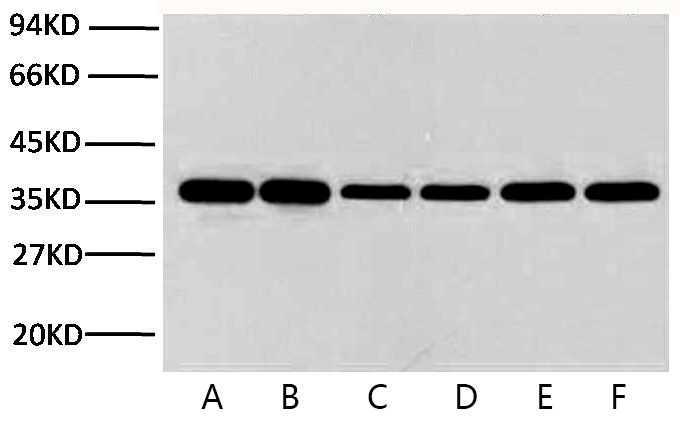
There is a particular kind of anxiety that visits every graduate student the first time they pipette 30 µg of precious whole-cell lysate into a gel lane, run the blot, transfer it overnight at 30 volts in a cold room that smells faintly of acetic acid, block the membrane in 5% milk for an hour, incubate with primary antibody, wash, incubate with secondary, wash again, add ECL substrate, and then watch a band appear at 37 kDa so dense and black it could double as a solar eclipse. That band is not the target protein they spent six months inducing. It is GAPDH. The loading control is so abundant it saturates the detector before the target protein becomes visible, and the student realizes, with a sinking feeling that will recur throughout their career, that the protein they loaded to prove they loaded equally has made the quantification impossible. This is the fundamental paradox of GAPDH as a loading control: its reliability as a normalization standard is undermined by the very property that recommended it as a normalization standard in the first place. It is expressed at such high levels that many published western blot images show saturated GAPDH bands, indicating the signal was not measured in the linear dynamic range—and a saturated loading control is not a control; it is a confound wearing a lab coat.
The solution to this paradox is not to abandon GAPDH. The solution is to use an antibody whose titer, affinity, and validation data allow working dilutions high enough to keep the signal within the linear detection window without sacrificing band clarity. Abbkine's Anti-GAPDH Mouse Monoclonal Antibody (2B5), catalog number ABL1020, is precisely such an antibody, and its specification sheet tells a story that rewards close reading.
The antibody was raised in mouse against a synthetic peptide immunogen and affinity-purified from ascites by affinity-chromatography using the specific immunogen. This is not a polyclonal serum where the GAPDH-recognizing IgG fraction constitutes a small percentage of the total immunoglobulin pool, requiring low dilutions that amplify background alongside signal. It is a monoclonal antibody of defined epitope specificity, clone 2B5, supplied as a liquid solution at 1 mg/mL in PBS, pH 7.4, containing 0.02% sodium azide and 50% glycerol. The recommended working dilutions begin at 1:10,000 for Western blot and extend to 1:100,000—a range that reflects genuine binding affinity rather than marketing optimism, and a range that enables researchers to titrate the antibody upward until the GAPDH signal exits the saturation zone and enters the linear range where densitometry actually means something. When the loading control band on a western blot is sharp, single, and positioned exactly at 37 kDa without ghost bands or hollow centers, the researcher is looking at the product of a monoclonal antibody used within its validated dilution window; when the band is a saturated black rectangle, they are looking at an antibody used at a dilution the manufacturer probably listed as "1:1000" on the datasheet. The difference between those two images is not subtle. It is the difference between data and a picture of data.
Clonality deserves its own section because the distinction between monoclonal and polyclonal antibodies maps directly onto the reproducibility crisis that has consumed quantitative western blotting for the better part of a decade. Polyclonal antibodies are pools of many immunoglobulin clones recognizing multiple epitopes on the same antigen, and their composition can vary from immunization to immunization and lot to lot, meaning a GAPDH polyclonal validated by a postdoctoral fellow in 2018 may recognize a subtly different epitope profile than the same catalog number ordered by a graduate student in 2024. Monoclonal antibodies produced via hybridoma technology recognize a single antigenic epitope and can be produced in large quantities with defined specificity, offering batch-to-batch consistency that polyclonals cannot match. For a loading control antibody—used in every single western blot a lab performs, for months or years, across experiments that will eventually be compared in the same figure panel—that consistency is not a luxury. It is the foundation upon which quantitative comparisons between experiments rest. ABL1020's monoclonal architecture ensures that the antibody a lab uses in January and the antibody it uses in September are, within the limits of hybridoma stability, the same reagent.
Batch-to-batch consistency has been quantified. Abbkine performs SDS-PAGE and densitometry testing across production lots, achieving less than 5% variation in signal intensity between batches. Five percent. When a reviewer questions whether the loading control normalization in Figure 3C introduced systematic error that inflated the apparent treatment effect, the answer must either cite batch-to-batch consistency data or admit that the answer is unknown. ABL1020 provides the citation-ready number.
The species reactivity panel is unexpectedly broad and deserves examination. The antibody reacts with GAPDH from chicken, dog, hamster, human, monkey, mouse, pig, rabbit, rat, sheep, and yeast. Eleven species, spanning mammals, birds, and fungi. This cross-reactivity profile is not arbitrary—GAPDH is among the most highly conserved proteins in eukaryotic evolution, with human GAPDH sharing extensive sequence homology with homologs from organisms as distant as Arabidopsis thaliana, and the antibody's broad reactivity reflects the conservation of the synthetic peptide immunogen across these species. For a core facility that processes samples from three different model organisms on the same day, or a translational laboratory comparing protein expression in patient-derived xenografts with the corresponding mouse stromal compartment, an antibody that works in human, mouse, and rat without requiring species-specific lot numbers eliminates a source of protocol fragmentation that wastes time and reagents.
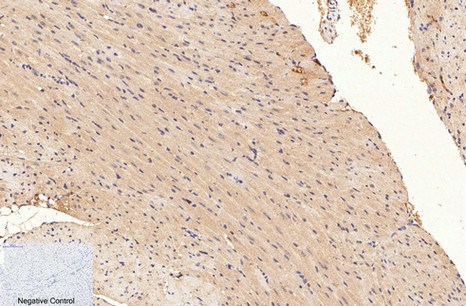
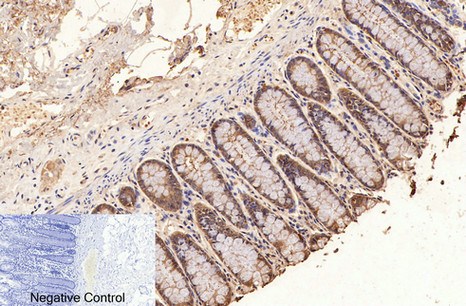
Applications extend beyond western blot. The antibody is validated for immunohistochemistry on paraffin-embedded tissue at 1:400 dilution, with representative images available for human colon, mouse heart, and rat kidney sections, and for immunofluorescence at the same dilution, with demonstration data in human colon and mouse liver tissue. The IHC and IF validations share the same clone and the same epitope recognition as the western blot application, meaning the tissue-level GAPDH localization data and the lysate-level GAPDH quantification data are generated by the same antibody recognizing the same protein—a methodological consistency that becomes relevant when a manuscript combines western blot loading controls with immunohistochemical confirmation of target protein expression in the same tissue type.
The publication record provides independent validation of a scale that internal QC data cannot replicate. At the time of writing, ABL1020 has been cited in 68 publications. These are not citations in predatory journals that accept anything with a p-value. The antibody appears in a study published in Nature (IF 48.5) examining STING agonist-based ER-targeting molecules for antigen cross-presentation, in Experimental & Molecular Medicine (IF 13) investigating serotonin-Htr2b signaling in skeletal muscle and obesity-induced insulin resistance, and in Materials Science and Engineering: C (IF 27) characterizing the effects of silica nanoparticles on adipogenic differentiation of human mesenchymal stem cells. When a laboratory at the level of a Nature publication selects a specific loading control antibody for experiments that will face the most rigorous peer review in the life sciences, that selection constitutes a validation more meaningful than any manufacturer's certificate of analysis. The 68 citations collectively represent thousands of individual western blot lanes, hundreds of experimental conditions, and a cumulative body of evidence that ABL1020 produces a clean, single band at 37 kDa in biologically diverse sample types.
The technical specifications reward a closer look. The antibody is supplied at 1 mg/mL, a concentration that provides approximately 100 µL of working solution at 1:10,000 dilution from a single microliter of stock. A 50 µL vial therefore yields roughly 500 mL of working solution when used at the recommended starting dilution—enough for approximately 50 standard western blot incubations in a 10 mL volume, depending on membrane size and container geometry. The formulation includes 50% glycerol as a cryoprotectant, which depresses the freezing point below -20°C and prevents ice crystal formation that denatures antibody protein. The 0.02% sodium azide preservative inhibits microbial growth during storage, eliminating the need for sterile filtration or aliquoting into single-use volumes for short-term use. Storage instructions specify stability for one year at -20°C from the date of shipment, with centrifugation of the original vial after thawing and prior to cap removal recommended for maximum product recovery, and aliquoting advised to avoid repeated freeze-thaw cycles.
What makes ABL1020 particularly interesting as a product is that it functions simultaneously as an extraordinarily practical laboratory reagent and as a window into the biological complexity of the protein it detects. GAPDH catalyzes the sixth step of glycolysis—the oxidative phosphorylation of glyceraldehyde-3-phosphate to 1,3-bisphosphoglycerate—and has done so in eukaryotic cells for roughly two billion years. That metabolic function alone would justify its evolutionary conservation and high expression level. But GAPDH is also a quintessential moonlighting protein, a single polypeptide chain capable of adopting structurally and functionally distinct roles depending on its subcellular localization, post-translational modifications, and binding partners. Cytoplasmic GAPDH regulates mRNA stability and is required for ER-to-Golgi vesicular trafficking. Nuclear GAPDH participates in transcriptional regulation, DNA repair, and the initiation of apoptosis. GAPDH is S-nitrosylated at its active-site cysteine, and this modification alters its enzymatic activity, its protein-protein interaction network, and its subcellular distribution. The same 37 kDa protein that a researcher normalizes against in a western blot is simultaneously a glycolytic enzyme, a transcriptional co-regulator, an apoptosis initiator, and a sensor of cellular redox state. When a treatment condition alters any of those non-glycolytic functions, the amount of GAPDH in the cell does not change—it is a loading control, after all—but its post-translational modification state and subcellular distribution may shift in ways that are optically invisible on a standard reducing SDS-PAGE gel but biologically significant. The antibody that detects GAPDH as a loading control is also, in a different experimental context, the antibody that could detect GAPDH as a moonlighting protein. ABL1020 serves both roles.
A practical note on experimental design: the very characteristics that make GAPDH valuable as a loading control—high abundance, constitutive expression, evolutionary conservation—also create the conditions under which it can fail as a normalization standard. A saturated GAPDH band cannot be used for quantification. If the target protein is of low abundance and requires loading 40–50 µg of total protein per lane to achieve a detectable signal, the GAPDH band may saturate the detector even at a 1:100,000 antibody dilution. The recommended corrective measure is to load less protein, but if the target protein's abundance precludes that, the alternative is total protein normalization using a stain-free detection system or a reversible total protein stain, which measures the entire protein signal in each lane rather than relying on a single housekeeping protein that may saturate before the target becomes visible. ABL1020's high recommended dilution range reduces the probability of saturation, but it does not eliminate it, and a researcher who ignores the linear dynamic range of their detection system while claiming GAPDH normalization has built their quantification on a saturated loading control—which is to say, on a number that is not a number.
The product ships on gel packs with blue ice, stores stably at -20°C for one year, and requires the standard precautions applicable to any affinity-purified monoclonal antibody: minimize freeze-thaw cycles, centrifuge before opening, aliquot if the full volume will not be consumed within a few uses. The antibody is for research use only and is not intended for diagnostic or therapeutic applications. Suggested applications and protocols are not recommendations to use the product in violation of any patent or as a license, and Abbkine cannot be responsible for patent infringements or other violations that may occur with the use of this product. These are standard legal disclaimers, stated transparently.
The loading control that has anchored more western blots than any other protein in the history of molecular biology can now be detected with a monoclonal antibody whose specifications—1:10,000 to 1:100,000 working dilution, eleven-species reactivity, less than 5% batch-to-batch signal variation, 68 peer-reviewed citations including Nature—make the saturated-band problem solvable rather than inevitable. The paradox of the loading control that refuses to stay within its lane is not resolved by the antibody alone. But the antibody determines the distance between the researcher and the paradox, and ABL1020 places that distance at the far end of a 1:100,000 dilution factor.
Explore specifications, view representative images, and place your order here: https://www.abbkine.com/product/anti-gapdh-mouse-monoclonal-antibody-2b5-abl1020/





