




The Lipoprotein That Still Demands to Be Measured Directly: Abbkine's KTE60050 and the End of the Calculated VLDL Era
Ten minutes spent in any clinical chemistry laboratory will teach you something unsettling about very low-density lipoprotein measurement: in most hospitals on most days, VLDL is not actually measured at all. The Friedewald equation—VLDL cholesterol equals triglycerides divided by five—was published in 1972 as a practical shortcut for a world that lacked direct lipoprotein quantification tools. Researchers and clinicians worked with calculation-based VLDL estimates that became clinically misleading the moment triglyceride concentrations exceeded 400 mg/dL, which happens routinely in patients with metabolic syndrome, type 2 diabetes, and familial hypertriglyceridemia. A 2022 study published in the Journal of Clinical Lipidology demonstrated that the Friedewald equation underestimates VLDL cholesterol by an average of 27% in patients with triglycerides between 200 and 400 mg/dL, and that the error becomes essentially uninterpretable above 400 mg/dL—precisely the patient population for whom VLDL quantification matters most. The equation is not a measurement. It is a concession to the difficulty of performing the measurement directly, and that concession has quietly shaped decades of clinical research and drug development in lipid metabolism.
What makes this continued reliance on a 1972 equation particularly striking is that VLDL is not a niche biomarker. It is the primary carrier of endogenously synthesized triglycerides in human plasma, the lipoprotein particle that the liver assembles from cholesterol, apolipoproteins, and triglyceride cargo, and the precursor that the circulatory system progressively remodels into intermediate-density lipoprotein and ultimately into low-density lipoprotein. Elevated VLDL concentrations are mechanistically linked to insulin resistance, non-alcoholic fatty liver disease, and atherosclerotic cardiovascular disease in studies spanning epidemiology, genetics, and pharmacology. The global lipid testing market was valued at over $12 billion in 2024 and is projected to grow at a compound annual growth rate of 5.8% through 2030, driven by the rising worldwide prevalence of obesity and type 2 diabetes. Yet beneath these numbers sits an incongruity that any researcher who has attempted VLDL quantification can describe: traditional detection methods have not kept pace with the biological questions being asked. Nuclear magnetic resonance spectroscopy delivers lipoprotein particle numbers with precision but requires instrumentation budgets that exclude all but the largest core facilities. Ultracentrifugation—the reference method against which all other VLDL measurements are theoretically calibrated—demands specialized equipment, extended run times, and per-sample processing that makes population-level cohort studies logistically prohibitive. Generic ELISA kits that claim cross-reactivity with VLDL frequently fail to distinguish it from other apolipoprotein-B-containing particles, generating signals that reflect LDL contamination as much as VLDL concentration.
Abbkine's Human Very Low Density Lipoprotein (VLDL) ELISA Kit (KTE60050) addresses this specificity gap directly, and the approach begins with antibody engineering rather than marketing language.
The kit employs a two-site sandwich ELISA architecture in which a capture antibody specific for human VLDL is pre-coated onto the microplate. Standards and samples are introduced, and any VLDL present is immobilized by the capture antibody. After a wash step removes unbound material, a biotin-conjugated detection antibody recognizing a distinct VLDL epitope is added, followed by streptavidin-conjugated horseradish peroxidase. A chromogenic substrate then develops color in direct proportion to the amount of VLDL captured in the initial step. The color development is stopped, and the absorbance intensity provides a quantitative readout of the VLDL concentration in each well. The entire assay—from the first reagent equilibration to the final plate reader export—requires three to five hours, depending on operator experience, which positions it as a same-day experiment rather than a multi-day protocol.
The specificity specification is the dimension that most directly distinguishes KTE60050 from the generic lipoprotein ELISA kits that populate the market. No significant cross-reactivity or interference between human VLDL and structurally analogous lipoproteins was observed. This is not a standard disclaimer. The apolipoprotein B-containing lipoprotein family includes VLDL, intermediate-density lipoprotein, LDL, and chylomicrons, all of which share apoB as a structural scaffold and differ primarily in density, size, and triglyceride-to-cholesterol ratio. An ELISA that cannot distinguish VLDL from LDL is measuring the summed concentration of two independently regulated lipoproteins, which is analytically equivalent to reporting a single number for combined systolic and diastolic blood pressure. The dual-antibody sandwich design of KTE60050 requires both the capture and detection antibodies to engage the target for signal generation, and this dual-recognition architecture achieves lipoprotein specificity that single-antibody detection formats cannot replicate.
Sample compatibility spans the biological matrices that lipid metabolism researchers actually use: serum, plasma, cell culture supernatants, and other biological fluids. Serum and plasma are the canonical sample types for systemic VLDL quantification, and the kit accommodates both without requiring separate validation protocols. Cell culture supernatant compatibility extends the kit's utility to the bench researcher studying hepatic VLDL assembly and secretion in primary hepatocyte models or hepatoma cell lines—the experimental systems in which the molecular mechanisms of VLDL biogenesis, apolipoprotein lipidation, and triglyceride incorporation are most directly interrogated. The inclusion of "other biological fluids" in the compatibility statement accommodates specialized sample types such as hepatocyte-conditioned medium from microfluidic liver-on-a-chip systems and interstitial fluid collected by microdialysis, without requiring separate matrix validation for each application.
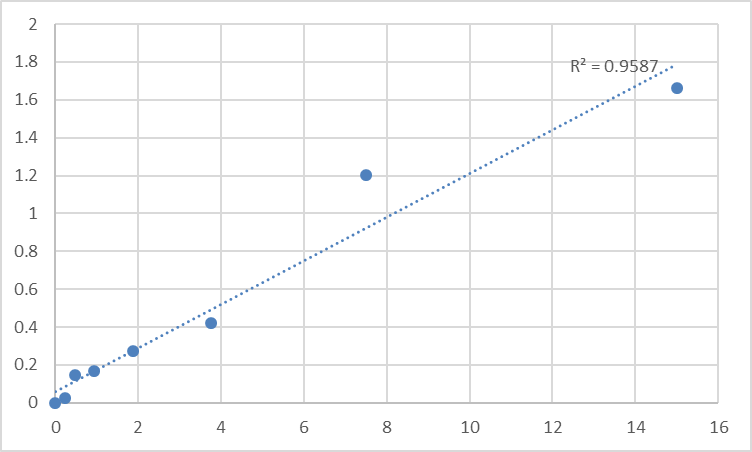
The analytical specifications position the kit within the concentration range that metabolic research actually demands. The calibration range is specified as 1.56 ng/mL to 100 ng/mL, with a limit of detection below 1.0 ng/mL. At sub-nanogram-per-milliliter sensitivity, KTE60050 captures VLDL at concentrations that fall well below the detection floor of clinical turbidimetric assays, which typically bottom out in the microgram-per-milliliter range and are unsuitable for the dilute biological matrices—cell culture supernatants, cerebrospinal fluid, tissue interstitial fluid—in which lipoprotein concentrations are a small fraction of plasma levels. The upper boundary of 100 ng/mL accommodates the physiological VLDL range in human plasma after appropriate dilution, meaning a single kit serves the researcher who needs to quantify VLDL across the full spectrum from quiescent tissue to pathological hypertriglyceridemia.
The component list reflects a complete sandwich ELISA system that ships ready for same-day deployment: Human VLDL microplate, Human VLDL standard, Human VLDL detect antibody, Streptavidin-HRP, standard diluent, assay buffer, HRP substrate, stop solution, wash buffer, and plate covers. The unopened kit stores at 2–8°C, requiring no -20°C freezer space and subjecting the capture antibody to none of the freeze-thaw cycling that progressively degrades binding affinity in kits stored under suboptimal conditions. Shipping occurs on gel packs with blue ice. The protocol notes reflect operational discipline accumulated through the manufacture and testing of many sandwich ELISA kits rather than generic laboratory disclaimers: all reagents must warm to room temperature for at least 30 minutes before opening, pipette tips must be pre-rinsed and replaced between samples and standards to prevent carryover contamination, thorough mixing every 10 minutes is specified as critical for result quality, and all standards and samples should be assayed in duplicate or triplicate. These are the operating procedures that separate a standard curve with an R² above 0.99 from a dataset that a reviewer will question.
The publication record currently stands at early-stage citations, a status the product shares with most recently launched ELISA kits before the research community has had time to independently validate and publish results. What drives adoption is not the citation count at launch but the combination of analytical specificity, detection sensitivity, sample type flexibility, and protocol reproducibility—all of which are documented in KTE60050's technical specifications. The kit enters a research landscape where the Friedewald equation's shortcomings are well characterized, where NMR-based lipoprotein profiling is financially inaccessible to most laboratories, and where the need for a direct, specific, and affordable VLDL quantification method spans cardiovascular epidemiology, metabolic disease pharmacology, hepatology, and lipid metabolism research.
The broader research context continues to expand the scientific case for direct VLDL measurement. A landmark 2024 study published in Nature Communications demonstrated that apolipoprotein C-III inhibits hepatic triglyceride lipase, blocking VLDL-to-LDL conversion and elevating circulating VLDL levels in a manner that conventional lipid panels—which report total triglycerides without distinguishing VLDL-triglyceride from chylomicron-triglyceride—could not resolve. A 2020 study in Diabetologia using direct VLDL quantification showed that VLDL-triglyceride secretion rate is the strongest predictor of hepatic steatosis severity in nondiabetic obese individuals, a finding that would have been obscured by calculated VLDL estimates. Metabolomic and proteomic profiling studies have increasingly identified VLDL particle number, size distribution, and apolipoprotein composition as independent predictors of cardiovascular events beyond the information carried by LDL cholesterol alone, and these findings depend entirely on the availability of measurement tools that distinguish VLDL from other apoB-containing lipoproteins with analytical specificity. In drug development, lipid-lowering agents including PCSK9 inhibitors, ANGPTL3 inhibitors, and apoC-III antisense oligonucleotides require VLDL quantification in preclinical models and clinical trial samples to establish mechanism of action—a requirement that calculated estimates cannot satisfy.
For the cardiovascular epidemiologist conducting a prospective cohort study in which VLDL is a primary exposure variable, the hepatologist characterizing VLDL assembly and secretion in a non-alcoholic fatty liver disease model, the pharmacologist screening lipid-lowering compounds in a high-throughput hepatocyte assay, the metabolic disease researcher investigating VLDL as a biomarker of insulin resistance progression, or the basic scientist performing any experiment in which hepatic lipid export is a variable rather than a confound, direct VLDL quantification is not an optional upgrade from calculated estimates. It is the measurement that separates a surrogate from a primary endpoint, and it is the data point that a reviewer will request when the manuscript relies on VLDL values derived from a 1972 equation that was never validated in the population being studied.
The lipoprotein particle that the liver assembles from triglycerides and cholesterol, releases into the circulation as the primary vehicle for endogenous lipid transport, converts progressively into intermediate-density and low-density lipoproteins, and serves as a biomarker and mechanistic mediator in metabolic disease from insulin resistance to atherosclerotic cardiovascular disease—that particle can now be quantified directly, specifically, and affordably in a standard sandwich ELISA format. The Friedewald equation was published over fifty years ago. A direct measurement is long overdue.
Explore specifications, access the protocol, and place your order here: https://www.abbkine.com/product/human-very-low-density-lipoprotein-vldl-elisa-kit-kte60050/





