




The 129-Aa "Th2 Signature" That's Secretly Running Macrophage M2 Reprogramming and Tumor Immune Evasion: Why Your Mouse IL-4 Readout Needs a 15 pg/mL Floor — And How KTE7007 Puts the Anti-Inflammatory Cytokine on a 450 nm Curve You Can Defend
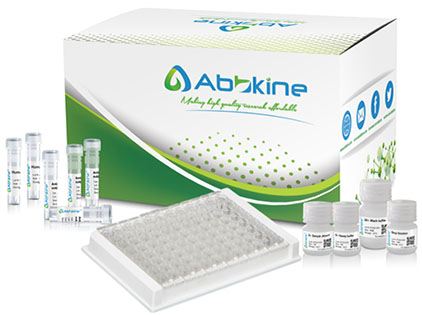
If there's one cytokine whose Wikipedia lede has done it the biggest disservice, it's IL-4 (Interleukin-4, alias BSF-1/B cell stimulatory factor 1, UniProt: P07750, Gene ID: 16189, Il4). Most grad students can rattle off "Th2 signature, IgE class switching, allergy" in their sleep — but that three-word label buries the fact that IL-4 is also the master switch for alternative (M2) macrophage activation, the cytokine that tells tumor-associated macrophages (TAMs) to swap killing for stromal remodeling, and the gatekeeper of regulatory T cell (Treg) stability in the gut and skin. It's a 129-aa, ~15–17 kDa secreted glycoprotein (two potential N-linked glycosylation sites mean it runs as a ~14 kDa / ~17 kDa doublet on reducing gels) that binds the IL-4Rα/γc heterodimer (type I, hematopoietic-restricted) or IL-4Rα/IL-13Rα1 (type II, epithelial/endothelial/fibroblast-expressed) to fire JAK1/JAK3 → STAT6 → GATA3 — the transcriptional axis that defines not just Th2 differentiation, but every "repair/anti-inflammatory" macrophage phenotype in the mouse house. Critically, mouse IL-4 shares only ~70% sequence identity with its human ortholog, and <30% homology with mouse IL-13 (its receptor-sharing cousin) — which means any "pan-species" readout that isn't validated for mouse will either under-read your samples or misattribute IL-13 signal as IL-4. The EliKine™ Mouse IL-4 ELISA Kit (KTE7007) from Abbkine exists because "we saw 10% IL-4⁺ Th2 by intracellular FACS" is a cell-population read, not a secreted-dose read — and if your paper claims "M2 polarization happened" or "Treg suppression was IL-4-dependent," you need pg/mL secreted IL-4 interpolated from a sandwich curve, not a flow dot plot.
IL-4 in One Paragraph: The Early Th2 Driver That Also Runs the M2/Treg Axis (And Why It's Not Just "Allergy")
IL-4 was first cloned in the 1980s for its B-cell class-switch activity (hence the BSF-1 legacy name), but the subsequent three decades revealed its heavier lifts beyond IgE:
Cell Source (steady state → activation) Key Downstream Effects Why It Matters for Non-Allergy Models
Naive CD4⁺ → Th2 (GATA3-driven), basophils, mast cells, eosinophils, TAMs, epithelial cells Th2 differentiation, B cell IgG1/IgE switch, M2 (Arg1/Fizz1/Ym1) macrophage programming, Treg stability (skin/gut), fibroblast activation Worm clearance, TME immune suppression, pulmonary/hepatic fibrosis, atopic dermatitis, checkpoint blockade resistance
The secretion logic is worth flagging for assay design: unlike IL-1β (which needs inflammasome cleavage) or IFN-γ (which is stored in granules), IL-4 is constitutively secreted by polarized Th2s and M2s at low baseline (~<50 pg/mL in unstimulated supernatants) spiking to 500–2000 pg/mL after anti-CD3/CD28 restimulation, OVA challenge, or IL-33/IL-25 2-type priming — which means your assay needs a low LOD to catch the whisper before the spike, and a dynamic range that doesn't saturate on strong stimuli.
Why a Mouse-Specific Sandwich ELISA — And Why "ICS/ELISPOT/CBA" Leave Money on the Table
Three practical reasons the gel/WB/CBA-only approach fails for IL-4 specifically:
- Intracellular FACS (ICS) and ELISPOT tell you which cell made IL-4, but not how much accumulated in the microenvironment — and in paracrine models (M2 reprogramming, TME TAM crosstalk, airway allergic inflammation), the concentration bathing neighboring cells is what drives Arg1 upregulation or Treg conversion, not the percentage of IL-4⁺ CD4s.
- CBA (cytometric bead array) mouse Th1/Th2 panels often have a 50–100 pg/mL LOD for IL-4, which misses baseline/resting samples and low-grade 2-type activation — a dealbreaker for models like mild OVA sensitization or early worm infection.
- Mouse IL-4's 70% human divergence and low IL-13 cross-reactivity demand a paired mAb sandwich that locks onto two non-overlapping mouse IL-4 epitopes — generic "IL-4" antibodies raised against human antigen will either not bind mouse IL-4 or grab IL-13 by mistake.
The KTE7007 architecture is the canonical EliKine™ mouse cytokine build, validated specifically for Mus musculus IL-4:
- Microplate pre-coated with a high-affinity mouse IL-4-specific capture mAb (epitope optimized to avoid IL-13 cross-reactivity, even at high IL-13 concentrations).
- Standards (NIBSC-traceable recombinant mouse IL-4) + samples — cell culture supernatants, serum, plasma (EDTA/heparin), bronchoalveolar lavage (BALF), tissue homogenates, other biological fluids — added → IL-4 binds.
- Wash → biotinylated anti-mouse IL-4 detection mAb (different epitope from capture) → EliKine™ Streptavidin–HRP → TMB → stop → 450 nm → interpolate pg/mL from a 4-parameter logistic (4-PL) fit of the 8-point standard curve.
Consolidated specs from Abbkine's distributor/technical records for KTE7007:
Parameter KTE7007 – EliKine™ Specification
Target Mouse IL-4 (UniProt P07750, Gene 16189)
Format 96-well sandwich ELISA, pre-coated capture (双抗体夹心法)
Detection Biotin-Ab → EliKine™ SA–HRP → TMB, 450 nm
Dynamic Range 15.6 – 1000 pg/mL
Sensitivity / LOD ~15 pg/mL
Intra-Assay CV < 8%
Inter-Assay CV < 10%
Recovery (serum/supernatant) 95–105%
Specificity No significant cross-reactivity with mouse IL-2, IL-5, IL-13, IFN-γ, TNF-α at physiological levels
Samples Cell culture supernatants, serum, plasma (EDTA/heparin), BALF, tissue homogenates, other biological fluids
Assay time ~2.5–3.5 hours
Storage (unopened) 2–8°C, sealed plate strips 4°C with desiccant
(Confirm exact standard traceability and dilution factors on the shipped Abbkine datasheet/CoA for KTE7007; most lots use NIBSC 88/656 or equivalent reference.)
The Prep Rule: IL-4 Is Stable, But Don't Let Serum/Medium Artifacts Drag Your 15 pg Floor
IL-4 is relatively robust compared to labile peptides (stable at 4°C for 24 h, -20°C for months), but the low-pg range means you need to respect two variables:
• Cell culture supernatants (the #1 matrix): harvest 24–72 h post-stimulation (anti-CD3/CD28, PMA/iono, IL-33, worm antigen), spin ≥ 10,000 ×g, 5 min, 4°C to drop cells/debris, take clear sup, store -80°C, avoid >1 freeze–thaw. Keep serum-free or ≤ 2% FBS (qualified FBS is IL-4-negative, but run a medium-only blank to catch background drift). For M2 induction assays: if you're adding exogenous IL-4 (20 ng/mL) to polarize BMDMs, you'll need to either wash out unbound IL-4 before the 24 h harvest or validate that the kit's standard curve can distinguish exo from endo (most don't — better to use a de novo M2 model like TCM/IL-33 to measure endo IL-4 secretion).
• In vivo fluids (BALF, serum, tissue homogenate): BALF collected in 5 mL cold PBS + 0.1% BSA/EDTA → spin → sup; tissue (lung, spleen, tumor) homogenized cold in PBS + PI → spin 12,000 ×g 15 min → sup → BCA normalize to mg protein. EDTA plasma preferred for systemic readouts (e.g., helminth infection timecourses), spun within 60 min of draw, aliquoted, -80°C.
Warm reagents ≥ 30 min RT before opening; protect TMB from light; stop uniformly; read 450 nm promptly; fit 4-PL; run full standard curve per plate — competitive/capture curves for 15 pg LOD need the B0 (zero standard) anchor to stay tight.
Where Mouse IL-4 ELISA Actually Carries the Paper (Beyond "Allergy Was Reduced")
- OVA/HDM Asthma & 2-Type Airway Inflammation — The BALF Gold Standard
This is the canonical IL-4 model. OVA-sensitized → challenged mice have BALF IL-4 50–500 pg/mL correlating with eosinophil count, mucus metaplasia (PAS score), and AHR (methacholine PC₅₀). The rigorous readout pair is: BALF IL-4 (KTE7007, pg/mL) + serum OVA-IgE + lung Gata3/Il4/Il13 qPCR + H&E/PAS — if you're testing a 2-type blocker (anti-IL-4Rα, ST2 antibody, CRTH2 antagonist), the BALF IL-4 drop is the primary pharmacodynamic endpoint reviewers expect. Pro tip: pair with IL-13 ELISA to split "early Th2 (IL-4) vs. late epithelial remodeling (IL-13)" — KTE7007's no-IL-13-cross-reactivity means you can run both on the same sample batch without signal bleed.
- Helminth Infection & Th2 Immunity — The "Natural" IL-4 Axis
Nippostrongylus brasiliensis (intestinal nematode) or Schistosoma mansoni (blood fluke) infection → Th2 priming → splenocyte/mesenteric LN restimulation IL-4 200–2000 pg/mL by day 7–10. Il4⁻/⁻ mice can't clear worms and have defective basophil/eosinophil recruitment — quantifying serum/supernatant IL-4 by KTE7007 is the gold-standard validation of Th2 priming in genetic or vaccine models (e.g., adjuvant comparison for recombinant worm antigen candidates).
- M2 Macrophage Polarization & TME Immune Evasion
This is where IL-4's "non-allergy" weight lives. BMDMs treated with IL-4 20 ng/mL for 48 h → endo IL-4 secretion (autocrine loop) + Arg1/Fizz1/Ym1 upregulation; in TME models, F4/80⁺CD206⁺ TAMs sorted from syngeneic tumors (LLC, B16, MC38) secrete 10–100 pg/mL IL-4 in ex vivo culture, which correlates with CD8⁺ T cell exhaustion (PD-1/TIM-3 ↑) and Treg infiltration. If you're testing a TAM-reprogramming agent (e.g., CSF-1R inhibitor, CD40 agonist), report TAM-supernatant IL-4 (pg/mg protein) alongside Arg1, iNOS, and CD8⁺ IFN-γ to prove you shifted the M1/M2 balance, not just "changed marker expression."
- Pulmonary/Hepatic Fibrosis — The IL-4/IL-13 Split
Bleomycin lung fibrosis or CCl4 liver fibrosis → early 2-type activation (IL-33/IL-25 from injured epithelium) → IL-4 primes Th2 and M2, while IL-13 drives late fibroblast activation. Lung homogenate/supernatant IL-4 (KTE7007, ng/g tissue) correlates with early collagen deposition (Hydroxyproline) and α-SMA⁺ myofibroblast count — and if you're testing an antifibrotic (e.g., pirfenidone, anti-IL-4Rα), the IL-4 drop at day 7–14 is the early efficacy signal before collagen peaks.
- Atopic Dermatitis (AD) & Skin Treg Stability
MC903 (calcipotriol) or house dust mite (HDM) epicutaneous challenge → skin Th2/Treg axis → IL-4 secretion from dermal DCs and Th2s drives itch (GRPR signaling), epidermal hyperplasia, and Treg stability (IL-4 prevents Treg conversion to Th17 in the skin). Skin homogenate/supernatant IL-4 (pg/mg) + serum CCL17 (TARC, Th2 chemoattractant) + scratching behavior is the standard triad for AD therapeutic screens (e.g., JAK1/2 inhibitors, IL-4Rα blockers like the murine equivalent of dupilumab).
- Genetic/Checkpoint Validation
If you're editing Il4 (T cell-specific Cre-loxP, germline heterozygote) or Stat6, report % IL-4 secretion remaining ± SEM from the calibrated KTE7007 curve (pg/mL → normalized to cell input), and close the loop with Gata3 IF, IgE titers, and worm clearance/asthma AHR so the edit's functional consequence is airtight. For checkpoint models: anti-PD-1 in 2-type-high TMEs (e.g., B16-F10 with IL-4⁺ TAMs) often fails compared to Th1-high TMEs — quantifying tumor IL-4 mass (ng/g) alongside CD8⁺ Granzyme B is the variable that explains why the PD-1 blocker didn't work.
A Minimal Protocol Skeleton You Can Paste Into Methods
- Supernatants/BALF: harvest at programmed timepoint, spin ≥ 10,000 ×g, 5 min, 4°C, collect clear sup, -80°C, avoid >1 freeze–thaw. Include medium-only/BALF-PBS blanks.
- Serum/plasma: EDTA, wet ice, spin ≥ 2,000 ×g, 10 min, 4°C within 60 min, aliquot, snap -80°C, single thaw.
- Tissue: homogenize frozen tissue in cold PBS + PI → spin 12,000 ×g, 15 min, 4°C → sup → BCA normalize to mg protein.
- Dilute into kit assay buffer per manual (stimulated supernatants often run neat or 1:2–1:5 inside the 15.6–1000 pg/mL window; undiluted serum may need 1:5 dilution to drop matrix interference).
- Warm reagents ≥ 30 min RT before opening; protect TMB from light; stop uniformly; read 450 nm promptly; fit 4-PL; run full standard curve per plate.
The Bottom Line
IL-4 is the 129-aa, ~15–17 kDa glycoprotein that wears a "Th2/allergy" T-shirt but does the heavy lifting for M2 macrophage reprogramming, Treg stability, and TME immune evasion — and because mouse IL-4 shares only 70% homology with human IL-4 and minimal cross-reactivity with IL-13, your readout needs a mouse-specific sandwich ELISA that can catch the 15 pg/mL baseline whisper before the 2000 pg/mL stimulus spike. The EliKine™ Mouse IL-4 ELISA Kit — KTE7007 from Abbkine delivers that readout: pre-coated anti-mouse IL-4 capture → biotin detection → EliKine™ SA–HRP → TMB → 450 nm → pg/mL interpolated, over a 15.6–1000 pg/mL calibrated range with LOD ~15 pg/mL (Intra CV < 8%, Inter CV < 10%, 95–105% recovery), in a ~2.5–3.5 hour workflow that scales from an OVA-BALF cohort to a TME TAM screen without chaining you to a CBA or densitometer.
Product Reference: KTE7007 – EliKine™ Mouse IL-4 ELISA Kit
Learn more and order: https://www.abbkine.com/product/elikine-mouse-il-4-elisa-kit-kte7007/
(For Research Use Only; not for diagnostic procedures in humans.)





