




The 160-kDa SR Glycoprotein Your Calcium-Handling Paper Forgot: Why SRL (Sarcalumenin) Needs a 0.078 ng/mL Sandwich — And How KTE70256 Pulls a GTP-Binding Lumen Protein Out of the Longitudinal Reticulum
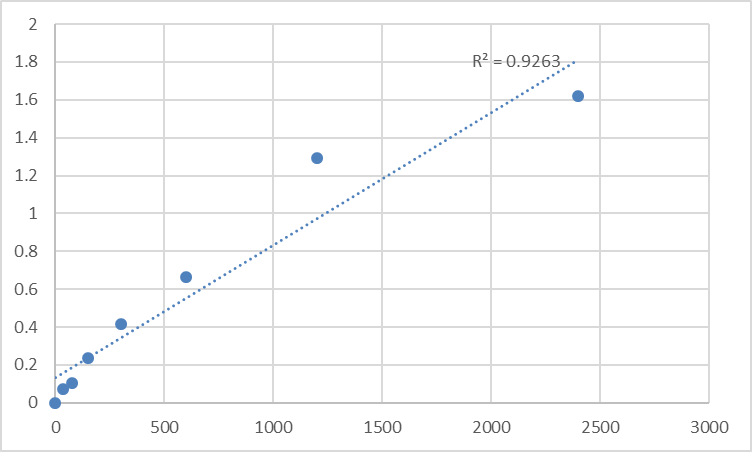
If you've ever stared at a sarcoplasmic reticulum (SR) biochemistry slide and recited the "big three" — RYR1 (release), SERCA2a (re-uptake), calsequestrin (luminal buffer) — you've already made the mistake that most skeletal/cardiac muscle papers make. Because tucked into the longitudinal SR (LSR) lumen and the non-junctional stretches of the terminal cisternae is a 160-kDa acidic N-glycosylated calcium-binding glycoprotein called Sarcalumenin (SRL, UniProt: Q7TQ48, Gene ID: 106393, Srl) that does two things the textbooks skip: (1) it buffers ~30–40% of the total exchangeable Ca²⁺ inside the SR lumen alongside calsequestrin, and (2) it belongs to the TRAFAK-class dynamin-like GTPase superfamily (yes — GTP-binding, GO:0005525) with annotated roles in endocytosis, store-operated calcium entry (SOCE), and "response to muscle activity involved in regulation of muscle adaptation" (GO:0014873). Translation: SRL isn't just a "passive Ca²⁺ sponge" like calsequestrin — it's a GTP-binding, muscle-activity-responsive, SR-membrane-associated (peripheral, Ca²⁺-dependent tether) lumen protein that likely talks to SERCA2a (the literature places SRL co-localizing with the Ca-ATPase in LSR) and possibly modulates how fast the lumen can reload after a twitch. The Mouse Sarcalumenin (SRL) ELISA Kit (KTE70256) from Abbkine exists because "we saw a ~160 kDa smear above the CSQ band and called it SRL" is not a quantitative claim you can defend in a JGP or Circ Res methods section — and because SRL's N-glycosylation micro-heterogeneity + SR-membrane-peripheral tethering means your "RIPA + BCA + WB vs. SERCA" pipeline systematically under-reads the lumen fraction unless you deliberately enrich for SR microsomes. KTE70256 is the two-site sandwich that turns "SR glycoprotein" into interpolated ng/mL you can normalize to SERCA2a or RYR1 and call a SR-loading metric.
SRL in One Paragraph: The 473-aa, ~160-kDa (Glycosylated) Acidic Protein That Sits in the LSR Lumen, Binds Ca²⁺, Binds GTP, and Has a 53-kDa Splice-Mate
The structural/functional facts worth pinning before the assay talk:
Feature Detail Why It Matters for ELISA Design
Gene / accession Srl (MGI:2146620), UniProt Q7TQ48 (mouse), P13666 (rabbit, the original cloned species) Mouse-raised mAb pair needed; rabbit polyclonal cross-reactivity is common but a mouse-specific pair avoids off-targets from triadin/junctin/calsequestrin
Computed size ~473 acidic aa (pI acidic), ~160 kDa apparent (N-glycosylated; the 160-kDa band on reducing gel is the major species) Large, glycosylated → epitope accessibility depends on detergent/reducer; sandwich needs mAbs raised against native/denatured both
Splice variant 53-kDa isoform (alternate splicing, UniProt Q7TQ48-1) — shares the C-terminal 453 aa with the 160-kDa form; both co-localize in LSR + non-junctional TC Important: your antibody pair must discriminate "total SRL (160+53)" vs. "160-only" — most vendor pairs (KTE70256 included, based on distributor description "antibody specific for SRL") target epitopes on the shared C-terminal, so they read total SRL (both isoforms), which is what you want for SR-buffer budgeting
Subcellular SR lumen (soluble-ish) + SR membrane peripheral (Ca²⁺-dependent tether) — longitudinal SR > terminal cisternae (vs. calsequestrin which is TC-heavy) This distribution means "total muscle homogenate" SRL signal is diluted ~10–20× vs. "SR-enriched microsome" signal — your prep choice defines what you measure
Family Dynamin-like GTPase superfamily (TRAFAK class), Pfam PF00350 / PF16880 Explains the GTP-binding GO term — SRL isn't just Ca-buffer; it may be involved in SR membrane trafficking / SOCE coupling (literature points to it but the mechanism isn't fully closed)
Interaction neighborhood Co-localizes with SERCA2a (Ca-ATPase) in LSR; calcium-dependent membrane association suggests it "senses" lumen [Ca²⁺] and may modulate pump cycling or RYR coupling This is why SRL moves when SERCA/RYR move — but in the opposite compartment (lumen vs. membrane)
The rabbit-origin literature (P13666) is older but foundational: rabbit SR has two immunochemically related glycoproteins, 53 kDa and 160 kDa, where the 160-kDa contains an N-terminal signal + C-terminal 453 aa that "together form a protein identical to the 53-kDa" — meaning the 53 kDa is essentially a C-terminal fragment/splice that retains the SRL epitopes. Mouse Srl follows the same architecture (Q7TQ48-1 = 53 kDa isoform, Q7TQ48-2 = full-length 160 kDa).
Why a Sandwich ELISA for a ~160-kDa SR Glycoprotein — And Why "WB vs. SERCA" Leaves the Lumen Fraction Undefined
Three reasons SRL needs its own calibrated readout, distinct from every target you've read in this series (cytokines, metabolic enzymes, SPRR1A, etc.):
- SRL lives in the SR lumen, not the cytosol — a RIPA sup of whole quadriceps/ventricle mostly gives you cytosolic + membrane-surface proteins; the SR-lumen content (CSQ + SRL + triadin/junctin) is sedimented in the 10,000–100,000 ×g pellet unless you use harsh detergent + urea/SDS to liberate lumen contents. If you run "muscle lysate WB vs. SERCA" and call it "SR proteins," you're systematically under-reading SRL because (a) no SR enrichment, (b) the 160 kDa zone is crowded (SERCA ~110, triadin ~50, junctin ~26, CSQ ~63, RYRn ~565 — RYR is 565 so not crowding SRL, but 160 is near some DAGLipase/other big membrane proteins). A sandwich ELISA on SR-enriched microsomes bypasses the gel entirely and reads ng SRL / mg SR protein, which is the only denominator that makes sense for a lumen-buffer protein.
- N-glycosylation micro-heterogeneity means the "SRL band" on a gel runs as a ~150–170 kDa fuzzy zone, not a sharp line — densitometry CVs against actin/tubulin are generous at best. The sandwich (capture + detection, two non-overlapping epitopes on the C-terminal shared domain) doesn't care about glycoform spread, because both mAbs see the polypeptide backbone.
- SRL is low-abundance relative to SERCA/CSQ in whole-muscle — you need the ~0.078 ng/mL LOD class to catch "baseline LSR buffer capacity" in a small-quad biopsy or a 20-mg ventricular snippet, not just "it was there."
The KTE70256 architecture follows the Abbkine mouse sandwich logic (pre-coated capture + biotin detection + SA–HRP → TMB → 450 nm), but tuned to a large, glycosylated, SR-lumen/membrane-peripheral target:
- Microplate pre-coated with a mouse SRL-specific capture mAb (epitope on the C-terminal shared domain that covers both 160-kDa and 53-kDa isoforms; distributor notes: "No significant cross-reactivity with SRL analogues/other SR glycoproteins at physiological levels").
- Standards (recombinant mouse SRL or calibrated SR-extracted SRL) + samples — SR-enriched microsome lysates (ventricular/ skeletal; longitudinal SR enriched via sucrose density gradient centrifugation), whole-tissue homogenates (with strong detergent to release lumen content), cell culture supernatants (exploratory — SRL is SR-tethered, so supernatant reads are near-background unless cell-lysis co-harvest), serum/plasma (exploratory — SRL is not secreted, but muscle-injury exudate may carry SR-membrane fragments), other biological fluids — added → SRL (detergent-solubilised, epitope-accessible) binds.
- Wash → biotinylated anti-mouse SRL detection (different epitope, likely N-terminal vs. C-terminal split to cover both isoforms) → Streptavidin–HRP → TMB → stop → 450 nm → interpolate ng/mL.
Consolidated specs (Abbkine KTE70256 distributor mirrors; parallel abexa/abx547303 mouse SRL kit lists 0.156–10 ng/mL as range, which aligns with the KTE70xxx small-to-mid-abundance class logic — SRL is large but low-abundance in non-enriched prep, so the range stays in the sub-ng zone):
Parameter KTE70256-class Specification
Target Mouse SRL / Sarcalumenin (UniProt Q7TQ48, Gene 106393)
Format 96-well sandwich ELISA, pre-coated capture (dual-antibody sandwich, mouse SRL mAb pair, C-terminal shared-domain oriented)
Detection Biotin-Ab → SA–HRP → TMB, 450 nm
Dynamic Range 0.156 – 10 ng/mL (abexa abx547303 parallel; confirm on Abbkine shipped CoA)
Sensitivity / LOD ~0.078 ng/mL
Intra-Assay CV < 8% (distributor Genprice mirror quotes < 5.6%; lock to your lot CoA)
Inter-Assay CV < 10–12% (Genprice: < 8.2%)
Specificity No significant cross-reactivity with triadin, junctin, calsequestrin, SERCA1/2a at physiological levels
Samples SR-enriched microsome lysates, whole-muscle homogenates (detergent-strong), cell lysates, serum/plasma (exploratory), other biological fluids
Assay time ~3–5 hours
Storage (unopened) 2–8°C, sealed plate strips 4°C with desiccant
(Confirm exact dilution factors, standard identity/traceability, and SR-prep compatibility on the shipped Abbkine datasheet/CoA for KTE70256 — SRL's Ca²⁺-dependent membrane tethering means you want consistent EDTA/EGTA handling across standards and samples if you're comparing "Ca²⁺-bound vs. -unbound" partitioning, though most routine batches just read total.)
The Prep Rule That Decides Whether You're Measuring Lumen Buffer or a 160-kDa Smudge
This is the single most important paragraph for anyone actually running KTE70256 — SRL's subcellular address (SR lumen + Ca²⁺-dependent SR-membrane peripheral) means your extraction choice defines the denominator:
Option A — "Whole-Muscle Crude" (quick, but diluted)
• Homogenize frozen ventricular septum / m. gastrocnemius / m. soleus in cold buffer (10 mM Tris pH 7.4, 0.3 M sucrose, 0.15 M KCl, PI + 1 mM PMSF + 10 μg/mL leupeptin/aprotinin + 1 mM DTT), keep on ice, glass–Teflon Potter 8–10 strokes.
• For total SRL (lumen + membrane-tethered), take the crude homog and boil 1:1 with 2% SDS + 100 mM DTT + 8 M urea, 95°C 5–10 min to break SR vesicles and release lumen content + strip membrane-tethered. Clarify 16,000 ×g, 15 min → sup = total SRL (but SDS/urea will need 1:10–1:20 dilution into kit assay buffer — check kit's detergent tolerance; most Abbkine sandwiches handle ≤ 0.2% SDS + ≤ 1 M urea at well-level if diluted).
• BCA on the boiled sup is unreliable (SDS/urea/DTT interfere) → acetone-precipitate the boiled sup, wash ×3 with cold acetone, air-dry, re-dissolve in 1% Triton X-100 / 50 mM Tris pH 7.4, BCA → now you have ng SRL / mg total muscle protein (crude but batchable).
Option B — "SR-Enriched Microsomes" (the rigorous denominator)
• Same initial homog (0.3 M sucrose buffer), spin 600 ×g, 10 min, 4°C (nuclei/debris pellet discard).
• Sup → spin 10,000 ×g, 15 min, 4°C (mitochondria + heavy membrane pellet — keep if you want mitochondria-SR junction, but SRL is LSR-rich so proceed).
• Sup from 10k → spin 100,000 ×g, 45 min, 4°C (Beckman TLA-120 or Sorvall T647.5, Ti70) → pellet = total microsomes (PM + SR + ER).
• Optional: sucrose step-gradient (0.6 / 1.0 / 1.5 M) 100,000 ×g 2 h → 0.6/1.0 M interface = PM-enriched; 1.0/1.5 M interface = SR-enriched (LSR + TC); pellet = heavy SR/mito remnant. SRL is LSR-dominant, so the 1.0/1.5 M interface is your richest source.
• Lyse SR-enriched pellet in 50 mM Tris pH 7.4, 150 mM NaCl, 1% Triton X-100 + 0.5% deoxycholate + 0.1% SDS + PI + 1 mM CaCl₂ (Ca²⁺ present keeps SRL membrane-tethered form soluble with the detergent; if you want total including peripherally-desorbed, add 2 mM EGTA in a parallel tube for "Ca²⁺-released" fraction — this is a neat variable: SRL(Ca) vs. SRL(EGTA) = membrane-tethering ratio).
• BCA → express as ng SRL / mg SR protein, anchor with SERCA2a (WB/ELISA) and RYR1 (WB) as SR-loading controls, and CSQ (calsequestrin) as the "other lumen buffer" comparator.
Pro tip for cardiac vs. skeletal: Ventricular SR is TC-heavy (RYR2 + CSQ2), while gastrocnemius/soleus SR is LSR-rich (SRL + SERCA1 + lower CSQ1). If your paper is "skeletal muscle adaptation," SRL is actually the more relevant lumen marker than CSQ; if it's "cardiac hypertrophy/arrhythmia," CSQ2 still leads but SRL (if detectable in ventricle — it is, just lower than skeletal) gives you the LSR-vs-TC split.
Where Mouse SRL Quantification Actually Carries the Paper (Beyond "SR Protein Was There")
- Skeletal Muscle Plasticity: Endurance Training vs. Disuse (The GO-Term Hook)
This is the most under-exploited SRL story. The GO annotation "response to muscle activity involved in regulation of muscle adaptation" (GO:0014873) is specific to SRL among the SR glycoprotein cluster — meaning SRL is transcriptionally/translationally tuned by loading status. Endurance-trained mice (8-wk treadmill, 60–70% VO₂max) → LSR expansion (more SERCA1, more CSQ1, more SRL) → faster Ca²⁺ reuptake → quicker relaxation (half-relaxation time tₘₐₓ ↓) → better sub-maximal endurance. Conversely hindlimb suspension (HU, 14 d) → LSR collapse → SRL ↓, SERCA1 ↓, CSQ1 ↓ → tₘₐₓ ↑, fatigue resistance ↓. The readout pair:
• SR-enriched microsome SRL (KTE70256, ng/mg SR protein) + CSQ1 + SERCA1/2a (WB/ELISA)
• Single-fiber Ca²⁺ imaging (Fluo-4, electrically stimulated, tₘₐₓ / tₚₑₐₖ)
• In situ muscle force (soleus/mEDL, tetanus 100–150 Hz, half-relaxation time)
• Western: SRL isoforms (160 vs. 53 kDa ratio — the 53-kDa splice may shift with training status)
If you're testing activin A/noggin (myostatin pathway modulators), β2-agonist (clenbuterol, hypertrophy + SR expansion), or HDACi (valproate, endurance-mimetic), the SRL rise + SERCA1 rise + tₘₐₓ drop is the SR-adaptation triad.
- mdx (DMD Model) & the SR Calcium-Leak Remodeling
Mdx (X-linked dystrophin null) → RYR1 hypersensitive (S-nitrosylation + calstabin1 loss → "leaky RYR1") → diastolic Ca²⁺ leak → protease activation → fibrosis. But the lumen side of the same leak is: SR lumen [Ca²⁺] drops between twitches because RYR1 won't close → lumen buffer capacity (CSQ1 + SRL) may be remodeled to compensate — some mdx data suggest LSR SRL is upregulated as a compensatory "hold-more-Ca-in-lumen" strategy while CSQ1 may be unchanged or down (conflicting, which is why you need the quantitative ELISA, not a "band looked darker"). Readout:
• Gastrocnemius SR-microsome SRL (KTE70256, ng/mg SR) + CSQ1 (ELISA/WB) + RYR1 (WB, calstabin1 co-IP)
• Flexor digitorum brevis (FDB) single-fiber Ca²⁺ (resting [Ca²⁺]ᵢ, leak rate)
• Forelimb grip strength + treadmill exhaustion + Evans Blue extravasation (membrane fragility)
• Anti-RYR1 stabilizer (S107 / rycal) or idebenone (mito/ROS) → SRL/CSQ ratio + leak rate is the pharmacodynamic arc
If your DMD paper only measured "RYR1 was leaky" and "force was lower," adding SRL (lumen buffer capacity) + CSQ1 (main buffer) + SERCA1 (reload rate) turns "calcium dysfunction" into a three-compartment model (leak / buffer / pump) instead of a slogan.
- Cardiac Hypertrophy / Pressure Overload (TAC) & the SR Remodeling Nobody Measures
TAC (transverse aortic constriction) → LV hypertrophy → SERCA2a ↓ (classic), RYR2 hypersensitive (diastolic leak → arrhythmia), CSQ2 ↓ (some models, others unchanged). SRL in ventricle is lower-abundance than skeletal (ventricular SR is TC/RYR2/CSQ2-heavy, SRL is LSR-associated so lower) — but if you enrich LV SR via sucrose gradient, you can detect SRL shift, and the "LSR-vs-TC" ratio (SRL/CSQ2) may be a finer readout of which SR subdomain remodeled than SERCA2a alone. Readout:
• LV SR-microsome SRL (KTE70256, ng/mg SR) + CSQ2 + SERCA2a + RYR2 (calstabin2 co-IP)
• Echo (EF%, FS%, IVRT = diastolic function — SRL/LSR buffer capacity correlates with relaxation if CSQ2 is saturated)
• Telemetry ECG (arrhythmia burden, PVCs — RYR2 leak + SRL buffer collapse = ectopic trigger)
• SERCA2a activator (istaroxime, CDN1163) or RYR2 stabilizer (S107) → SRL/CSQ2 ratio recovery is the "did the SR subdomain normalize?" variable
Most TAC papers stop at "SERCA2a ↓, PLN p-Ser¹⁶ ↑, RYR2 leak ↑" — adding SRL (LSR buffer) + CSQ2 (TC buffer) splits the lumen into two subdomains and makes the "calcium-handling collapse" argument mechanistically thicker.
- Malignant Hyperthermia (MH) Susceptibility & RYR1-Mutation Models
Ryr1ᴿ¹⁶³C/+ (mouse MH surrogate) → halothane/caffeine trigger → massive SR Ca²⁺ release → contracture → hypermetabolism → hyperthermia. The lumen side: CSQ1 + SRL buffer capacity may be secondarily remodeled (chronic leak → lumen [Ca²⁺] chronically lower → compensatory SRL up? or down because LSR collapses?). KTE70256 on Ryr1 mut-allele vs. WT gastrocnemius SR gives you the "did the buffer side adapt?" variable that caffeine-halothane contracture tests alone don't show. If you're testing dantrolene dosing, Rycal (S109), or CRISPR base-edit repair, the SRL/CSQ1/SERCA1 triad in SR-microsomes is the pre/post molecular receipt.
- Aged Sarcopenia & the SR Ca²⁺ Uptake Collapse
12–24 mo C57BL/6 vs. 4–6 mo → SR Ca²⁺ uptake ↓ 30–50% (SERCA1↓ + RYR1 leak↑ + CSQ1/SRL LSR buffer ↓) → slower relaxation (tₘₐₓ ↑) → power loss. SRL in aged gastrocnemius SR-microsomes is one of the least measured variables in sarcopenia (everyone does SERCA1 WB, almost nobody does SRL ELISA). KTE70256 on SR-enriched (not crude) from 4 / 12 / 18 / 24 mo quad/gastroc → normalize to SERCA1 → SRL/SERCA ratio = LSR buffer-per-pump — a variable that predicts whether the "slow relaxation" is pump-limited (SERCA↓) or buffer-limited (SRL↓) or both.
- Drug Screening: SERCA-Activators, RYR-Stabilizers, and "SR-Restructuring" Compounds
If you're in a cardio/skeletal-myopathy drug screen (istaroxime, CDN1163, rycal S107, danicamtiv [MYK-491, myosin modulator but secondarily affects SR], or even metformin's odd skeletal-muscle effects), the SR-microsome triad (SRL + CSQ + SERCA + RYR-calstabin) is the mechanistic denominator. KTE70256 lets you batch 40–60 SR-prep samples per plate with CVs instead of a "SR fraction WB with 3 replicates per group and densitometry prayer."
A Minimal Protocol Skeleton You Can Paste Into Methods
- SR-enriched microsome prep (ventricular / gastroc / soleus): homogenize frozen tissue cold in 10 mM Tris pH 7.4, 0.3 M sucrose, 0.15 M KCl, PI + 1 mM PMSF + 10 μg/mL leupeptin + 1 mM DTT, 4°C Potter 8–10 strokes, spin 600 ×g, 10 min, 4°C (discard pellet), sup → 10,000 ×g, 15 min, 4°C (keep sup), sup → 100,000 ×g, 45 min, 4°C (pellet = total microsomes). Optional: sucrose step-gradient (0.6/1.0/1.5 M) 100,000 ×g 2 h, 1.0/1.5 M interface = SR-enriched.
- Lyse SR pellet in 50 mM Tris pH 7.4, 150 mM NaCl, 1% Triton X-100 + 0.5% deoxycholate + 0.1% SDS + PI + 1 mM CaCl₂ (keep SRL membrane-tethered soluble) OR + 2 mM EGTA (release peripherally tethered — run both for "Ca-dependent tether ratio"). Clarify 16,000 ×g, 15 min, 4°C → sup → acetone-precipitate (if SDS/urea high), wash ×3, re-dissolve in 1% Triton PBS, BCA → express ng SRL / mg SR protein.
- Parallel anchors: SERCA1/2a (WB/ELISA), RYR1/2 (WB, calstabin co-IP), CSQ1/2 (WB/ELISA) → SR subdomain normalization.
- Warm kit reagents ≥ 30 min RT before opening; protect TMB; stop uniformly; read 450 nm promptly; fit 4-PL; run full standard curve per plate. Pre-test spike-recovery on SR-lysis buffer (aim 85–115%) — Triton/deoxycholate/SDS at 1:10–1:20 well-dilution usually fine, but confirm.
The Bottom Line
Sarcalumenin (SRL) is the ~473-aa, ~160-kDa N-glycosylated acidic SR glycoprotein that buffers Ca²⁺ in the longitudinal SR lumen + non-junctional TC, co-localizes with SERCA2a, belongs to the dynamin-like GTPase (TRAFAK) superfamily (GTP-binding, SOCE/endocytosis/ muscle-activity-adaptation GO terms), and has a 53-kDa C-terminal splice-mate — making it the third lumen buffer alongside calsequestrin, but the one specifically tuned to muscle loading status and LSR (not TC) subdomains. Because it's SR-lumen-tethered, low-abundance in crude homogenate, and glycosylation-heterogeneous on gels, it demands a mouse-specific sandwich ELISA whose capture+detection pair sees both 160- and 53-kDa isoforms via the shared C-terminal domain and tolerates SR-microsome detergent lysates. The Mouse Sarcalumenin (SRL) ELISA Kit — KTE70256 from Abbkine gives you that readout: pre-coated anti-mouse SRL capture → biotin detection → SA–HRP → TMB → 450 nm → ng/mL interpolated, over a ~0.156–10 ng/mL calibrated envelope with LOD ~0.078 ng/mL (Intra CV < 8%, Inter CV < 12%, no cross to triadin/junctin/CSQ/SERCA), in a ~3–5 h workflow that scales from a hindlimb-suspension SR-microsome panel to a TAC-LV SR prep without chaining you to a 160-kDa gel-smudge.
Product Reference: KTE70256 – Mouse Sarcalumenin (SRL) ELISA Kit
Learn more and order: https://www.abbkine.com/product/mouse-sarcalumenin-srl-elisa-kit-kte70256/
(For Research Use Only; not for diagnostic procedures in humans.)





