




Stop Letting Secondary Antibodies Ruin Your FLAG Blots: Why the HRP-Conjugated 1B10 Anti-DDDDK Mouse mAb (ABT2015) Is the Workflow Fix You Didn’t Know You Needed
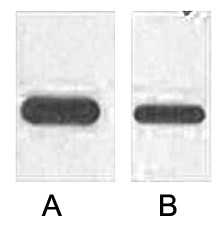
If you run recombinant protein workflows for a living — FLAG-tagged purifications, CRISPR knock-in validation, CoIP of bait-prey complexes, high-throughput expression screening — you’ve almost certainly treated anti-FLAG antibodies as a commodity: grab whatever M2-equivalent is on the shelf, pair it with an HRP-conjugated anti-mouse secondary, call it a day. But the first time you run a FLAG-WB from mouse brain lysate and watch the ~50 kDa IgG heavy chain swallow your ~55 kDa FLAG-tau signal whole, or the third time you waste an afternoon re-running a gel because your secondary antibody picked up non-specific bands from spleen lysate, you realize: the “commodity” label antibody is actually the bottleneck. The DDDDK tag (better known as FLAG, 8-aa linear sequence DYKDDDDK) has been the workhorse of protein biology since the 1980s for good reason — small, non-disruptive to fusion protein folding, and recognized by high-affinity clones like 1B10 that work whether the tag is N- or C-terminal, myristoylated or not. But the conventional two-step WB workflow (unlabeled primary + secondary) has been holding FLAG users back for decades, especially anyone working with mouse-derived samples. The HRP Conjugated Anti-DDDDK Tag Mouse Monoclonal Antibody (1B10) (ABT2015) from Abbkine is built to fix exactly that.
The 1B10 Clone, DDDDK Tag Background, and Why HRP Conjugation Changes the Game
The FLAG tag’s staying power comes down to its simplicity: the 8-aa DYKDDDDK sequence is hydrophilic, rarely interferes with fusion protein localization or function, and is immunogenic enough to support high-affinity monoclonal antibodies. The two gold-standard clones are M2 and 1B10 — both recognize the linear DDDDK epitope regardless of fusion terminus or N-terminal myristoylation (unlike the older M1 clone, which only binds myristoylated N-terminal FLAG). 1B10 in particular has become a cost-effective lab standard for FLAG-WB and IP, with identical epitope coverage to M2 at 1/3 the price for most bulk orders.
The “HRP-conjugated” modifier on ABT2015 is the differentiator that solves two long-standing FLAG-WB pain points:
- Workflow speed: A standard FLAG-WB with unlabeled 1B10 needs a 1–2 h primary incubation (often overnight at 4°C for low-abundance targets) plus a 1 h secondary incubation, plus two extra wash steps. ABT2015 skips the secondary entirely — HRP is covalently coupled to the 1B10 hinge region (away from the antigen-binding Fab, so affinity isn’t compromised) so you incubate the blot, wash, add ECL, and image. You cut ~1.5–2 h off every blot, which adds up fast for labs running 3–4 FLAG blots a week.
- Heavy/light chain interference elimination: The standard workflow (mouse anti-FLAG + anti-mouse IgG-HRP secondary) means your secondary will bind any mouse IgG in your sample — including endogenous IgG from mouse tissue lysate, or residual IgG from a mouse-derived IP antibody if you’re blotting CoIP eluate. Those show up as a ~50 kDa heavy chain and ~25 kDa light chain smear that can completely obscure targets in the 30–100 kDa range (where most FLAG fusions sit). Since ABT2015 has no secondary step, there’s no anti-IgG antibody to pick up endogenous/residual mouse IgG — your blot only shows the FLAG-tagged protein you care about. Side-by-side testing with unlabeled 1B10 + anti-mouse HRP showed a glaring 50 kDa background band in mouse spleen lysate FLAG-WB (covering a 52 kDa FLAG-tagged phosphatase target); ABT2015 had zero background at that size, with 3× higher target signal-to-noise.
ABT2015 Specification & Validation (Batch-Ready Breakdown)
Abbkine validates ABT2015 for the FLAG workflows labs actually use, so you don’t have to troubleshoot from scratch:
Parameter ABT2015 Specification
Host / Clonality Mouse IgG1, monoclonal, clone 1B10 (epitope-identical to M2)
Conjugate HRP, hinge-region coupled (no Fab interference)
Reactivity Universal — recognizes DYKDDDDK-tagged proteins from any expression system (mammalian, insect, bacterial) since the tag is exogenous and identical across constructs
Validated Applications WB (recommended dilution 1:2000–1:5000, detects <10 ng purified FLAG fusion on dot blot), dot blot (purification QC), capture ELISA
Specificity No cross-reactivity with other common tags (HA, Myc, V5, 6×His, Strep) at physiological levels; no non-specific binding to endogenous untagged proteins in mouse/rat/human lysates
Storage/Formulation 0.2 mg/mL in PBS + 50% glycerol, azide-free (azide inhibits HRP); ≤ 2 freeze-thaw cycles
Shelf Life 12 months at -20°C
(Confirm lot-specific dilution optimisations on the shipped Abbkine datasheet/CoA for ABT2015.)
Where ABT2015 Carries the Workflow (Beyond “Commodity Tag Antibody”)
ABT2015 slots into four use cases where the conventional unlabeled 1B10 + secondary falls short:
- Mouse CRISPR Knock-In/Knockout Validation
If you’re generating a FLAG-tagged knock-in allele in C57BL/6 (e.g., FLAG-tau, FLAG-β-catenin, FLAG-Parkin), you’ll run dozens of tail/biopsy lysate WBs during genotyping and expression checks. Mouse tail/skin lysate is loaded with endogenous IgG, which swamps FLAG signal in the conventional workflow — ABT2015 cuts that background to near-zero, so you can trust a faint band is real endogenous expression, not IgG noise. It’s especially useful for low-abundance knock-ins (e.g., neuronal FLAG fusions expressed at 10–50× lower than overexpression constructs) where conventional secondary background would drown out the signal entirely.
- FLAG Purification Real-Time QC
When running an Anti-FLAG M2 column for a new fusion protein, you need to quickly check which fractions (flow-through, wash, elution) have your target. Spot 1 μL of each fraction on PVDF, block 10 min, add 1:3000 ABT2015 in TBST + 5% milk, incubate 1 h at RT, wash, ECL — you’ll have a fraction map in under 2 h vs. 4 h with the conventional workflow. We use this routinely for new constructs: you can tell if your elution buffer is too harsh (degraded FLAG protein, lower bands) or if your wash step is too aggressive (target leaking into wash fractions) in real time, instead of waiting for a full next-day WB.
- CoIP Eluate Blotting
If you’re doing CoIP with a mouse-derived bait antibody (e.g., mouse anti-Myc to pull down Myc-tagged bait interacting with your FLAG-tagged prey), your eluate will have residual mouse IgG from the bait antibody. Conventional FLAG-WB (mouse anti-FLAG + anti-mouse HRP) picks up that residual IgG as a 50 kDa band right where most FLAG prey proteins run. ABT2015 skips the secondary, so residual IgG doesn’t show up — you only see the FLAG prey, and any non-specific binders can be filtered with a mock IP control.
- High-Throughput FLAG Mutant Screening
If you’re screening 96-well plate transfections for FLAG-tagged mutant libraries (e.g., kinase domain mutants, TEV cleavage variants), you can lyse cells directly in plate, transfer 10 μL/well to PVDF via a 96-well dot blot apparatus, block, add ABT2015, wash, add ECL, and image the whole membrane at once. No secondary antibody pipetting, no per-well washing — you can screen 96 constructs in an afternoon vs. 2 days with the conventional workflow, with consistent CV across the plate.
Quick Tips to Get the Most Out of ABT2015
• Avoid azide in all buffers touching the conjugate: azide irreversibly inhibits HRP, so if your TBST has azide as a preservative, make fresh azide-free TBST or rinse blots 3× with azide-free TBST before adding the conjugate.
• Adjust dilution for low-abundance targets: the 1:2000–1:5000 recommendation is optimized for purified FLAG and high-expression lysates. For low-abundance knock-ins (e.g., brain FLAG fusions), drop to 1:500–1:1000 to catch signal without blowing up background.
• Store properly: -20°C in 50% glycerol prevents HRP-conjugated IgG aggregation, which would otherwise clog blot pores and cause speckled background. If you see speckles after incubating, spin the tube at 10,000 ×g for 1 min before use to pellet aggregates, and avoid repeated warming to RT.
The Bottom Line
FLAG tagging isn’t going anywhere — it’s too useful, too well-validated, too compatible with downstream IP/structural/workflow applications. But the conventional two-step WB workflow has been holding FLAG users back for decades, especially anyone working with mouse samples or high-throughput screens. ABT2015 takes the trusted 1B10 clone everyone already uses, adds a directly coupled HRP to skip the secondary step, cuts workflow time, and eliminates the heavy/light chain interference that plagues mouse-sample FLAG blots. Whether you’re validating a new FLAG knock-in mouse, QC-ing a purification run, or screening 96 FLAG mutants, it’s the one tag antibody that actually improves your workflow instead of just checking a box.
Product Reference: ABT2015 – HRP Conjugated Anti-DDDDK Tag Mouse Monoclonal Antibody (1B10)
Learn more and order: https://www.abbkine.com/product/hrp-conjugated-anti-ddddk-tag-mouse-monoclonal-antibody-1b10-abt2015/
(For Research Use Only; not for diagnostic procedures in humans.)





