




The 10-Minute BCA: Quantify Protein So Fast You'll Forget It Was Ever the Bottleneck
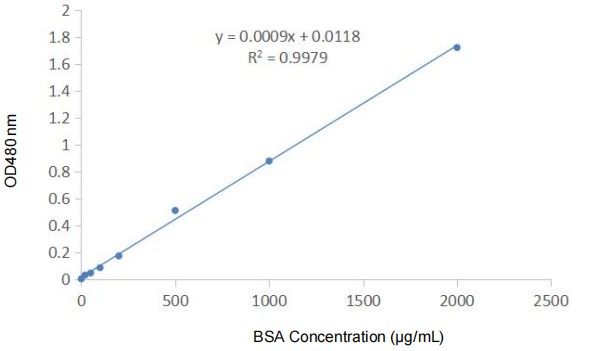
There's a special kind of bench frustration that every molecular biologist, biochemist, and cell biologist shares: you've just finished your lysis spins, you've got ten ice-cold supernatants staring at you, and you still have to wait 30 minutes at 37°C — or two hours at room temperature — just to find out how much protein you actually have before you can load a single lane. The standard BCA assay is rock-solid, detergent-tolerant, and alkali-stable, but nobody ever claimed it was fast. That's exactly the problem the Super-Rapid Protein Quantification Kit (BCA Assay) — KTD3010-EN from Abbkine was built to solve. Think of it as the "turbo" version of the classic copper reduction assay — same gold-standard chemistry (Cu²⁺ → Cu⁺ chelated by bicinchoninic acid), same purple complex at 562 nm, same compatibility with the messy lysis buffers you actually use — but reformulated so the color develops in minutes, not half an hour, and your workflow doesn't stall while a heater ticks down.
The Bottleneck You Stop Noticing — Until You're Running Late
Every glamour technique in your paper depends on one unglamorous upstream number: total protein mass. Western blots need it for equal loading. Co-IPs need it to set bead input. Fraction collectors need it to decide what's a peak and what's noise. The regular BCA gets you there, but its standard protocol (30 min @ 37°C or 2 h RT) inadvertently turns protein quantification into a pacing problem — especially when you're doing repeats, troubleshooting, or processing multiple conditions in parallel. You end up either (a) sitting on your hands, or (b) rushing the incubation and watching your standard curve soften.
The Super-Rapid BCA is designed around a simple premise: the reduction-oxidation equilibrium that drives the BCA signal can be pushed harder and stabilized better, so you get a fully developed, linear, reproducible readout in a dramatically shorter window — typically ~5–10 minutes at 37°C (or a brief ambient incubation) instead of 30. That's not a trick; it's formulation engineering: optimized alkali strength, refined Cu⁺/ligand balance, and a working-reagent stability profile that holds the signal without precipitating out or drifting across the day.
Same Core Chemistry You Trust — Just Accelerated
At its heart, this is still the BCA assay everyone already knows:
• Alkaline environment (pH > 11) denatures proteins and enables peptide bonds to reduce Cu²⁺ → Cu⁺
• The newly formed Cu⁺ is immediately trapped by two molecules of bicinchoninic acid (BCA) to form a purple–blue ternary complex
• You read the absorbance at 562 nm — the sharper and cleaner, the better
• Protein amount ∝ color intensity ∝ A₅₆₂, so a BSA (or your preferred standard) calibration curve converts unknowns into µg/µL
What changes in the Super-Rapid format isn't the principle — it's the kinetics and the reagent balance so the color reaches a stable plateau faster and stays there long enough for you to plate-read calmly instead of racing a timer.
What You Gain vs. the Standard 30-min BCA (and When It Matters Most)
Pain Point (Standard BCA) KTD3010-EN Advantage
30 min @ 37°C (or 2 h RT) locks your schedule ~5–10 min @ 37°C / very short RT → quantify and load your gel the same hour
Working reagent can drift if over-aged or poorly mixed Reformulated WR stability so your standards & unknowns stay on the same curve across a run
Big experiments = big waiting blocks Microplate format + fast kinetics = rapid-fire processing of dozens of samples without a heater bottleneck
Hesitation: "Is my incubation exactly 28 or 32 min?" Shorter, steeper development curve means the usable window is more forgiving when you're juggling tubes
In practical terms, this kit is tailor-made for:
• Busy labs where lysis → quantification → gel needs to happen same morning
• Core facilities that pipeline large sample sets and can't afford a hidden 30-min tax per plate
• Anyone who's ever missed a gel because the BCA was still "cooking"
The Workflow (Still Stupid-Simple — Just Faster)
- Prepare Working Reagent (WR) by mixing the provided components at the indicated ratio (classically 50 parts Solution A : 1 part Cu Solution B for BCA systems; follow the exact kit instruction for KTD3010-EN).
- Build a BSA standard curve across the range you care about — and do it on the same plate as your samples, always.
- Add sample (or standard) + WR to wells/tubes (e.g., 10 µL sample + 200 µL WR in a 96-well plate — confirm the exact ratio in your manual).
- Incubate: typically 37°C for ~5–10 minutes (or the short ambient condition specified).
- Read A₅₆₂ nm on your microplate reader (or cuvette spec).
- Plot → fit curve (linear or 4-PL) → interpolate → back-calculate dilutions → record µg/µL.
Total elapsed? Often under 15 minutes door-to-door, not counting the minute it takes to spin down debris beforehand.
The Same Practical Guardrails Still Apply (Because It's Still BCA at Heart)
Speeding up the read doesn't mean ignoring the chemistry that makes BCA famous:
• EDTA / strong chelators & high [reducers] can still blunt the Cu redox — if your lysis buffer runs heavy on EDTA or DTT/β-ME, either dialyze/desalt or dilute the lysate into the WR so the final matrix is within tolerance.
• Detergent limits still matter for the usual suspects (moderate nonionics OK; higher SDS/ionic can push background) — again, a modest pre-dilution fixes most cases cleanly.
• Clarify lysates (centrifuge, keep supernatant cold) — turbid samples scatter light at 562 and falsify absorbance; a clear supernate = a clean curve.
And as always: run a matrix blank (lysis buffer + WR, no protein) and subtract it, or fit your standard curve in buffer that resembles your sample background — that's the habit that separates "looks okay" from "defensible data."
Why Abbkine's "Super-Rapid" Positioning Actually Holds Water
This isn't about branding; it's about throughput as a method parameter. When your quantification step becomes a 10-minute inline operation instead of a 30–120 minute gate, three things change in your lab:
- Scheduling gets looser — you can lyse at 10:00 and be loading at 11:00.
- Repeat rates drop — fewer "my incubation was off / my WR was old" disasters.
- People actually run the standard curve instead of eyeballing loading, because the cost of doing it right is no longer "lose your whole afternoon."
That's why, once a lab switches to the accelerated BCA, they almost never switch back.
Bottom Line
The Super-Rapid Protein Quantification Kit (BCA Assay) — KTD3010-EN gives you the same trusted Cu-reduction / BCA colorimetry you've built your loading protocols on, but optimized so the bottleneck evaporates. Ten minutes from mix to number. No sacrifice in detergent tolerance. No mystery chemistry. Just a faster road from "I have lysate" to "I know how much protein I have" — which is exactly where real experiments begin.
Product Reference: KTD3010-EN – Super-Rapid Protein Quantification Kit (BCA Assay)
Learn more and order: https://www.abbkine.com/product/super-rapid-protein-quantification-kit-bca-assay-ktd3010-en/





