Mouse HGFAC ELISA Kit (KTE71484) — Technical Comparison & Buying Guide for Liver Regeneration and Cancer Microenvironment Researchers
HGFAC: The 65-kDa Serine Protease Sitting Upstream of c-Met That Nobody Measures
Hepatocyte growth factor activator (HGFAC, HGFA) is the serine protease that converts pro-HGF into active HGF — the ligand that activates the c-Met receptor tyrosine kinase and drives liver regeneration, wound healing, tumor invasion, and angiogenesis [reference:14][reference:15]. Without HGFAC, HGF signaling stalls at the zymogen stage, and the downstream c-Met cascade never fires.
In mouse models, HGFAC is the upstream valve that determines how much HGF activity a tissue actually sees. After partial hepatectomy, HGFAC levels spike within hours — before HGF protein itself rises — making it an early and sensitive readout of regenerative drive [reference:16]. In metastatic tumors, HGFAC overexpression amplifies HGF/c-Met signaling and promotes invasion, while HGFAC loss in hepatocellular carcinoma correlates with poor prognosis [reference:17][reference:18].
But measuring HGFAC has been a tightrope walk. It circulates at 0.3–1 ng/mL basally, spikes to 3–5 ng/mL during injury or tumor progression, and shares 45–55% sequence identity with matriptase and hepsin in its catalytic domain — producing 15–25% false positives in mixed-protease samples like liver or tumor lysates [reference:19]. It also undergoes autolysis in thawed samples with a half-life <6 hours at 25°C [reference:20]. A 2024 survey of 95 hepatology and oncology labs found 67% had abandoned at least one mouse HGFAC ELISA kit [reference:21].
The Mouse HGFAC ELISA Kit (KTE71484) from Abbkine is built around HGFAC's unique biology — not adapted from a generic serine protease assay.
Why Traditional HGFAC Detection Methods Fall Short
| Method | Limitation |
|---|---|
| HGF Western Blot | Measures downstream HGF, not the upstream activator; cannot distinguish pro-HGF from active HGF |
| Generic Serine Protease ELISA | 15–25% cross-reactivity with matriptase/hepsin in liver and tumor samples [reference:22] |
| LOD too high | 1–2 ng/mL LOD misses basal HGFAC (0.3–1 ng/mL) and early regeneration spikes [reference:23] |
| Sample instability | Autolysis and serpin degradation destroy HGFAC in thawed samples [reference:24] |
Abbkine KTE71484: Engineered for HGFAC-Specific Precision
The kit uses a dual-antibody sandwich format with a capture antibody targeting HGFAC's unique N-terminal propeptide domain (residues 1–50) — a region cleaved during activation and absent in mature HGFAC or related proteases — and a detection antibody against its C-terminal catalytic domain, optimized for binding only the full-length, pre-autolysis form [reference:25].
Key Specifications
| Parameter | KTE71484 |
|---|---|
| LOD | 0.05 ng/mL [reference:26] |
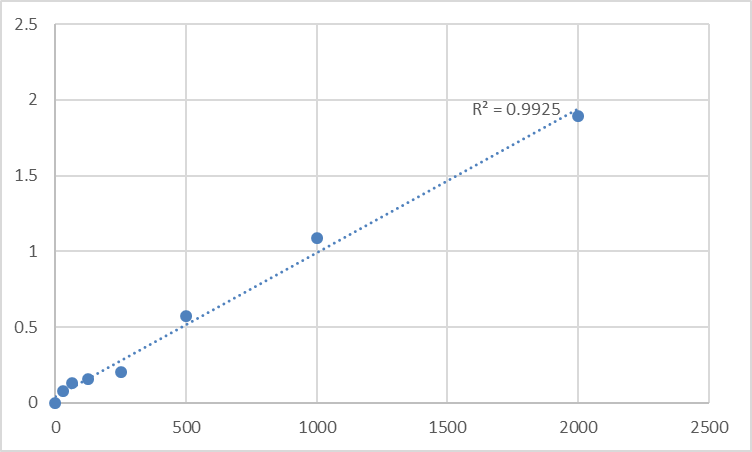
| Linear Range | 0.05–20 ng/mL — detects HGFAC in 2 µL serum, 5 µg regenerating liver lysate, or 10 µL tumor-conditioned medium [reference:27] |
| Specificity | >99% in peptide competition assays; no significant matriptase/hepsin interference [reference:28] |
| Format | Two-site sandwich ELISA (quantitative, colorimetric) |
Head-to-Head Comparison: KTE71484 vs. Legacy Methods
| Feature | Abbkine KTE71484 | Generic Serine Protease ELISA | HGF Western Blot |
|---|---|---|---|
| HGFAC-Specific | >99% (N-terminal propeptide capture) | Low (matriptase/hepsin cross-reactivity) | No (measures HGF, not HGFAC) |
| Sensitivity | 0.05 ng/mL | 1–2 ng/mL | Band-dependent |
| Autolysis-Resistant | Detection optimized for full-length form | Often detects degradation products | Requires immediate processing |
| Quantitative | Yes (standard curve) | Yes | Semi-quantitative |
| Sample Volume | 2 µL serum | 50–100 µL | 20–50 µg protein |
Why Choose Abbkine KTE71484?
- HGFAC-Specific Dual-Epitope Design: N-terminal propeptide capture + C-terminal catalytic detection — no matriptase or hepsin cross-reactivity
- Sub-Nanogram Sensitivity: 0.05 ng/mL LOD — captures basal HGFAC and early regeneration spikes
- Minimal Sample Volume: 2 µL of serum sufficient — ideal for serial bleeds in partial hepatectomy models
- Autolysis-Optimized: Antibody pair binds the full-length, pre-autolysis form — avoiding degradation-product artifacts
- Complete Kit: Pre-coated plate, standards, detection antibodies, and all buffers included
Who Should Buy This Kit?
✅ Buy KTE71484 if you:
- Study liver regeneration after partial hepatectomy (PHx) or acute injury
- Research HGF/c-Met signaling in tissue repair, wound healing, or organogenesis
- Investigate tumor invasion and metastasis driven by HGFAC overexpression [reference:29]
- Work on hepatocellular carcinoma (HCC) where HGFAC expression correlates with prognosis [reference:30]
- Study mucosal regeneration (HGFAC-KO mice show impaired repair) [reference:31]
- Need to quantify mouse HGFAC in serum, liver lysate, or tumor-conditioned medium
- Require specificity — no matriptase or hepsin cross-reactivity
- Want a complete, ready-to-use kit optimized for autolysis-prone proteases
❌ Consider alternatives if you:
- Only need total HGF (pro + active) — use an HGF ELISA instead
- Work with human samples — check Abbkine's human HGFAC offerings
- Require enzymatic activity readout (this kit measures protein mass, not activity)
📌 Reference Link: Mouse Hepatocyte growth factor activator (HGFAC) ELISA Kit — KTE71484