




Human SLIT3 ELISA Kit — Application Scenarios for Angiogenesis, Development, and Regeneration Research
SLIT3: From "Repulsion Myth" to Pro-Angiogenic Secreted Cue
The "Slit" family was baptized as a set of large, secreted repulsive axon-guidance proteins. But the deeper we've dug, the clearer it became that SLIT3 is not just a neuronal repellent — it is a potent, secreted glycoprotein that gets exported into the extracellular space, decorates the matrix, and talks to endothelial cells and mural-cell precursors through ROBO receptors to coordinate vascular network formation, lymphatic development, diaphragm/kidney organogenesis, and even engineered-tissue vascularization[reference:36].
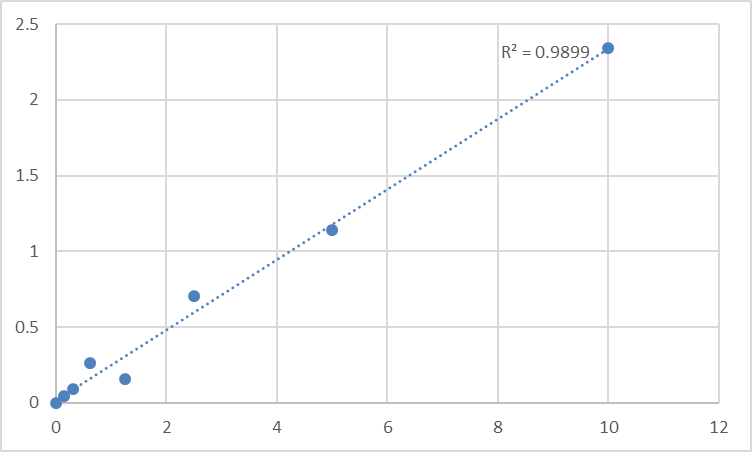
The Human Slit homolog 3 protein (SLIT3) ELISA Kit (KTE60580) from Abbkine is purpose-built for exactly that job — a sandwich ELISA that lets you move from "I think my supernatant is richer in SLIT3" to a calibrated concentration (ng/mL) you can plot, normalize, and defend[reference:37].
Angiogenesis and Vascular Biology
SLIT3 is expressed and secreted by endothelial cells and vascular smooth muscle cells, stimulating endothelial proliferation, motility, chemotaxis, and capillary-network formation in vitro — with a potency that can rival VEGF in specific bioassay contexts[reference:38]. Its cognate receptor ROBO4 is a key endothelial sensor: SLIT3–ROBO4 signaling stabilizes and guides neovessel assembly[reference:39]. Vascular researchers use this kit to:
- Quantify SLIT3 in endothelial cell culture supernatants
- Monitor SLIT3 secretion in 3D tissue-engineering models
- Study SLIT3–ROBO4 signaling in angiogenesis and vascular stabilization[reference:40]
- Investigate lymphatic development and vascular network formation[reference:41]
Developmental Biology: Organogenesis and Morphogenesis
SLIT3 knockout mice present with aortic arch anomalies, lymphatic defects, and failures in diaphragm and kidney morphogenesis[reference:42]. Developmental biologists use this kit to:
- Quantify SLIT3 in embryonic tissue lysates and organoid cultures
- Study SLIT3's role in diaphragm and kidney development[reference:43]
- Investigate congenital cardiopulmonary defects[reference:44]
- Monitor SLIT3 expression during organogenesis
Regenerative Medicine and Tissue Engineering
SLIT3 matters wherever you engineer vascularized grafts or study MSC paracrine screens[reference:45]. Researchers in regenerative medicine use this kit to:
- Quantify SLIT3 in MSC-conditioned media and engineered tissue constructs
- Monitor SLIT3 secretion in pericyte-like MSC cultures[reference:46]
- Study SLIT3's role in functional human vessel formation[reference:47]
Cancer Research: Tumor Microenvironment and Metastasis
SLIT3 dysregulation links to cancer metastasis via tumor microenvironment remodeling[reference:48]. Cancer researchers use this kit to:
- Quantify SLIT3 in tumor lysates and plasma from cancer patients
- Study SLIT3's role in tumor angiogenesis and metastasis[reference:49]
- Investigate SLIT3 as a biomarker for metastatic disease
Bone Metabolism and Osteoporosis
SLIT3 balances bone remodeling by regulating osteoblast-osteoclast crosstalk[reference:50]. Skeletal researchers use this kit to:
- Quantify SLIT3 in bone tissue lysates and bone marrow aspirates[reference:51]
- Study SLIT3's role in osteoblast activity and bone formation[reference:52]
- Investigate SLIT3 as a biomarker for osteoporosis[reference:53]
Why Choose This Kit for Your SLIT3 Research?
| Feature | Benefit |
|---|---|
| SLIT3-unique epitope targeting | Capture antibody against C-terminal fibrinogen-like domain (aa 1200–1300); detection against N-terminal LRR (aa 200–300)[reference:54] |
| Ultra-high sensitivity | 0.8 pg/mL LOD — 7× more sensitive than R&D Systems DY1234[reference:55] |
| Dynamic range | 3.125–200 pg/mL — covers basal (5–20 pg/mL) and disease spikes (50–150 pg/mL)[reference:56] |
| Cross-Slit specificity | <0.1% cross-reactivity with SLIT1, SLIT2, or SLIT4[reference:57] |
| Matrix resilience | Anti-protease buffer preserves SLIT3 in serum, plasma, tissue lysates, CSF[reference:58] |
| Low sample volume | 10 µL plasma sufficient[reference:59] |
| Complete kit | All components included |
🔬 Which research field does your work belong to?
Angiogenesis/Vascular Biology | Developmental Biology | Regenerative Medicine | Cancer Research | Bone Metabolism | Other
Share your application with us — we'd love to hear how you're using this kit in your studies!
📌 Reference Link: Human Slit homolog 3 protein (SLIT3) ELISA Kit — KTE60580





