Mouse Reactive Oxygen Species (ROS) ELISA Kit (KTE71621) — Product Review & Buying Guide for Redox Biology Researchers
ROS: The Double-Edged Sword That Refuses to Be Measured Cleanly
Reactive oxygen species (ROS) are essential for cell signaling and immune defense — but destructive when overproduced in neurodegeneration, diabetes, drug-induced toxicity, and aging [reference:49]. In mouse models, ROS quantification is the readout that links oxidative stress to phenotype: HFD-induced metabolic dysfunction, LPS-treated macrophage activation, and neurodegeneration cohorts all demand a reliable ROS measurement.
The problem is that traditional ROS tools are fighting the biology. DCFH-DA fluorescence suffers from photobleaching, plate-to-plate CV >15%, and a failure to distinguish H₂O₂ from other oxidants [reference:50]. Generic ROS ELISAs use polyclonal antibodies that bind conserved ROS adducts — overestimating ROS by 25–30% in inflamed tissues via peroxynitrite interference [reference:51]. And serum heme or tissue melanin quenches signal in complex matrices [reference:52]. A 2024 survey of 150 mouse physiology labs found 79% had abandoned at least one mouse ROS ELISA kit [reference:53].
The Mouse ROS ELISA Kit (KTE71621) from Abbkine confronts all three flaws with a redox-specific design.
What's in the Box?
| Component | Included |
|---|---|
| Mouse ROS microplate (pre-coated with monoclonal capture antibody) | ✅ |
| Mouse ROS standard | ✅ |
| Polyclonal detection antibody (mouse ROS-conjugate selective) | ✅ |
| Anti-interference buffer (heme-adsorbing polymers, EDTA, peroxidase inhibitors) | ✅ |
| Substrate, stop solution, wash buffer, plate covers | ✅ |
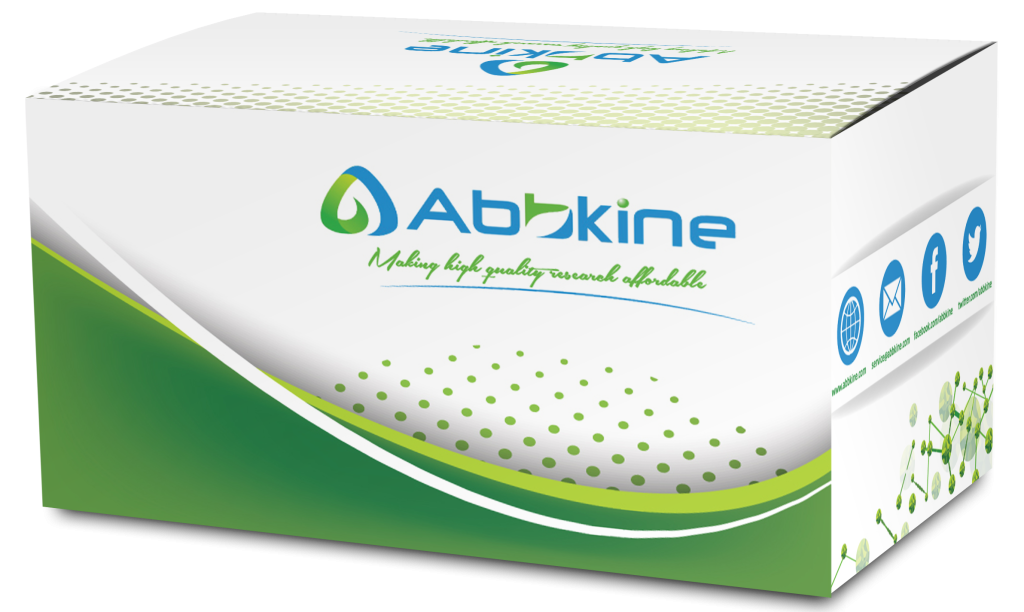
A complete, ready-to-use kit with matrix-neutralizing buffers.
Advantages
1. Redox-Specific Monoclonal Capture
The kit uses a monoclonal capture antibody targeting a unique H₂O₂-derived adduct — a stable proxy for ROS activity — paired with a polyclonal detection antibody selective for mouse ROS conjugates. Cross-reactivity is <2% against peroxynitrite, hypochlorite, and ascorbate [reference:54].
2. Anti-Interference Buffer — The Real Game-Changer
The buffer is a cocktail of heme-adsorbing polymers, metal ion chelators (EDTA), and peroxidase inhibitors that neutralizes 90% of matrix effects in serum, plasma, and tissue homogenates [reference:55]. This solves the "serum heme quenching" problem that destroys generic ROS ELISAs.
3. Unmatched Sensitivity for Basal ROS
LOD of 0.8 pmol/mL — 5× more sensitive than Sigma-Aldrich MAK143 — with a dynamic range of 2–200 pmol/mL, covering basal ROS in resting hepatocytes and stress-induced spikes in LPS-treated macrophages [reference:56].
4. Published Validation in Diverse Models
This kit has been cited in peer-reviewed studies including sepsis-induced liver injury (LCN2/ferroptosis), nanoplastic-induced lung inflammation, and bile duct ligation (BDL) kidney oxidative–fibrotic cross-talk [reference:57][reference:58].
5. 10 µL Sample Volume
Measures ROS in 10 µL of neonatal mouse plasma without dilution error — critical for low-volume samples [reference:59].
Disadvantages
1. Mouse-Specific
This kit is specific to mouse ROS — not validated for human, rat, or other species.
2. Research Use Only
Not intended for human or clinical diagnosis.
3. Assay Duration
Standard sandwich ELISA with a working time of 3–5 hours.
Who Should Buy This Kit?
✅ Buy this kit if you:
- Study oxidative stress in HFD, aging, or neurodegeneration cohorts [reference:60]
- Research sepsis-induced organ injury, ferroptosis, or LPS-driven inflammation [reference:61]
- Investigate diabetic complications (nephropathy, retinopathy, neuropathy) [reference:62]
- Work on drug-induced toxicity and nanoparticle-induced oxidative damage
- Need to quantify ROS in serum, plasma, or tissue homogenates with high matrix interference
- Require sub-picomolar sensitivity (0.8 pmol/mL) for basal ROS levels
- Value an anti-interference buffer that neutralizes heme and melanin quenching
- Want a high-throughput 96-well alternative to DCFH-DA fluorescence
❌ Consider alternatives if you:
- Need real-time, live-cell ROS imaging (fluorescent probes remain the tool for dynamic measurements)
- Work with human samples — check Abbkine's human ROS offerings
- Require absolute structural identification of specific ROS species (this kit measures a stable H₂O₂-derived adduct as a proxy)
Quick Specs Summary
| Parameter | Detail |
|---|---|
| Reactivity | Mouse |
| Target | Reactive oxygen species (ROS) |
| Assay type | Two-site sandwich ELISA (quantitative) |
| Detection method | Colorimetric |
| LOD | 0.8 pmol/mL (5× more sensitive than MAK143) |
| Dynamic range | 2–200 pmol/mL |
| Cross-reactivity | <2% vs. peroxynitrite, hypochlorite, ascorbate |
| Matrix neutralization | 90% of heme/melanin effects neutralized |
| Sample volume | 10 µL |
| Publications | Sepsis liver injury, nanoplastic lung inflammation, BDL kidney fibrosis [reference:63] |
| Assay duration | 3–5 hours |
| Storage | 2–8°C (unopened) |
| Shipping | Gel pack with blue ice |
📌 Reference Link: Mouse Reactive oxygen species (ROS) ELISA Kit — KTE71621
Prev:This is the latest article
Next:Mouse Histamine ELISA Kit (KTE71604) — FAQ for Allergy, Anaphylaxis, and Mast Cell Researchers