




Human SLIT1 ELISA Kit — Application Scenarios for Neurodevelopment and Neuro-Oncology Research
SLIT1: The Midline Repellent That Goes Soluble
The word "Slit" conjures a specific image for developmental neurobiologists: a growing axon approaching the ventral midline, encountering a cloud of secreted repellent, and veering sharply away[reference:60]. SLIT1 is the family's most brain-restricted, secreted extracellular matrix-associated member — a bulky leucine-rich repeat protein that diffuses from producing cells, decorates the ECM, and talks to ROBO receptors to steer migrating neurons, repel olfactory axons, and sculpt forebrain wiring[reference:61].
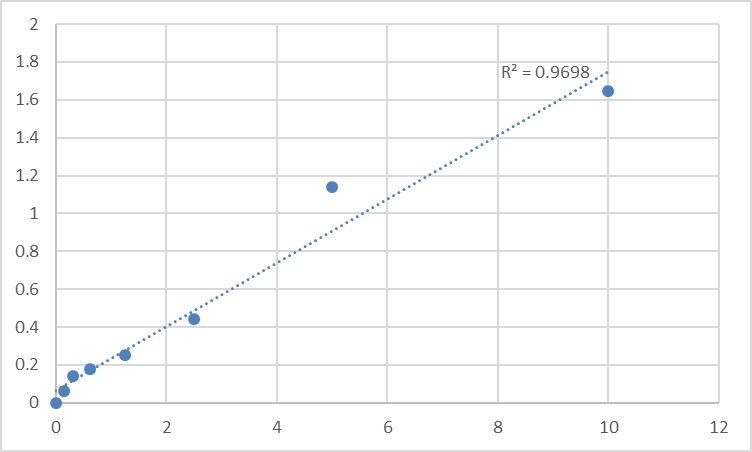
Because SLIT1 is actively secreted rather than trapped inside a cell, the biologically relevant question isn't just "is SLIT1 there?" — it's how much soluble SLIT1 is your culture supernatant, CSF, serum, or tissue extract actually producing?[reference:62] The Human Slit homolog 1 protein (SLIT1) ELISA Kit (KTE60582) from Abbkine is built to answer exactly that[reference:63].
Neurodevelopment: Axon Guidance and Circuit Assembly
SLIT1 (together with SLIT2) helps enforce midline exclusion — repelling and preventing recrossing of olfactory bulb–projecting axons — and contributes to interneuron migration and cortical circuit assembly[reference:64]. Developmental neuroscientists use this kit to:
- Quantify SLIT1 in brain tissue lysates and neuronal culture supernatants
- Study SLIT1's role in axon guidance and neuronal migration[reference:65]
- Investigate SLIT1 function in forebrain wiring and cortical development[reference:66]
- Monitor SLIT1 secretion in organoid-conditioned harvests[reference:67]
Neuro-Oncology and Brain Tumor Research
Because SLIT1 is secreted and ECM-associated, its functional dose matters in contexts beyond a single immunostaining section[reference:68]. Neuro-oncology researchers use this kit to:
- Quantify SLIT1 in CSF, surgical aspirates, and tumor lysates[reference:69]
- Study SLIT1's role in glioma and brain tumor microenvironment
- Investigate SLIT1 as a surrogate circulatory biomarker for neuro-oncology conditions[reference:70]
CSF and Biomarker Discovery
SLIT1's presence in CSF makes it a candidate biomarker for neurodevelopmental and neurological conditions[reference:71]. Biomarker researchers use this kit to:
- Quantify SLIT1 in cerebrospinal fluid (CSF) samples
- Study SLIT1 levels in neurodevelopmental disorders and neurodegenerative diseases
- Investigate SLIT1 as a diagnostic or prognostic biomarker
Why Choose This Kit for Your SLIT1 Research?
| Feature | Benefit |
|---|---|
| Two-site sandwich ELISA | Quantitative, specific detection |
| Human reactivity | Directly applicable to human samples |
| Multiple sample types | Serum, plasma, CSF, tissue lysates, cell culture supernatants |
| High specificity | SLIT1-specific — no cross-reactivity with SLIT2 or SLIT3 |
| Secreted protein readout | Measures functional, soluble SLIT1 — not just mRNA |
| Complete components | Ready-to-use — no additional reagents needed |
Key Experimental Considerations
- Sample type: Brain tissue lysates, neuronal culture supernatants, CSF, serum, plasma
- Assay format: Sandwich ELISA with pre-coated plate
- Detection: Colorimetric, 450 nm readout
- Applications: Axon guidance, neuronal migration, forebrain development, CSF biomarkers
🔬 Which research field does your work belong to?
Neurodevelopment | Neuro-Oncology | CSF Biomarker Discovery | Axon Guidance | Other
Share your application with us — we'd love to hear how you're using this kit in your studies!
📌 Reference Link: Human Slit homolog 1 protein (SLIT1) ELISA Kit — KTE60582





