




Human PIIINP ELISA Kit — Application Scenarios for Fibrosis, Liver Disease, and Connective Tissue Research
Article Type: Application Scenarios — showcasing the kit's value across different research fields investigating the collagen-synthesis biomarker
PIIINP: The Fibrillar "Scar Code" in Your Blood
PIIINP (N-terminal procollagen III propeptide) is a ~42 kDa trimeric fragment cleaved off during type III collagen assembly and released into the extracellular space — and ultimately circulation — as a by-product of new collagen deposition[reference:73]. Every molecule of collagen III that matures → one PIIINP trimer released[reference:74]. It's not a "proxy cytokine"; it's literally the manufacturing off-cut of the fibril itself.
Most labs chasing fibrosis still obsess over total collagen/hydroxyproline (destructive, low-specificity) or TGF-β/α-SMA immunohistochemistry (gorgeous, but spatial-only), while ignoring the one analyte that directly quantifies how fast type III collagen is being made in real time[reference:75]. The Human N-terminal Procollagen III Propeptide (PIIINP) ELISA Kit (KTE61328) from Abbkine is the tool that plugs that gap[reference:76].
Liver Fibrosis Research: Staging and Monitoring Disease Progression
PIIINP levels surge in liver cirrhosis, making its quantification a linchpin for staging disease progression and evaluating therapy[reference:77]. Hepatology researchers use this kit to:
- Quantify PIIINP in serum and plasma from liver fibrosis patients
- Monitor fibrogenesis dynamics in response to anti-fibrotic therapies
- Stage liver disease progression (early fibrogenesis: 10–50 ng/mL; decompensated disease: >300 ng/mL)[reference:78]
- Study hepatic stellate cell activation and type III collagen deposition[reference:79]
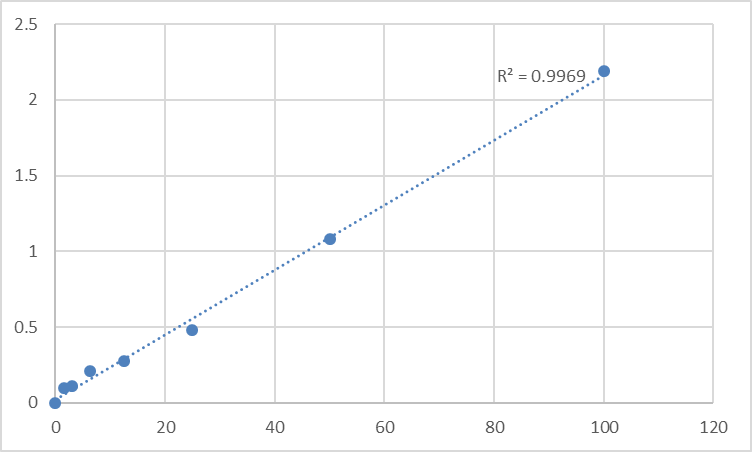
The kit features a 7-point standard curve with a dynamic range of 0.312–20 ng/mL[reference:80], spanning the full clinical spectrum of fibrotic disease.
Cardiac Fibrosis and Heart Failure Research
Type III collagen is the early, "soft" fibril laid down before type I replaces it[reference:81]. Cardiovascular researchers use this kit to:
- Quantify PIIINP in serum from heart failure patients
- Monitor cardiac remodeling and fibrosis progression
- Study the effects of anti-fibrotic therapies on collagen synthesis
- Investigate PIIINP as a prognostic biomarker in heart failure
Pulmonary Fibrosis and Connective Tissue Research
PIIINP reflects dynamic tissue remodeling in the lung and other connective tissues[reference:82]. Researchers in pulmonary medicine use this kit to:
- Quantify PIIINP in serum, plasma, and bronchoalveolar lavage fluid (BALF)
- Monitor pulmonary fibrosis progression and treatment response
- Study connective tissue turnover in systemic sclerosis and other fibrotic disorders
Drug Development: Pharmacodynamic Biomarker for Anti-Fibrotics
For researchers developing anti-fibrotic therapeutics, PIIINP is a dynamic, secretion-coupled readout of active type III collagen biosynthesis that can be tracked in serial samples without killing the animal or harvesting the organ[reference:83]. Drug developers use this kit to:
- Monitor pharmacodynamic responses to anti-fibrotic compounds
- Assess drug efficacy in preclinical and clinical trials
- Study the mechanism of action of novel anti-fibrotics
- Identify PIIINP as a surrogate endpoint in clinical trials
Why Choose This Kit for Your PIIINP Research?
| Feature | Benefit |
|---|---|
| Two-site sandwich ELISA | Quantitative, specific detection |
| Human reactivity | Directly applicable to human samples |
| High sensitivity | Detects PIIINP at pg–ng/mL levels[reference:84] |
| Dynamic range | 0.312–20 ng/mL (7-point standard curve)[reference:85] |
| Multiple sample types | Serum, plasma, tissue homogenates, cell culture supernatants[reference:86] |
| Stoichiometric readout | Directly measures type III collagen synthesis rate[reference:87] |
| Complete components | Ready-to-use — no additional reagents needed |
Why PIIINP — And Not Just "Total Collagen"?
| Approach | Limitation |
|---|---|
| Hydroxyproline assays | Tell you how much collagen ended up in tissue, but not at what rate it was synthesized[reference:88] |
| TGF-β and α-SMA | Tell you the profibrotic drive, but not the actual matrix output[reference:89] |
| PIIINP | Bridges that gap — a dynamic, secretion-coupled readout of active type III collagen biosynthesis[reference:90] |
🔬 Which research field does your work belong to?
Liver Fibrosis Research | Cardiac Fibrosis | Pulmonary Fibrosis | Drug Development | Connective Tissue Biology | Other
Share your application with us — we'd love to hear how you're using this kit in your studies!
📌 Reference Link: Human N-terminal procollagen III propeptide (PIIINP) ELISA Kit — KTE61328





