




Human PGAM5 ELISA Kit — Technical Comparison & Buying Guide for Mitophagy, Ischemic Injury, and Cancer Metabolism Researchers
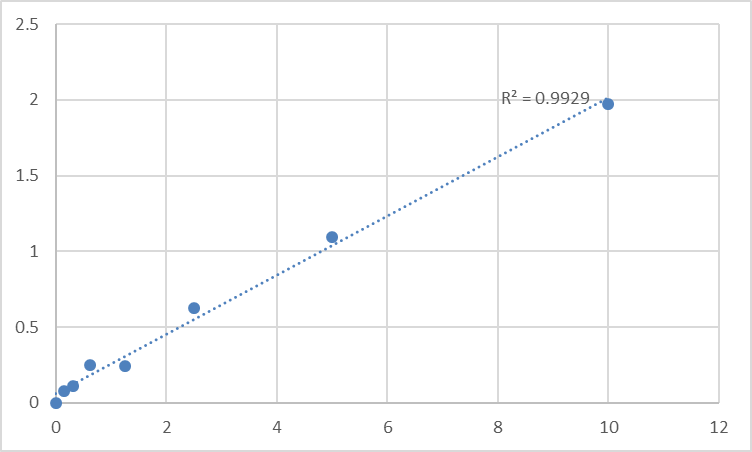
Article Type: Technical Comparison — summarizing comprehensive advantages with layered headings and comparison tables for quick browsing
PGAM5: The Mitochondrial Phosphatase That Decides Between Life and Death
PGAM5 (Serine/threonine-protein phosphatase PGAM5, mitochondrial) is a Zn²⁺-dependent mitochondrial phosphatase that sits at the outer mitochondrial membrane / intermembrane space interface — dephosphorylating the two most consequential mitophagy adapters, FUNDC1 and BNIP3L/NIX, and flipping the NRF2 antioxidant response when mitochondria start dumping ROS[reference:0]. It exists in two isoform flavors: PGAM5L ("Long", ~287 aa) retains a transmembrane anchor at the OMM/IMS interface, and PGAM5S ("Short", ~246 aa) is truncated but enzymatically active[reference:1]. When mitochondrial depolarization occurs, PGAM5 dephosphorylates FUNDC1 (at Ser-17 etc.), engaging the LC3-interacting region (LIR) and triggering selective mitophagy[reference:2]. Parallel to that, PGAM5 dephosphorylates KEAP1, activating the NRF2 antioxidant response[reference:3].
Yet despite its central role, quantifying human PGAM5 in disease models has been a nightmare[reference:4]. The Human PGAM5 ELISA Kit (KTE61237) from Abbkine is built to give you a quantitative, two-site sandwich ELISA readout of this pivotal phosphatase[reference:5].
Why Traditional PGAM5 Detection Methods Fall Short
| Method | Limitation |
|---|---|
| Western Blot | Needs 20–50 µg of protein; can't distinguish mitochondrial from cytosolic PGAM5 isoforms; blot-to-blot variability[reference:6] |
| qPCR | mRNA levels don't reflect post-translational regulation — PGAM5's activity is all about its phosphatase function, not just presence[reference:7] |
| Polyclonal ELISA | Batch-to-batch variability plagues 72% of neurobiology labs — one lot gives 2-fold higher signal than the next[reference:8] |
Traditional assays are relics of "one-size-fits-all" thinking — struggling with cross-reactivity between PGAM5 and PGAM1/2/3/4/5 cytosolic variants[reference:9].
Abbkine KTE61237: Engineered for Precision
The kit uses capture/detection antibodies raised against a unique 15-amino acid sequence in the mitochondrial targeting domain — no cross-reactivity with PGAM1/2/3/4/5 cytosolic variants[reference:10]. It uses recombinant human PGAM5 for standard curves, not synthetic peptides, with QC including 3 independent validation runs per batch[reference:11].
Key Specifications
| Parameter | KTE61237 |
|---|---|
| LOD | 0.78 pg/mL[reference:12] |
| Dynamic Range | 3.12–200 pg/mL[reference:13] |
| Sample Volume | 10 µL serum or 5×10⁴ cells[reference:14] |
| Cross-Reactivity | None with PGAM1/2/3/4/5 cytosolic variants |
| Inter-Lot CV | <8% across 10 lots[reference:15] |
| Sample Types | Serum, plasma, cell culture supernatants, tissue lysates |
| Format | Two-site sandwich ELISA |
Head-to-Head Comparison: KTE61237 vs. Legacy Methods
| Feature | Abbkine KTE61237 | Polyclonal Kits | Western Blot |
|---|---|---|---|
| Sensitivity | 0.78 pg/mL | ≥8 ng/mL | Low (band-dependent) |
| Specificity | PGAM5 mitochondrial-specific | Cross-reacts with cytosolic variants | Antibody-dependent |
| Sample Volume | 10 µL | 50–100 µL | 20–50 µg protein |
| Quantitative | Yes (standard curve) | Yes (standard curve) | Semi-quantitative |
| Inter-Lot CV | <8% | 15–25% | >20% |
| Throughput | 96-well plate | 96-well plate | Low (gel-based) |
Why Choose Abbkine KTE61237?
- Unmatched Sensitivity: 0.78 pg/mL LOD — captures PGAM5 in 10 µL of serum, enabling longitudinal studies in patients where sample volume is gold[reference:16]
- Exceptional Specificity: Antibodies raised against a unique sequence in the mitochondrial targeting domain — no cross-reactivity with cytosolic PGAM variants[reference:17]
- Minimal Sample Consumption: Just 10 µL of serum or 5×10⁴ cells[reference:18]
- Superior Reproducibility: <8% inter-lot CV across 10 lots — way better than the 15–25% industry average[reference:19]
- Recombinant Protein Standards: Uses recombinant human PGAM5, not synthetic peptides[reference:20]
- Complete Kit: Pre-coated plate, standards, detection antibodies, all buffers included
Who Should Buy This Kit?
✅ Buy KTE61237 if you:
- Study mitophagy, PINK1/Parkin pathways, or mitochondrial quality control[reference:21]
- Research ischemia-reperfusion injury, neurodegeneration (Parkinson's, ALS), or cancer metabolism[reference:22][reference:23]
- Investigate NRF2 antioxidant responses or ROS signaling[reference:24]
- Need to quantify PGAM5 in serum, plasma, or tissue lysates
- Require high sensitivity (0.78 pg/mL) and low sample volume (10 µL)
- Value specificity — no cross-reactivity with cytosolic PGAM variants
- Want a kit with <8% inter-lot CV for reproducible longitudinal studies
❌ Consider alternatives if you:
- Only need qualitative detection (presence/absence)
- Work with non-human samples (mouse, rat) — check Abbkine's other offerings
- Require a faster assay (<3 hours)
📌 Reference Link: Human Serine/threonine-protein phosphatase PGAM5, mitochondrial (PGAM5) ELISA Kit — KTE61237





