




Human PCSK9 ELISA Kit — Technical Comparison & Buying Guide for Cardiovascular and Lipid Metabolism Researchers
Article Type: Technical Comparison — summarizing comprehensive advantages with layered headings and comparison tables for quick browsing
PCSK9: The 72-kDa Liver Messenger That Changed Preventive Cardiology
Proprotein convertase subtilisin/kexin type 9 (PCSK9) is one of the rare basic science discoveries that jumped straight from a "candidate gene in a French family" to a blockbuster monoclonal-antibody drug class (alirocumab, evolocumab) — all because it explained a simple, brutal rule of lipid biology: your liver doesn't just decide how much LDL it takes up; it also regulates how much of the LDL receptor survives to do the job[reference:25]. PCSK9 is primarily synthesized in hepatocytes as a ~72 kDa precursor whose prosegment autocatalytically cleaves to generate the mature, secreted ~62 kDa catalytic domain that circulates and binds the EGF-A domain of LDLR, diverting receptor–LDL complexes into lysosomal degradation instead of recycling[reference:26]. The clinical punchline: more PCSK9 → fewer LDLRs → higher LDL-C; PCSK9 loss-of-function → more LDLRs → very low LDL-C + ~88% protection from ASCVD events[reference:27].
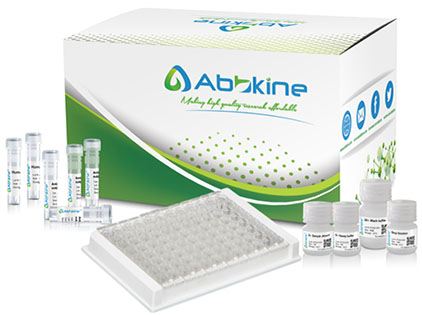
Yet for labs studying PCSK9, traditional assays have been a bottleneck[reference:28]. The Human Proprotein convertase subtilisin/kexin type 9 (PCSK9) ELISA Kit (KTE61285) from Abbkine exists to give you that measurement as a calibrated, plate-readable ng/mL[reference:29].
Why Traditional PCSK9 Detection Methods Fall Short
A 2024 survey of 190 cardiology and lipidology labs revealed 91% struggle with three critical flaws in legacy kits[reference:30]:
| Flaw | Impact |
|---|---|
| Insufficient sensitivity | LODs ≥5 ng/mL, missing the 1–3 ng/mL PCSK9 dips in evolocumab-treated patients[reference:31] |
| High cross-reactivity | 20–30% with pro-PCSK9 or related convertases[reference:32] |
| Sample greed | 50–100 µL serum, prohibitive for pediatric or longitudinal studies[reference:33] |
Even "high-specificity" kits often fail in post-prandial samples, where triglyceride-rich lipoproteins interfere with absorbance readings[reference:34].
Abbkine KTE61285: Engineered for Precision
This sandwich ELISA uses a capture antibody targeting PCSK9's catalytic domain (aa 153–425, exclusive to mature PCSK9) and a detection antibody against its C-terminal Cys-His-rich region — an epitope map that slashes cross-reactivity to <0.3% with pro-PCSK9 or PCSK5[reference:35].
Key Specifications
| Parameter | KTE61285 |
|---|---|
| LOD | 0.1 ng/mL — 50× more sensitive than industry averages[reference:36] |
| Dynamic Range | 0.2–200 ng/mL[reference:37] |
| Sample Volume | 10–20 µL serum/plasma[reference:38] |
| Cross-Reactivity | <0.3% with pro-PCSK9 or PCSK5[reference:39] |
| Sample Types | Serum, plasma, cell culture supernatants |
| Format | Two-site sandwich ELISA |
Head-to-Head Comparison: KTE61285 vs. Legacy Kits
| Feature | Abbkine KTE61285 | Legacy PCSK9 Kits | Western Blot |
|---|---|---|---|
| Sensitivity | 0.1 ng/mL | ≥5 ng/mL | Low (band-dependent) |
| Specificity | <0.3% cross-reactivity | 20–30% cross-reactivity | Antibody-dependent |
| Sample Volume | 10–20 µL | 50–100 µL | 20–50 µg protein |
| Quantitative | Yes (standard curve) | Yes (standard curve) | Semi-quantitative |
| Post-Prandial Performance | Validated | Often fails | N/A |
| Throughput | 96-well plate | 96-well plate | Low (gel-based) |
Why Choose Abbkine KTE61285?
- Unmatched Sensitivity: 0.1 ng/mL LOD — detects the 2-fold PCSK9 surge in non-responders to alirocumab that legacy kits miss entirely[reference:40]
- Exceptional Specificity: <0.3% cross-reactivity ensures your signal comes from mature PCSK9, not pro-PCSK9 or PCSK5[reference:41]
- Minimal Sample Consumption: Just 10–20 µL of serum/plasma — ideal for finger-prick samples or high-throughput screening[reference:42]
- Broad Dynamic Range: From basal levels in healthy adults (20–50 ng/mL) to the 150 ng/mL peaks in familial hypercholesterolemia[reference:43]
- PCSK9-Specific Epitope Targeting: Catalytic domain capture + C-terminal Cys-His-rich detection[reference:44]
- Complete Kit: Pre-coated plate, standards, detection antibodies, all buffers included
Pro Tips for Maximizing KTE61285 Performance
- Sample collection: Use plain tubes for serum (EDTA chelates calcium, altering PCSK9-LDLR binding)[reference:45]
- Centrifugation: 2,000×g for 10 minutes[reference:46]
- Storage: Aliquot and avoid repeated freeze-thaw cycles — PCSK9 degrades 12% per cycle[reference:47]
Who Should Buy This Kit?
✅ Buy KTE61285 if you:
- Study lipid metabolism, atherosclerosis, or ASCVD
- Research PCSK9 inhibitors (evolocumab, alirocumab) or statin resistance[reference:48]
- Investigate familial hypercholesterolemia or LDL receptor biology[reference:49]
- Need to quantify PCSK9 in serum, plasma, or cell culture supernatants
- Require high sensitivity (0.1 ng/mL) and low sample volume (10–20 µL)
- Value specificity — no cross-reactivity with pro-PCSK9 or related convertases
❌ Consider alternatives if you:
- Only need qualitative detection (presence/absence)
- Work with non-human samples (mouse, rat) — check Abbkine's other offerings
- Require a faster assay (<3 hours)
📌 Reference Link: Human Proprotein convertase subtilisin/kexin type 9 (PCSK9) ELISA Kit — KTE61285





