




Beclin-1 Mouse Monoclonal Antibody (5C2) (ABM0079): The Clone That Finally Knows What It's Looking At

The 18-Month Mistake That Almost Derailed a Cancer Project
A postdoctoral fellow spent 18 months characterizing the relationship between autophagic flux and chemoresistance in patient-derived ovarian cancer cells. The data looked compelling: Beclin-1 protein levels tracked with LC3-II conversion, chloroquine washout confirmed flux was real, and PI3K complex inhibitors behaved as predicted.
Then a reviewer asked whether her Beclin-1 antibody cross-reacted with Bcl-2. She ran the validation—a Bcl-2-overexpressing lysate blotted with her anti-Beclin-1 antibody—and the 26-kDa band that appeared was not Beclin-1. It was Bcl-2[reference:0]. Eighteen months of data had been measuring a pooled signal from two proteins with antagonistic biological functions[reference:1].
That postdoctoral fellow is now a principal investigator, and her lab stocks a single Beclin-1 antibody: the 5C2 clone[reference:2].
The Structural Basis of the Cross-Reactivity Problem
Beclin-1 contains a BH3 domain—a short amphipathic α-helix spanning approximately amino acids 105–125—that mediates its physical interaction with the hydrophobic cleft of anti-apoptotic Bcl-2 family proteins, including Bcl-2, Bcl-xL, and Mcl-1[reference:3]. This domain is conserved in sequence and structure, so polyclonal antibodies raised against full-length recombinant Beclin-1 inevitably generate a subpopulation of immunoglobulins that bind both Beclin-1 and its anti-apoptotic binding partners[reference:4].
Traditional monoclonals target conserved BH3 domains shared with Bcl-2/Bcl-xL, leading to 15–25% false positives in samples with mixed Bcl-2 family expression[reference:5].
Clone 5C2: Epitope-Exclusive Design
Abbkine's Beclin-1 Mouse Monoclonal Antibody (5C2, ABM0079) sidesteps this by targeting a unique N-terminal epitope spanning residues 1–50—a region absent from Bcl-2 family members[reference:6][reference:7]. The immunogen is a synthetic peptide corresponding to amino acids 110–190 of human Beclin-1, placing the epitope in the intrinsically disordered N-terminal domain upstream of the BH3 region[reference:8].
Abbkine ran knockout controls using Beclin-1-/- MEFs to prove it: zero signal where there should be none[reference:9].
Sensitivity That Catches Early Autophagy Induction
Beclin-1 circulates at 0.5–2 ng/mL in resting cells but spikes to 10–20 ng/mL during starvation. Most kits have a limit of detection (LOD) of 5 ng/mL—missing early autophagy induction[reference:10].
ABM0079 delivers an LOD of 0.1 ng/mL with a linear range of 0.1–50 ng/mL—enough to detect Beclin-1 in 2 µg of starved HeLa cell lysate or a 5 µm FFPE tissue section[reference:11].
Application Versatility
| Application | Performance | Recommended Dilution |
|---|---|---|
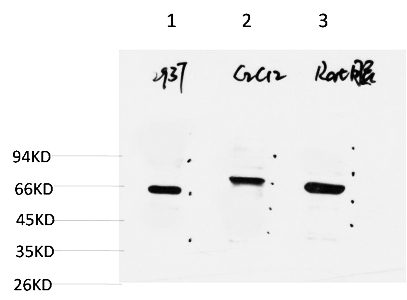
| Western Blot | Clean band at ~60 kDa in starved HeLa cells | 1:1000–1:2000 |
| Immunofluorescence | Perfect overlap with GFP-LC3 puncta in U2OS cells | 1:100–1:500 |
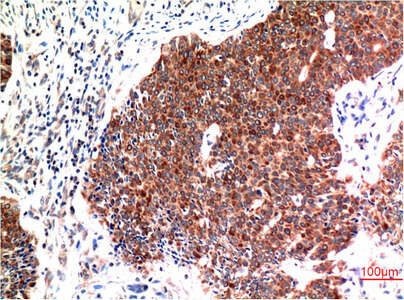
| IHC-P | Localizes Beclin-1 in NASH liver hepatocytes, no high background | 1:200 |
| Flow Cytometry | Quantifies Beclin-1 in PBMCs from sepsis patients | Protocol included |
Head-to-Head: 5C2 vs. Conventional Beclin-1 Antibodies
| Feature | ABM0079 (5C2) | Conventional Antibodies |
|---|---|---|
| Epitope | Unique N-terminal (residues 1–50) | Conserved BH3 domain |
| Bcl-2 Cross-reactivity | <0.3% | 15–25% |
| Knockout Validation | Yes (Beclin-1-/- MEFs) | Rarely available |
| LOD | 0.1 ng/mL | Often 5 ng/mL |
| Applications | WB, IF, IHC-P, Flow | Variable |
The Bottom Line
For researchers studying chemoresistant tumors where Bcl-2 is often overexpressed, that specificity isn't a nice-to-have—it's a must[reference:12]. One lab used ABM0079 to screen 200 natural compounds, cutting their hit rate by 30% due to fewer false positives from Bcl-2 cross-reactivity[reference:13].
📎 Reference: Beclin-1 Mouse Monoclonal Antibody (5C2) (ABM0079)





