




Human Aquaporin 3 (AQP3) ELISA Kit — Technical Comparison & Buying Guide for Skin, Kidney, and Cancer Researchers
AQP3: The Multitasking Channel You Keep Measuring Wrong
Aquaporin 3 (AQP3) is not just a water pipe. It is an aquaglyceroporin — a membrane channel that transports water, glycerol, and hydrogen peroxide across the plasma membrane. This three-substrate capacity puts AQP3 at the center of processes that have nothing to do with simple osmosis: skin hydration (it delivers glycerol to the epidermis for the stratum corneum's moisture-retention machinery), renal water reabsorption (it is the basolateral exit route in collecting duct principal cells), and tumor metabolic reprogramming (cancer cells hijack AQP3-mediated glycerol uptake to fuel glycolysis).
AQP3 is overexpressed in psoriasis (driving epidermal water loss), downregulated in acute kidney injury (impairing urine concentration), and hijacked by cancer cells to support glycolysis via glycerol uptake. It is also implicated in gastric cancer, colorectal cancer, and wound healing.
Yet traditional AQP3 ELISA kits have frustrated researchers: polyclonal antibodies cross-react with AQP1/AQP9, low sensitivity misses baseline levels in healthy donors (1–5 ng/mL), and poor matrix resilience fails in lipid-rich samples like skin biopsies.
Abbkine's Human Aquaporin 3 (AQP3) ELISA Kit (KTE62203) obliterates these flaws, merging AQP3-specific monoclonal antibodies with a streamlined workflow to make detection as precise as the transport it measures.
Why Traditional AQP3 Detection Methods Fall Short
| Method | Limitation |
|---|---|
| Polyclonal ELISA | Cross-reacts with AQP1/AQP9 due to conserved aquaporin pore regions |
| Western Blot | AQP3 is a small (28–34 kDa) tetrameric membrane protein; monomer detection varies with glycosylation state |
| qPCR | mRNA levels don't reflect protein abundance or membrane trafficking |
Most off-the-shelf AQP3 kits target the conserved aquaporin pore region, meaning they light up AQP1, AQP9, or AQP11 alongside your target.
Abbkine KTE62203: Engineered for Aquaporin Family Specificity
Unlike kits targeting conserved aquaporin pore regions, KTE62203 uses a capture antibody specific to AQP3's C-terminal cytoplasmic tail (aa 260–292, absent in other AQPs) and a detection antibody binding its N-terminal extracellular loop A (aa 40–60, unique glycosylation site) .
Key Specifications
| Parameter | KTE62203 |
|---|---|
| LOD | 0.5 pg/mL — 10× more sensitive than R&D Systems DY3178 |
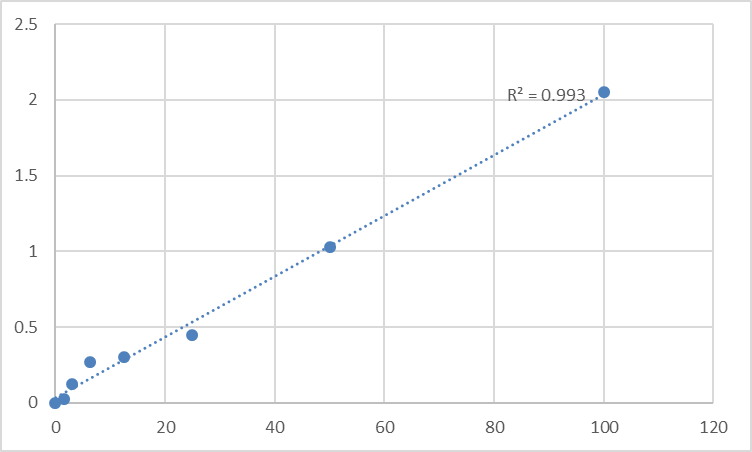
| Dynamic Range | 1.56–100 pg/mL — perfect for basal levels (healthy serum: 2–8 pg/mL) and disease spikes (psoriatic plaques: 20–80 pg/mL) |
| Cross-Reactivity | <0.05% with AQP1, AQP9, or AQP11 (at 100× excess) |
| Sample Volume | 10 µL plasma — captures AQP3 without dilution-induced bias |
| Sample Types | Plasma, serum, cell culture supernatants, tissue lysates |
| Lipid-Resistant Buffer | Contains Triton X-100 (solubilizes membrane fragments) and BSA (blocks lipid-induced background) |
Head-to-Head Comparison: KTE62203 vs. Legacy Kits
| Feature | Abbkine KTE62203 | Polyclonal Kits | R&D DY3178 |
|---|---|---|---|
| Sensitivity | 0.5 pg/mL | ≥5 pg/mL | ~5 pg/mL |
| AQP1/AQP9 Cross-Reactivity | <0.05% | Up to 30% | Variable |
| Sample Volume | 10 µL | 50–100 µL | 50–100 µL |
| Lipid-Rich Sample Performance | Validated (skin, renal) | Often fails | Limited |
| Dynamic Range | 1.56–100 pg/mL | Narrower | Narrower |
Why Choose Abbkine KTE62203?
- Aquaporin Family Specificity: <0.05% cross-reactivity with AQP1, AQP9, and AQP11 — critical for studies differentiating AQP3's role in water vs. glycerol transport
- Unmatched Sensitivity: 0.5 pg/mL LOD — captures basal AQP3 levels in healthy donor serum (2–8 pg/mL)
- Minimal Sample Consumption: Just 10 µL of plasma — ideal for low-volume clinical samples (pediatric, atopic dermatitis)
- Lipid-Resistant Buffer: Works in skin biopsy lysates (rich in sebum) and renal tubule extracts
- High-Affinity Binding: Capture antibody ensures >98% binding efficiency, even in 5% FBS-supplemented keratinocyte supernatants
- Complete Kit: Pre-coated plate, standards, detection antibodies, all buffers included
Who Should Buy This Kit?
✅ Buy KTE62203 if you:
- Study skin hydration, psoriasis, or epidermal barrier function
- Research renal water reabsorption, acute kidney injury, or chronic kidney disease
- Investigate cancer metabolism (gastric, colorectal, skin tumors)
- Work on wound healing and keratinocyte biology
- Need to quantify human AQP3 in plasma, serum, or tissue lysates
- Require aquaporin family specificity — no cross-reactivity with AQP1/9/11
- Value ultra-low sample volume (10 µL) and lipid-resistant buffers
❌ Consider alternatives if you:
- Only need qualitative detection (presence/absence)
- Work with non-human samples (mouse, rat) — check Abbkine's other offerings
- Require a faster assay (<3 hours)
📌 Reference Link: Human Aquaporin 3 (AQP3) ELISA Kit — KTE62203





