




The Ligand That Sculpts Ectoderm—and How Cancer Borrows the Same Tool
Most Wnt ligands receive a biographical sketch that reads like a job application for a single developmental position. Wnt3a patterns the primitive streak. Wnt7a sculpts the limb. Wnt5a guides the gut tube. The assignment is neat, the knockout phenotype explains itself, and the protein is thereafter mentioned only in the context of the organ system it helped build. WNT10A refuses this tidy categorization. It is strongly expressed in promyelocytic leukemia and Burkitt's lymphoma cell lines, promiscuous expression that does not fit the narrative of a developmentally restricted morphogen. It promotes an invasive and self-renewing phenotype in esophageal squamous cell carcinoma while simultaneously being essential for the proliferation of adult epithelial stem cells in hair follicles, sebaceous glands, taste buds, nails, and sweat ducts. Its loss-of-function mutations produce the odonto-onycho-dermal dysplasia spectrum—dry hair, severe hypodontia, smooth tongue with reduced papillae, onychodysplasia, keratoderma, and hyperhidrosis of palms and soles—a phenotype that reads like a catalog of every tissue that depends on ectoderm-derived progenitor maintenance. And then, in a completely different clinical context, WNT10A missense polymorphisms are strongly associated with increased obesity risk in human populations. This is not one protein with one function. This is a secreted glycoprotein whose biological output depends on the Frizzled receptor repertoire available on the target cell surface, the presence or absence of co-receptors like LRP5/6, and the cellular decision to route signaling through β-catenin-dependent or PKC/calcium-dependent cascades.
Abbkine's Human Protein Wnt-10a (WNT10A) ELISA Kit (KTE60029) addresses the protein quantification problem that this functional complexity makes unavoidable. The kit employs a two-site sandwich ELISA configuration in which a capture antibody specific for human WNT10A is pre-coated onto the microplate, and a biotin-conjugated detection antibody recognizes a distinct epitope on the same protein. After washing away unbound material, streptavidin-conjugated horseradish peroxidase binds to the biotinylated detection antibody. A substrate solution then develops color in proportion to the amount of captured WNT10A, and the absorbance is measured on any standard microplate reader. This dual-site recognition architecture achieves what the product specification describes as excellent specificity with no significant cross-reactivity or interference between human WNT10A and its structural analogues—a specification that matters enormously given the 19-member WNT gene family's sequence homology, particularly among the WNT10A/WNT10B/WNT6 subfamily clustered on chromosome 2q35.
The analytical performance parameters require direct statement, though the product page itself specifies that the calibration range and limit of detection should be inquired. What is documented is the kit's design philosophy: high sensitivity and excellent specificity for the detection of human WNT10A, built into a standard sandwich ELISA workflow with a working time of 3–5 hours depending on operator experience. The kit components ship as a complete package—pre-coated microplate, WNT10A standard, detection antibody, streptavidin-HRP, standard diluent, assay buffer, HRP substrate, stop solution, wash buffer, and plate covers—on gel packs with blue ice, with the unopened kit stable at 2–8°C. These are the logistical specifications of a kit designed to move from shipping box to incubator on the day it arrives.
Sample compatibility spans cell culture supernatants, serum, plasma, and other biological fluids. This breadth is significant for a WNT10A measurement tool because WNT10A, like all Wnt ligands, is a secreted protein that is post-translationally modified by palmitoleic acid addition mediated by Porcupine, processed through the secretory pathway, and either deposited on the extracellular matrix or released into the conditioned medium. The biologically relevant pool is the one that reaches target cells, not the unprocessed intracellular precursor detectable by western blot in whole-cell lysate. A kit that quantifies only lysates is measuring protein that may never be secreted. KTE60029 accepts the sample types that actually contain the functional extracellular protein fraction.
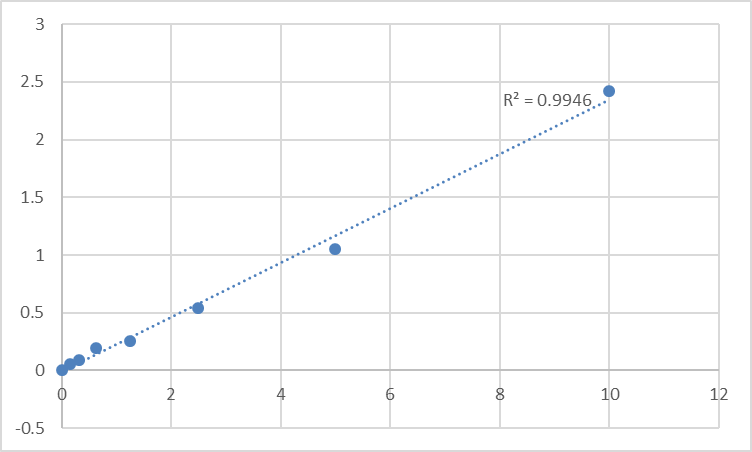
The protocol's usage notes reflect genuine immunoassay discipline rather than regulatory boilerplate. Allow all reagents to warm to room temperature for at least 30 minutes before opening. Pre-rinse pipette tips with reagent and use fresh tips for each sample, standard, and reagent. Keep unused wells desiccated at 4°C in the sealed bag provided. Mix thoroughly using a low-frequency oscillator or slight hand shaking every 10 minutes. Assay all samples and standards in duplicate or triplicate. Do not mix components from different kit lots or use reagents beyond the kit expiration date. These are not warnings about exotic handling requirements. They are the ordinary courtesies that sandwich ELISA demands of anyone who wants a standard curve with an R² above 0.99, and the protocol states them clearly rather than burying them in a troubleshooting appendix nobody reads until the first plate fails.
The publication record for KTE60029 currently stands at zero citations on the product page, a status it shares with most newly launched ELISA kits before the research community has had time to incorporate them into published studies. Zero citations should not be read as a quality verdict. It should be read as a product entering a research landscape where WNT10A protein-level measurement has been underserved by commercially available tools. The kit fills a niche that Abbkine's own product description articulates: traditional detection methods have struggled to meet the demands of precision and throughput, creating a gap that specialized tools must fill. The dual-site sandwich ELISA design, the species specificity for human WNT10A, the compatibility with biological fluids that actually contain secreted Wnt protein—these are features that address documented analytical gaps, not features in search of an application.
The broader biomedical context makes reliable WNT10A quantification increasingly relevant across multiple research domains. In oncology, WNT10A overexpression promotes proliferation, migration, invasion, and self-renewal in esophageal squamous cell carcinoma, and induces a greater CD44⁺/CD24⁻ population—the putative cancer stem cell marker phenotype. In glioblastoma, WNT10A was found to be highly expressed, and its knockdown significantly suppressed malignant behavior both in vitro and in vivo, via both autocrine and paracrine pathways that remodel the tumor microenvironment. In renal cell carcinoma, WNT10A activates the WNT/β-catenin pathway to drive oncogenesis. In cervical cancer and papillary thyroid carcinoma, WNT10A overexpression promotes proliferation and invasion. In colorectal cancer cell lines, WNT10A and WNT6 are strongly co-expressed, and their overexpression may play key roles in carcinogenesis through activation of the WNT-β-catenin-TCF signaling pathway. These are not isolated observations. They form a consistent pattern of WNT10A as a broadly relevant oncogenic ligand across multiple tumor types.
In dermatology and epithelial biology, the WNT10A story is equally layered. A comprehensive review published in 2021 detailed how WNT10A is implicated as a key physiological and pathological contributor to syndromic and nonsyndromic disorders, as well as population variants, affecting the skin and teeth. WNT10A variants have been associated with hair thickness, male androgenetic alopecia, hair curl, acne vulgaris, lipodystrophy, keloids, wound healing, tooth size, tooth agenesis, hypodontia, taurodontism, and oral clefting. The 2017 demonstration that WNT10A/β-catenin signaling constitutes a broadly used mechanism controlling epithelial progenitor proliferation in adult tissues—and that Wnt-activated self-renewing stem cells are present in the very tissues affected by WNT10A mutation—established a mechanistic framework that connects the developmental phenotype to the regenerative defect. In wound healing, critical in vivo roles of WNT10A in regulating collagen expression and synthesis in WNT10A-deficient mice have been demonstrated, positioning WNT10A as a potential therapeutic target for tissue repair.
In metabolic research, the WNT10A connection to adipogenesis is direct and mechanistically defined. WNT10A suppresses adipogenesis and stimulates osteoblastogenesis, and enforced expression of WNT10A stabilizes β-catenin to an extent comparable to that of WNT10B. A missense polymorphism (rs141074983) substituting arginine with cysteine in WNT10A is strongly associated with increased obesity risk in the Egyptian population. When S6K1-mediated suppression of Wnt genes, including WNT10A, facilitates adipogenic differentiation through PPARγ and CEBPA expression, the protein-level status of WNT10A becomes a variable that directly affects adipocyte cell fate decisions.
For the cancer biologist quantifying WNT10A in tumor-conditioned medium to establish whether autocrine Wnt signaling drives the cancer stem cell phenotype, the dermatology researcher measuring WNT10A levels in patient-derived keratinocytes with suspected ectodermal dysplasia mutations, the regenerative medicine investigator developing WNT10A-based strategies for wound healing or dental pulp regeneration, the metabolic disease researcher examining WNT10A's role in adipogenesis and obesity, or the developmental biologist studying ectodermal organogenesis in organoid cultures, the ability to measure WNT10A protein concentration specifically and quantitatively is not a convenience. It is the measurement that converts a gene expression correlation into a protein-level mechanism, and it is the measurement that separates experiments that describe Wnt pathway activation from experiments that demonstrate which ligand is doing the activating. KTE60029 provides that measurement in a sandwich ELISA format that distinguishes human WNT10A from its closest structural homologs and accepts the sample types that actually contain the biologically active secreted protein fraction.
The ligand that sculpted your ectoderm and the ligand a tumor steals to sustain its stem cell population are the same molecule. Measuring it directly is no longer the privilege of labs with custom sandwich ELISA development capabilities. It is a kit with a catalog number.
Explore specifications, access the protocol, and place your order here: https://www.abbkine.com/product/human-protein-wnt-10a-wnt10a-elisa-kit-kte60029/





