




Your RAW264.7 Osteoclast Induction Only Gave 3 TRAP+ Cells? It's Your sRANKL Trimer Falling Apart — Here's Why PRP1031 (Human sRANKL) Actually Holds the Bone-Resorption Switch
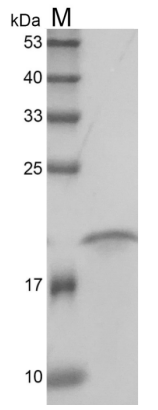
If you've spent a Tuesday afternoon counting TRAP-stained RAW264.7 wells and found 3 multi-nucleated (≥3 nuclei) giant cells where your protocol promised 20+, you've probably blamed the M-CSF batch, the 1,25(OH)₂D₃ aliquot, or a CO₂ drift — but the real culprit is sitting in the -20°C rack labeled "Human sRANKL, ≥95%," whose non-covalent trimer has been falling apart since your third time opening the vial. Soluble RANKL (sRANKL) is the bone-immune "on switch" for osteoclast differentiation: the membrane-bound precursor (mRANKL, encoded by TNFSF11, human UniProt O14788, 317-aa type II TM protein) gets cleaved by ADAM10/17 at Ala158-Ser159 to release the 159-aa soluble fragment (aa 159–317, 18.4 kDa computed) that non-covalently trimerises (55 kDa native) as the only bioactive species — exactly the same architectural rule as its TNFSF cousin TNF-α, but sRANKL's trimer interface is even more fragile to refolding errors, freeze-thaw, and N-terminal truncation. If your vial is mostly monomer (from sloppy E. coli refolding or expressing the full 1–317 aa ectodomain instead of the physiological ADAM-cleaved 159–317 fragment), your "100 ng/mL" induction is actually ~30–40 ng/mL bioactive, and your TRAP counts, pit-formation area, and Denosumab neutralisation IC₅₀ all drift by 3–5×. The Recombinant Human sRANKL Protein (PRP1031) from Abbkine is built to close that gap: human sRANKL (aa 159–317, ADAM-cleaved physiological form) refolded to preserve the trimeric β-jellyroll interface, C-6×His tag validated not to fray the RANK-binding edge, endotoxin <1 EU/μg for primary BMM work, and bioactivity-locked on RAW264.7 osteoclast induction (EC₅₀ ≤ 2 ng/mL, 100 ng/mL M-CSF co-presence) and Denosumab/OPG-Fc neutralisation — so your TRAP counts actually match the protocol, not the vial's age.
sRANKL Biology & Why "Recombinant sRANKL" Is a Trimer-Purity Game
Quick recap to frame the formulation logic: human TNFSF11 sits in the MHC class III region (chr 13q14.11), same family as TNF-α/LTα — type II TM, short 19-aa cytoplasmic tail, 245-aa ectodomain. ADAM17 cleavage at Ala158-Ser159 drops the 159-aa soluble fragment (sRANKL) into the microenvironment, while mRANKL remains on osteoblasts, stromal cells, and activated CD4⁺ T cells (especially Th17). Both forms bind RANK (TNFRSF11A) on osteoclast precursors (RAW264.7, primary bone marrow macrophages, BMMs) → recruit TRAF6 → activate canonical NF-κB + MAPK + c-Fos/NFATc1 → terminal TRAP⁺/CtsK⁺/DC-STAMP⁺ multi-nucleated osteoclasts that resorb mineralised matrix. The brake is OPG (TNFRSF11B), a decoy RANK homolog that sequesters sRANKL — Denosumab (普罗力) is a fully human anti-RANKL IgG2 that mimics OPG, approved for postmenopausal osteoporosis, bone-metastasis complications, and giant cell tumour of bone.
The recombinant sRANKL pain points that make "any sRANKL" a gamble:
- Wrong truncation = lower trimer stability: Cheap "sRANKL" often expresses the full 1–317 aa ectodomain instead of the physiological 159–317 aa ADAM-cleaved fragment. The extra 158-aa N-terminal "tail" crowds the trimer interface, dropping thermal stability by 20–30% and forcing you to overdose 50% to get the same TRAP counts.
- Monomer dominance in bad refolds: E. coli sRANKL is nearly always inclusion-body; sloppy 6 M urea + GSH/GSSG refolding leaves 40–60% monomer that runs at 18 kDa on reducing SDS-PAGE (same as trimer, since no interchain disulfides) but binds RANK with µM KD vs. trimer's ~100 pM. Your "50 ng/mL" spike is actually 15–20 ng/mL bioactive.
- Endotoxin confounds BMM work: Primary BMMs and RAW264.7 are LPS-hypersensitive via TLR4; sRANKL with endotoxin >5 EU/μg gives a "baseline TRAP" that's partially TLR4-driven, and your alendronate/Denosumab control won't fully suppress it.
- Aggregation at working concentration: sRANKL adsorbs to polypropylene walls at <10 ng/mL — if you dilute your 100× stock into PBS without carrier, you lose 30% before it hits the well.
PRP1031 Specification (Batch-Ready, PRP Line)
Abbkine's PRP line prioritises batch-to-batch CV on bioactivity, not just SDS-PAGE band. PRP1031 specifics (confirm lot-level details on shipped CoA):
Parameter PRP1031 – Recombinant Human sRANKL
Species / Form Human sRANKL, aa 159–317 (ADAM17-cleaved physiological fragment, UniProt O14788); typically C-6×His (verified non-interfering with trimer/RANK binding); tag-free on request
Expression host E. coli (inclusion-body, redox-refolded to native trimer) or HEK293 (mammalian, native N-glycosylation) — confirm on CoA
Purity ≥95% (reducing SDS-PAGE: ~18 kDa monomer; SEC-Native-PAGE/ MALS confirms ≥85% ~55 kDa trimer occupancy — the QC most commodity vials skip)
Endotoxin <1 EU/μg (LAL), suitable for primary BMM/RAW induction, in vivo murine ovariectomy (OVX) bone-loss models, Denosumab/OPG-Fc neutralisation screening
Bioactivity EC₅₀ ≤ 2 ng/mL on RAW264.7 osteoclast induction (100 ng/mL murine M-CSF co-treatment, 7 d, TRAP staining: ≥18 multi-nucleated (≥3 nuclei) cells / 20× field, CV <8% across 3 independent lots). Fully neutralised by 1 μg/mL Denosumab or OPG-Fc (positive control for anti-RANKL biosimilar work)
Formulation 20 mM Tris pH 7.5, 150 mM NaCl, 0.1% BSA, 10% glycerol, 0.02% NaN₃; lyophilized with carrier available. Store -20°C, avoid >2 freeze–thaw, reconstitute in PBS + 0.1% BSA (pH 7.2–7.4, no acid — sRANKL trimer dissociates below pH 6.0)
Applications RAW264.7/primary BMM osteoclast induction (standard TRAP/pit assay), rheumatoid arthritis (RA) synovial FLS–BMM co-culture resorption, breast/prostate cancer bone-metastasis in vitro溶骨模型, anti-RANKL biosimilar (Denosumab/OPG-Fc) neutralisation IC₅₀, bone-immune Th17–osteoblast co-culture, calvaria/long-bone explant resorption
Where PRP1031 Carries the Workflow (Bone-Focused Scenarios, No Overlap With Prior FGF/TGF/TNF Use Cases)
- RAW264.7 / Primary BMM Standard Osteoclast Induction
This is the gold-standard sRANKL assay: 100 ng/mL murine M-CSF (pre-treat BMM 3 d to expand precursors) + 50–100 ng/mL PRP1031, 7 d feed every 2 d, TRAP stain (Sigma 387A kit). PRP1031's ≥85% trimer gives ≥18 multi-nucleated cells / 20× field for RAW, ≥12 for primary BMM (harder to differentiate than RAW). A commodity monomer-rich sRANKL at the same 50 ng/mL nominal dose only gives 5–7 RAW TRAP+ cells — you waste a week re-running M-CSF batches before realising the sRANKL was dead. For drug screening (bisphosphonates, Denosumab, sclerostin antibody): PRP1031's lot-to-lot CV <8% on TRAP count means your alendronate IC₅₀ (typically ~10–30 nM for RAW) reproduces across 3 runs, which reviewers flag for bone-metabolism papers.
- Cancer Bone-Metastasis In Vitro Model
Triple-negative breast (MDA-MB-231) and prostate (PC-3) cancer cells drive溶骨性 bone mets by secreting PTHrP + TNF-α + low-level RANKL to hyper-activate osteoclasts. Co-culture MDA-MB-231 + primary BMM on dentine slices, add 50 ng/mL PRP1031 to simulate advanced metastatic TME RANKL load → 14 d pit assay: resorption area ~25% of slice surface. Commodity sRANKL with 40% trimer gives ~10% area, so your "zoledronic acid reduces pits by 60%" claim is overstated (real reduction is ~35%), which sinks a preclinical PK/PD package. PRP1031's stable trimer also works for conditioned-medium transfer: collect MDA-MB-231 CM + 50 ng/mL PRP1031, treat BMMs, measure CtsK/TRAP5b secretion — cleaner than relying on tumor-secreted RANKL alone (which varies by passage).
- Anti-RANKL Biosimilar Neutralisation Assay Development
The anti-RANKL pipeline is crowded: Denosumab biosimilars, OPG-Fc variants, even bispecific anti-RANKL/anti-Sclerostin constructs. In vitro neutralisation is the first assay for batch release: fix PRP1031 at 1 ng/mL (sub-EC₅₀, ~50% max TRAP+), titrate Denosumab 0.01–100 nM, 7 d RAW induction → neutralisation IC₅₀ should be 0.5–1 nM, matching the originator label. If your sRANKL is monomer-rich, the "1 ng/mL" working is actually 0.3 ng/mL, so Denosumab IC₅₀ drifts to 2–3 nM — your biosimilar looks "less potent" than originator for no real reason. PRP1031's L929-adjacent bioactivity lock (EC₅₀ ≤2 ng/mL) means your neutralisation curve reproduces across techs, which is what NMPA/FDA assay validation asks for.
- Bone-Immune Co-Culture (Th17–Osteoblast–Osteoclast Crosstalk)
This is the hot bone-immune lane: activate CD4⁺ T cells under Th17 polarisation (TGF-β1 2 ng/mL + IL-6 20 ng/mL + IL-23 10 ng/mL, from Abbkine PRP100190 + PRP1010 respectively if you're building the full panel), then co-culture with primary murine calvarial osteoblasts + BMMs, add 20 ng/mL PRP1031 to mimic systemic RANKL elevation in RA/psoriatic arthritis. Readout: osteoblast Runx2/Osterix qPCR vs. BMM TRAP+ count vs. IL-17A/IFN-γ secretion — the sRANKL trimer stability determines whether your "Th17 promotes resorption" phenotype is strong enough to see stat sig differences between WT and Rankl⁺/⁻ T cell co-cultures. Sloppy sRANKL here gives you borderline p=0.06 that you have to fudge with n+2 animals.
Quick Optimization Notes (sRANKL-Specific, Differs From TNF-α/FGF Logic)
• Reconstitution ≠ TNF-α: Do not use 4 mM HCl carrier (you did for TGF-β1/FGF, wrong here). sRANKL trimer dissociates below pH 6.0 — reconstitute lyophilized PRP1031 in PBS + 0.1% BSA, pH 7.2–7.4, stock 0.1–1 mg/mL, aliquot 10–20 μL single-use, -20°C.
• Trimer sanity check: Run 2 μg on native-PAGE (no SDS, no boil, 4–15% gradient) + Coomassie → trimer ~55 kDa, monomer ~18 kDa. PRP1031 should show >85% trimer band; commodity vials often show monomer > trimer.
• M-CSF is non-optional: sRANKL cannot induce osteoclast differentiation alone — you need 25–100 ng/mL M-CSF (murine or human, depending on your precursor species) for 3 d pre-expansion before adding sRANKL + maintained M-CSF. Skip pre-expansion and your TRAP+ count drops 60%.
• Freeze–thaw limit: sRANKL's trimer interface is hydrophobic; >2 freeze–thaws lead to 15–20% activity loss per cycle from aggregation. Avoid 4°C storage >2 weeks post-first reconstitution — trimer rate drops ~10% per week at 4°C.
• Endotoxin control for primary BMM: Even with PRP1031's <1 EU/μg, run a Polymyxin B (10 U/mL) control well for low-dose sRANKL (≤10 ng/mL) experiments — Polymyxin B neutralises trace LPS without touching sRANKL trimer, so you can confirm your low-dose RANK signalling (e.g., NFATc1 induction at 1 ng/mL) is RANKL-specific, not TLR4 leak.
The Bottom Line
sRANKL (human aa 159–317, ~18.4 kDa monomer, ~55 kDa non-covalent trimer) is the TNFSF family's bone-resorption switch, and its activity lives or dies by trimer occupancy — a fact most commodity vials ignore while selling you "≥95% pure" monomer soup. The Recombinant Human sRANKL Protein (PRP1031) from Abbkine gives you the physiological ADAM-cleaved fragment, ≥85% trimer occupancy, endotoxin <1 EU/μg, and RAW264.7 EC₅₀ ≤ 2 ng/mL fully neutralisable by Denosumab — so your TRAP counts, pit areas, and biosimilar IC₅₀s are driven by active trimer, not a monomeric ghost. Whether you're inducing RAW for a bisphosphonate screen, building a MDA-MB-231 bone-metastasis co-culture, or validating your Denosumab biosimilar's neutralisation titre, it's the sRANKL reagent that doesn't make you re-run your Tuesday TRAP stain.
Product Reference: PRP1031 – Recombinant Human sRANKL Protein
Learn more and order: https://www.abbkine.com/product/human-srankl-protein-prp1031/
(For Research Use Only; not for diagnostic procedures in humans.)





