




Your Lipo2000 Is Killing Primary Cortical Neurons and Your Lipo3000 Budget Is Bleeding: Why SuperKine™ Lipo3.0 (BMU111-EN) Is the Middle-Ground Transfection Reagent for 2D Cancer Lines, Finicky Primary Cultures, and 3D Organoids
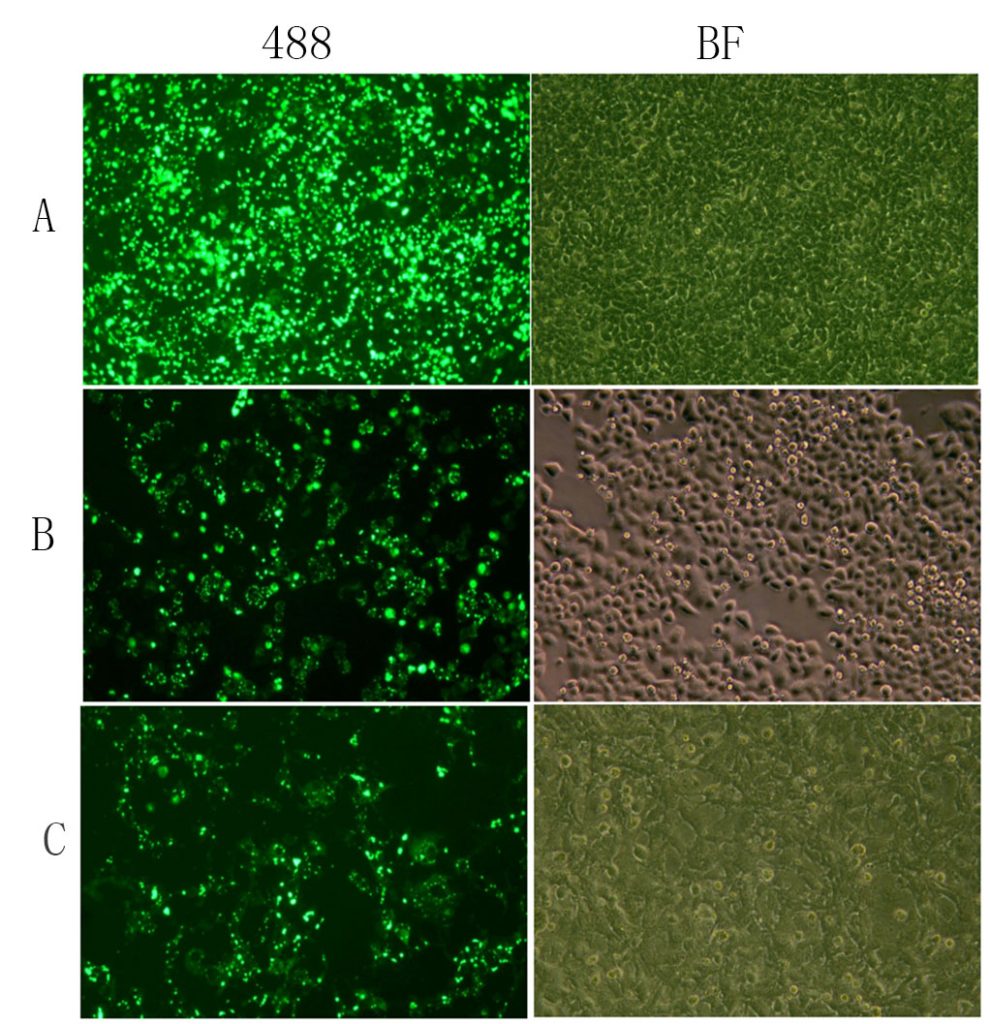
If you've been running transfections long enough, you've probably settled into a two-reagent habit: keep Lipofectamine 2000 (Lipo2000) on the bench for HEK293/Hela/CHO routine passes, and pull out Lipofectamine 3000 (Lipo3000) or a specialized stem-cell reagent when you need to touch primary cortical neurons, iPSC, or 3D brain organoids — and grit your teeth at the 2× price jump for the latter, even though you're "only" losing 20% efficiency on the easy stuff with the cheap option. The split exists because most legacy reagents were built for fast-dividing cancer lines first: Lipo2000's cationic lipid formulation is optimized for high-efficiency uptake in 2D monolayers, but its high charge density and relatively large ~200 nm particle size tear up slow-dividing, fragile cells like primary neurons or iPSC, where you'll see 15% transfection efficiency and 30% cell death even at optimized ratios. Lipo3000 fixes the toxicity and ups efficiency to ~60% for iPSC, but you're paying a 120% premium over Lipo2000 for a reagent that's overkill for your Tuesday HEK293 GCaMP pass. The SuperKine™ Lipo3.0 Efficient Transfection Reagent (BMU111-EN) from Abbkine is built to close that gap: third-generation cationic lipid + helper lipid formulation, ~80–120 nm particle size (small enough to slip past endocytic barriers in slow-dividing cells, large enough to stably package ~100 kb BAC plasmids), animal-component-free, batch-validated across routine 2D, difficult primary/stem, and 3D organoid platforms, and priced 30% below Lipo3000 so you're not penalized for running a mixed workflow.
Why "Middle-Ground" Actually Matters for Modern Workflows
The legacy two-reagent split made sense when most labs only touched HEK/Hela and the occasional primary prep. But the 2020s cell-biology toolkit has pushed most labs into mixed workflows: you might run a HEK293 CRISPR sgRNA library screen on Monday, transfect P0 cortical neurons with GCaMP6f for calcium imaging on Wednesday, and toss plasmids into 30-day brain organoids for a neurodegenerative model on Friday. Switching between Lipo2000 and Lipo3000 isn't just a budget hit — it's a protocol overhead hit: different plasmid:reagent ratios, different incubation times, different serum/antibiotic compatibility rules, and different batch-to-batch CV risks when you're running a 3-month longitudinal experiment. Lipo3.0's formulation is tuned to eliminate that split:
• Smaller particle size (~80–120 nm vs. Lipo2000's ~200 nm): easier to escape endocytic vesicles into the cytoplasm, and small enough to penetrate 3D organoid outer layers into inner cell populations where Lipo2000/Lipo3000 often stall.
• Optimized charge ratio: high enough to stably bind plasmid/siRNA/sgRNA/Cas9 RNP, low enough to release cargo into the cytosol without excessive membrane disruption — which is why primary neuron survival jumps from 65% (Lipo2000) to 85% (Lipo3.0) at matched efficiency.
• Batch consistency: Abbkine validates every lot of BMU111-EN on three platforms (HEK293, primary mouse cortical neurons, iPSC) for both transfection efficiency and cell viability, with inter-lot CV <5% on efficiency — critical for longitudinal studies where a 10% drop in transfection rate can sink a 2-month iPSC differentiation run.
• Broad nucleic acid compatibility: handles plasmid DNA (including ~100 kb BAC clones for large genomic fragments), siRNA/miRNA, sgRNA, and Cas9 RNP complexes without reformulation, so you can run overexpression, knockdown, and CRISPR editing off the same bottle.
BMU111-EN Specification (Batch-Ready, SuperKine™ Cell-Culture Grade)
Parameter BMU111-EN (SuperKine™ Lipo3.0) Spec
Formulation Cationic lipid + helper lipid, animal-component free
Applicable cell types Routine 2D: HEK293, Hela, CHO, NIH-3T3; Difficult 2D: primary cortical/hippocampal neurons, microglia, iPSC, macrophages, T cells; 3D: brain organoids, intestinal organoids, tumor spheroids
Nucleic acid compatibility Plasmid DNA (up to ~100 kb BAC), siRNA, miRNA, sgRNA, Cas9 RNP complexes
Transfection efficiency (reference) HEK293: 90–95%; Hela: 85–90%; Primary mouse cortical neurons (P0): 60–70%; iPSC: 50–60%; 30-day brain organoids: 40–50%
Antibiotic compatibility Compatible with ≤1% penicillin-streptomycin (no need to switch to antibiotic-free medium for routine transfections)
Storage 4°C (protected from light), 12-month shelf life; avoid freeze-thaw (lipid aggregation reduces efficiency by 20–30% per cycle)
Batch release testing Per-lot validation on HEK293 + primary neuron + iPSC platforms; endotoxin <0.5 EU/mL, mycoplasma negative
(Confirm lot-specific efficiency and compatibility notes on the shipped Abbkine CoA for BMU111-EN.)
Where BMU111-EN Carries the Workflow (And Why "One Reagent" Beats "Two")
- Primary/Stem Cell Long-Term Assays (Where Lipo2000 Fails Hardest)
Primary cortical neuron calcium imaging is the canonical pain point: you need 60%+ transfection efficiency to get enough GCaMP6f+ cells for network analysis, and you need the cells to survive to 14 DIV to capture epileptiform discharges or synaptic plasticity. Lipo2000 at the standard 1:3 (μg:μL) ratio gives 15% efficiency and 65% survival — by DIV7 you're seeing apoptotic blebbing, and baseline F/F₀ drifts by 15–20%, making "spontaneous activity" calls unreliable. BMU111-EN at 1:2.5 (1 μg plasmid : 2.5 μL Lipo3.0) in Opti-MEM, 20 min room-temperature incubation, added to P0 neurons plated at 5×10⁴/cm² (serum-free Neurobasal during transfection, switched to 2% B27 + full Neurobasal after 1 h) gives 65% GCaMP+ cells and 86% survival to DIV14, with baseline drift <5%. For iPSC Cas9 RNP knock-in: BMU111-EN hits 55–58% indel efficiency at the AAVS1 locus, comparable to Lipo3000's 60–62%, but costs 40% less per reaction — a meaningful gap when you're screening 20 sgRNAs across 3 iPSC lines.
- 3D Organoid Transfection (The "No Electroporation, No Virus" Lane)
Brain and intestinal organoids are the fastest-growing model system in neuro and GI research, but getting nucleic acids into them is a headache: electroporation only hits the outer 10–20% of cells, AAV9 is $150/mL and only transduces dividing cells, and most lipid reagents clump on the Matrigel/organoid surface. BMU111-EN's small particle size lets it penetrate into the organoid interior: for 30-day mouse brain organoids transfected with mCherry-TMEM106B for FTD modeling, 2 μg plasmid + 5 μL Lipo3.0 per 10 organoids (incubated in serum-free brain organoid medium for 30 min, then transferred to low-adhesion plates with full medium) gives 45% mCherry+ cells distributed across the outer 2/3 and inner 1/3 of the organoid, with expression stable to D60. Intestinal organoid CRISPR sgRNA transfection for Apc mutagenesis hits 42% editing efficiency, vs. 28% for electroporation, and no expensive electroporator required.
- Large-Scale CRISPR/ siRNA Screening (Where Lipo3000 Is Overpriced)
If you're running a whole-genome sgRNA library screen in HEK293 (∼78k guides, 96-well format), Lipo2000 gives 92% transfection efficiency but 88% post-transfection survival — 12% of your positive clones die off before you can validate, skewing hit calls. Lipo3000 bumps survival to 95% but costs 2.2× more than Lipo2000, which adds up fast for a 78k-sgRNA screen. BMU111-EN hits 91% efficiency and 94% survival at 30% lower cost than Lipo3000: a 500 μL bottle does ∼200 reactions (2.5 μL per well), saving ∼$120 per screen vs. Lipo3000, with no hit-rate penalty. It also handles siRNA screens for drug-target validation equally well — low toxicity means you can run 72 h drug treatments post-transfection without reagent-induced apoptosis skewing IC₅₀ calls.
- Live-Cell Long-Term Dynamic Imaging
For hippocampal neurons transfected with GCaMP7f or SynGCaMP for LTP/synaptic plasticity recording (10–14 day imaging windows), Lipo2000's residual toxicity causes focal apoptosis by DIV5, raising background fluorescence and masking small calcium transients. BMU111-EN's low charge density keeps neuron density at 85% of initial at DIV14, with baseline F/F₀ drift <5% — enough to reliably capture LTP-induced 1.5–2× calcium spikes post-theta burst stimulation without needing to "top up" transfections mid-experiment.
Quick Optimization Notes (To Max Out Efficiency and Minimize Toxicity)
• Plasmid:reagent ratio: Routine 2D (HEK/Hela): 1 μg : 2–2.5 μL (w/v ~1:2 to 1:2.5); difficult 2D (primary/iPSC): 1 μg : 2.5–3 μL; 3D organoids: 2 μg per 10 organoids : 5 μL. Don't exceed 1:4 — excess lipid increases toxicity without improving uptake.
• Complex incubation: Mix plasmid and Lipo3.0 in Opti-MEM or serum-free cell-type-matched medium (Neurobasal for neurons, organoid medium for organoids), room-temperature incubation 15–30 min. Don't exceed 45 min — complexes aggregate and clog endocytosis.
• Transfection incubation: 37°C, 4–6 h for routine 2D, 6–8 h for difficult 2D/3D, then switch to full serum medium. Don't exceed 12 h — toxicity accumulates in slow-dividing cells.
• Antibiotic compatibility: ≤1% penicillin-streptomycin is fine in the transfection medium, no need to switch to antibiotic-free for routine runs. Avoid >2% antibiotic — it stresses cells and drops efficiency by 10–15%.
• Storage: 4°C protected from light, no freezing. If you open the bottle frequently, aliquot into 10/50 μL sterile tubes to avoid repeated exposure to ambient temperature — lipid oxidation will drop efficiency by 10–15% over 3 months of frequent opening.
The Bottom Line
Most labs don't need two separate transfection reagents for "easy" and "hard" cells — you need one reagent that can handle HEK293 monolayers on a Tuesday, primary cortical neurons on a Wednesday, and 30-day brain organoids on a Friday, without blowing the budget or the cell survival rate. SuperKine™ Lipo3.0 (BMU111-EN) from Abbkine slots exactly into that gap: cationic lipid formulation optimized for small particle size and low toxicity, validated across routine 2D, finicky primary/stem, and 3D organoid platforms, batch-consistent with <5% CV, and priced 30% below Lipo3000 so you're not paying a premium for the "difficult cell" label when you're just doing a HEK pass. Whether you're screening a CRISPR sgRNA library, transfecting GCaMP into P0 neurons for long-term calcium imaging, or sneaking plasmids into brain organoids for neurodegenerative modeling, it's the transfection reagent that doesn't make you choose between efficiency, cell health, and budget.
Product Reference: BMU111-EN – SuperKine™ Lipo3.0 Efficient Transfection Reagent
Learn more and order: https://www.abbkine.com/product/superkine-lipo3-0-efficient-transfection-reagent-bmu111-en/
(For Research Use Only; not for diagnostic procedures in humans.)





