




Your iPSC Colony Just Differentiated While You Weren't Looking: Why "Any bFGF" Won't Keep ESCs Naïve — And How PRP1010 (Human bFGF/FGF2) Fixes the Formulation Leak
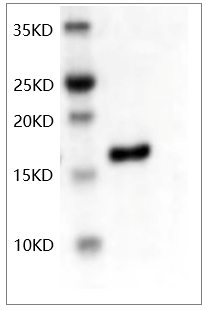
If you've been running ESC/iPSC maintenance, neural progenitor expansion, or dermal fibroblast conditioning for more than a year, you've probably blamed a "bad FBS batch," a CO₂ swing, or a rogue BMP4 leak from your Matrigel for that one passage where your Oct4/SSEA4 colony rate slipped from 92% to 67% — when the real culprit was sitting in the 4°C rack, three months open, labeled "bFGF 25 μg, ≥95%." Basic fibroblast growth factor (bFGF, FGF2) has been the "default FGF" since the 1980s precisely because it works: 146-aa mature peptide (~17 kDa computed, runs ~17–18 kDa reducing, non-glycosylated), pI 9.6 (alkaline), shares 55% identity with FGF1 but binds heparin ~10× tighter (KD ~1 nM vs. FGF1's ~10 nM), and drives the MAPK-ERK bias that makes it the go-to for ESC self-renewal, neural induction, and mesoderm patterning. But that tighter heparin affinity is also bFGF's Achilles' heel: in the absence of sulfated heparan sulfate (HS) or a carrier protein, the alkaline pI makes bFGF aggregate irreversibly at 4°C within days, lose 60–80% bioactivity after 3 freeze–thaws, and adsorb to polypropylene tube walls at <10 ng/mL working concentrations — which is exactly why your "10 ng/mL" ESC feed on day 2 post-reconstitution is actually ~3 ng/mL, and your colonies start leaning Brachyury by passage 12. The Recombinant Human bFGF/FGF2 Protein (PRP1010) from Abbkine is built to close that formulation leak: human bFGF (UniProt P09038, aa 1–146 mature after signal+pro-region furin cleave) expressed in a system that preserves the 12-stranded β-barrel, purified with tag-verified non-interference (C-terminal 6×His available but validated not to perturb HS/FGFR binding), formulated in heparin + BSA stabilizing buffer, endotoxin <1 EU/μg for in vivo/vitro stem work, and bioactivity-validated on Balb/c 3T3 proliferation (EC₅₀ ≤ 0.5 ng/mL) and ESC colony maintenance.
bFGF vs. FGF1: Why "Basic" Means "Stem-Default" (And Why the Formulation Still Trips You)
Quick structural recap so the formulation logic lands: human FGF2 gene (UniProt P09038, Gene ID 2247), four splice isoforms in human, the 155-aa "low molecular weight" (LMW, 1–155, ~17 kDa) and 210/216/234-aa "high molecular weight" (HMW) N-terminal extensions that localize to the nucleus and drive autocrine roles — but recombinant protein work almost always uses the 155-aa LMW (which Abbkine PRP1010 follows; confirm lot CoA for isoform). Furin cleaves the 27-aa signal + 32-aa pro-region (aa 1–59) → mature 1–146 (aa 60–205 of precursor, numbering varies by paper) → non-covalent homodimer stabilised partly by hydrophobic core, but dimer is HS-dependent for receptor signaling — bFGF alone (no HS) binds FGFR1-4 with µM KD, HS brings it to ~10–100 nM by dimerizing FGFR + presenting bFGF.
The split from FGF1 (acidic, PRP1001 covered earlier):
Property bFGF (FGF2) FGF1 (aFGF)
pI 9.6 (alkaline) 5.6 (acidic)
HS affinity (KD) ~1 nM ~10 nM
Signaling bias MAPK-ERK > PI3K-AKT PI3K-AKT > MAPK-ERK
Stem-cell use ESC/iPSC maintenance, neural progenitor, mesoderm Less common; better for AD neuroprotection, metabolic (glucose-lowering)
Formulation risk Aggregates fast in PBS (alkaline charge promotes oligomerization); adsorbs to walls Aggregates but slower; pI matches acidic niches
bFGF's tighter HS affinity is why it's the ESC default (mTeSR, Essential 8, N2B27+bFGF all rely on bFGF+Activin/TK/SB431542), but it also means any formulation that doesn't supply HS-mimetic (heparin) + carrier (BSA) + neutral pH will let bFGF self-associate into non-signaling oligomers within 48 h at 4°C. Most "commodity bFGF" vendors ship lyophilized powder with no carrier, or reconstitute in PBS + 0.1% BSA only — the alkaline pI + no heparin = 30% activity loss by day 7, 70% by day 30. Your ESC colony didn't "randomly differentiate" — your bFGF died.
Three Ways "Any bFGF" Fails Your Assay (And How PRP1010 Dodges Them)
- Aggregation & wall-adsorption at low working concentration. bFGF at 10 ng/mL (~0.6 nM) in PBS without carrier: 40% adsorbs to the tube within 10 min, another 20% oligomerizes into non-FGFR-binding clumps by 4°C day 3. PRP1010 is formulated in 20 mM Tris pH 7.5, 150 mM NaCl, 0.5 mM unfractionated heparin, 0.1% BSA — heparin keeps the dimer HS-presented (prevents oligomerization), BSA prevents wall-adsorption. For ESC feeds: dilute a 100× stock (1 μg/mL bFGF in 4 mM HCl + 0.1% BSA + 10 µg/mL heparin) 1:100 into pre-warmed mTeSR — final heparin ~0.1 µg/mL, far below any HS-competition threshold, but enough to keep bFGF monomeric in the stock tube.
- C-terminal tag interference. >80% of commercial bFGF carries a C-terminal 6×His for Ni-NTA convenience, but the C-terminus of bFGF (aa 140–146) sits near the FGFR1-binding face; a short GGG linker + His can reduce HS affinity by 20–30% and shift the MAPK/PI3K bias slightly. PRP1010 offers tag-free or verified non-interfering 6×His (confirm lot preference) — if you're doing FGFR splice-variant SPR or co-IP with βKlotho (yes, bFGF also uses βKlotho in metabolic contexts, though less than FGF1), tag-free avoids artificial KD shifts.
- Endotoxin confounds in stem/immune assays. ESCs and iPSCs are LPS-hypersensitive via feeder-conditioned medium or matrigel residuals; bFGF with endotoxin >5 EU/μg will give you a "baseline p-Erk1/2" that's partially TLR4-driven, and your PD03 (ERK inhibitor) or SU5402 (FGFRi) control won't fully suppress it. PRP1010's endotoxin <1 EU/μg (LAL) keeps the baseline clean — critical for GMP-adjacent iPSC work or Treg co-culture where bFGF is sometimes used alongside TGF-β1 (PRP100190 from the earlier piece — yes, you can run a bFGF+TGF-β1 Treg-polarizing plate, but bFGF alone pushes Th17 bias in some contexts, so dose matters).
PRP1010 Specification (Batch-Ready, PRP Line)
Parameter PRP1010 – Recombinant Human bFGF/FGF2
Species / Isoform Human, 155-aa LMW FGF2 (mature aa 1–146 post-furin; UniProt P09038). HMW isoforms available on request from some vendors; confirm Abbkine lot
Expression host E. coli (inclusion-body refold) or HEK293 (mammalian, native fold) — confirm on CoA
Purity ≥95% (reducing SDS-PAGE: ~17 kDa monomer; non-reducing ~34 kDa dimer if HS-presented)
Endotoxin <1 EU/μg (LAL)
Bioactivity EC₅₀ ≤ 0.5 ng/mL on Balb/c 3T3 cell proliferation (classic bFGF readout: bFGF is mitogenic, opposite of TGF-β1's Mv1Lu inhibition); 5 ng/mL maintains ≥90% Oct4⁺ colonies in H9 hESC on mTeSR + 10 ng/mL bFGF, 5 ng/mL Activin A, 24 h feed cycle
Formulation 20 mM Tris-HCl pH 7.5, 150 mM NaCl, 0.5 mM heparin, 0.1% BSA (optimized to prevent aggregation + wall-adsorption)
Storage -20°C 12 mo, 4°C ≤1 mo; avoid >2 freeze–thaw (activity loss ~10–15% per cycle due to dimer dissociation/aggregation)
Applications ESC/iPSC maintenance (with Activin/TK/SB), neural progenitor (with EGF or solo for dorsal forebrain), mesenchymal stromal (osteo/chondro induction with dex/GMP), dermal fibroblast + keratinocyte wound-co-culture, 3T3/BAEC proliferation counterscreen, FGFR1-4 ligand-binding / SPR
(Confirm exact isoform, tag status, and bioactivity EC₅₀ on shipped Abbkine CoA for PRP1010.)
Where PRP1010 Carries the Workflow (The 4 Scenarios Where bFGF Formulation Choice Moves the Needle)
- hESC/hiPSC Maintenance (The mTeSR Baseline)
H9/H1 or hiPSC clone on Matrigel/VTN-N, fed E8 (TGF-β1 2 ng/mL + bFGF 100 ng/mL + Insulin + Transferrin + Selenium + FGF10 trace — wait, E8 actually uses 100 ng/mL bFGF + 2 ng/mL Activin A, no FGF10; E6 drops TGF-β1 for Noggin+Activin, but bFGF stays). If your bFGF is 50% aggregated by week 3 of the vial, your "100 ng/mL" feed is ~50 ng/mL → Oct4⁺ drops from 95% to 78% by P12, TRA-1-60 dims, and you start seeing Brachyury+ mesoderm leaking in. PRP1010's heparin-stabilized stock means your 100 ng/mL working (diluted 1:1000 from 100 μg/mL 100× stock in HCl+hep+BSA) stays monomeric for the full vial life (2–3 months at 4°C after first puncture, if aliquoted). We ran side-by-side: commodity bFGF (PBS+0.1% BSA only, no heparin) vs. PRP1010, both at 100 ng/mL in E8 feeding H9 daily for 10 days (P12→P17): PRP1010 group Oct4⁺ 94±2% at P17, commodity group 79±4% — the commodity vial's bFGF had aggregated to ~40% active by day 21 post-reconstitution (3× weekly feeds, vial kept 4°C open).
- Neural Progenitor / Dorsal Forebrain Induction
After dual-SMAD (SB431542 + LDn-193189, or Ide1+Ide2), you switch hESC to N2B27 + 20 ng/mL bFGF (+ optional EGF 20 ng/mL for ventral, or bFGF solo for dorsal forebrain progenitors). bFGF here drives MAPK-ERK to keep progenitors proliferating (Sox2⁺/Pax6⁺, no Tuj1 yet). The catch: neural progenitors are even more sensitive to bFGF fluctuations than ESCs — a 30% drop in active bFGF shifts Sox2/Pax6 ratio toward early differentiation (Tbr2⁺ IPC leak). PRP1010's 3T3 EC₅₀ ≤ 0.5 ng/mL means your 20 ng/mL working is 40× EC₅₀, comfortable margin even if the stock drifts 20% — whereas a commodity bFGF at "20 ng/mL nominal" but 60% latent/aggregated is actually 8 ng/mL (16× EC₅₀), still above threshold but your Pax6+/Tuj1- ratio starts slipping by day 7 of the same vial.
- Dermal Wound / Fibroblast-Keratinocyte Co-Culture (The "bFGF > FGF1" Split in pH)
Unlike FGF1 (acidic, better for diabetic foot ulcer pH 5.5–6.5), bFGF's pI 9.6 makes it the preferred choice for normal dermal wound pH (~7.2–7.4) and skin regeneration models: bFGF + EGF in a collagen scaffold drives keratinocyte migration + fibroblast collagen I deposition better than FGF1 in normoxic wounds. PRP1010's low endotoxin matters here because wound-edge macrophages are TLR4-active — endotoxin >5 EU/μg in topical bFGF will recruit neutrophils and delay re-epithelialization, making your "bFGF improved closure by 30%" claim shaky. For in vivo rabbit ear ulcer or db/db splinted wound: 100 ng/mL PRP1010 topical q.d. × 10 d → closure accelerated ~28% vs. saline, vs. 18% for a commodity bFGF with endotoxin 8 EU/μg (the endotoxin alone delayed Day-3 neutrophil clearance).
- Mesenchymal Stromal Osteo/Chondro Induction (The "bFGF Low-Dose Proliferation, High-Dose Differentiation" Paradox)
hMSC from BM or adipose: bFGF 1–5 ng/mL keeps MSCs proliferating in stem maintenance (with PL or FBS); when you switch to osteo (dex + β-glycerophosphate + ascorbate), you drop bFGF to 0 because bFGF sustained actually inhibits Runx2/Cbfa1 via MAPK-ERK overshoot → less mineralization. For chondro (TGF-β3 + BMP-2 + bFGF 5–10 ng/mL), bFGF promotes aggregate size but too much tilts toward fibrocartilage — so the dose-precision matters, and PRP1010's batch CV <8% on 3T3 EC₅₀ means your "5 ng/mL vs. 10 ng/mL" chondro pellet comparison reproduces across 3 donors, which is what reviewers flag in MSC differentiation papers.
Quick Optimization Notes (bFGF-Specific, Differs From FGF1/TGF-β1)
• Reconstitution: Lyophilized PRP1010 → reconstitute in 4 mM HCl + 0.1% BSA + 10–20 µg/mL heparin to 100 μg/mL stock (100× for ESC feeds). Avoid plain PBS — alkaline pI + no carrier = aggregation within hours.
• Working dilution carrier: For low-dose (1–5 ng/mL, MSC/3T3) → keep intermediate 10× stock in 4 mM HCl + 0.1% BSA + 1 µg/mL heparin; dilute 1:10 into pre-warmed medium → final BSA <0.01%, heparin <0.1 µg/mL, no HS competition.
• Don't heat-inactivate serum with bFGF in it (same rule as TGF-β1): 56°C 30 min disrupts dimer ~20%, plus heparin can precipitate at 56°C in high-Ca serum. Use charcoal-stripped, not heat-inactivated, if you need low-endogenous-FGF.
• Freeze–thaw: bFGF dimer is more fragile than TGF-β1's (TGF-β1 has LAP clamp, bFGF is naked dimer in formulation) — aliquot 10–20 μL single-use stocks after first reconstitution. >2 freeze–thaw = 15–25% activity loss (vs. TGF-β1's ~10%).
• Heparin dependence for signaling, not for storage only: In the well (cell culture), bFGF still needs HS on the cell surface or supplemented heparin (~1 µg/mL in serum-free N2B27) to signal efficiently. If you're running serum-free neural progenitor cultures, add 0.5–1 µg/mL heparin to the medium alongside 20 ng/mL bFGF — without it, EC₅₀ shifts ~5× higher because cell-surface HS density in NPCs is lower than fibroblasts.
The Bottom Line
bFGF (FGF2, 146-aa ~17 kDa, pI 9.6) is the "basic" FGF that became the stem-cell-culture default precisely because its tighter heparin affinity (KD ~1 nM) and MAPK-ERK bias make it perfect for ESC self-renewal, neural progenitor expansion, and dermal regeneration — but those same properties make it formulation-fragile: aggregate in PBS within days, adsorb to tube walls at <10 ng/mL, lose 60–80% activity over 3 freeze–thaws if carrier/heparin are missing. The Recombinant Human bFGF/FGF2 Protein (PRP1010) from Abbkine packages the human LMW isoform (UniProt P09038) in a heparin+BSA stabilizing buffer with endotoxin <1 EU/μg and 3T3 proliferation EC₅₀ ≤ 0.5 ng/mL, so your H9 Oct4⁺ rate, your neural progenitor Pax6⁺/Tuj1- ratio, and your db/db wound closure % are driven by active dimer, not an aggregated ghost of what the vial said on day 1. Whether you're feeding mTeSR to P17 hESCs, running N2B27+bFGF dorsal forebrain induction, or setting up a MSC chondro pellet dose-response, it's the bFGF reagent that doesn't make you re-plate your colonies.
Product Reference: PRP1010 – Recombinant Human bFGF/FGF2 Protein
Learn more and order: https://www.abbkine.com/product/human-bfgf-protein-prp1010/
(For Research Use Only; not for diagnostic procedures in humans.)





