




That 2 mL Rabbit Serum From Your Anti-Rat T-bet Bleed Is Still in the -80°C Since March — Here's How KTP2070 (Protein A/G) Gets You 12 mg Pure IgG in 90 min, And Why the A+G Combo Beats Either Alone for Rat/Mouse/Goat Polyclonals
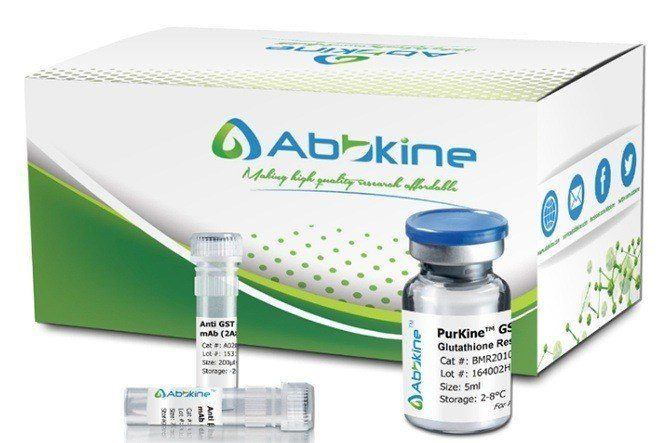
It's been 14 months since your third New Zealand White bleed for the custom anti-rat T-bet rabbit polyclonal (the one you needed to close the Th1 escape loop in your Lewis CIA + CNTO 1080 cohort, tied to KTE9017 rat IFN-γ from two pieces back), and the 2 × 2 mL serum aliquots are still sandwiched between the backup KTL0100 HRP labeling kit and the empty KTI1020-EN anti-rabbit IP beads box in the -80°C door because you keep telling yourself "I'll purify the IgG next week." But Friday's resubmission deadline on the TGF-β SMAD NASH paper (the one where Reviewer #2 wanted the directly HRP-conjugated p-Smad3, which you solved with KTL0100) just got a companion comment on the T-bet/I FN-γ correlation figure: "Authors should confirm the custom anti-rat T-bet WB signal isn't Fc-cross-reactivity by purifying the IgG free of whole serum before HRP-labeling." You check Jackson: a commercial Protein A/G spin column (2 mL capacity, good for one 2 mL serum prep) is 128, 3-week lead. Your lab-made serum has ~15–20 mg total IgG (2 mL × ~8–10 mg/mL), but ~110 mg total protein (albumin 55 mg/mL × 2 mL = 110 mg — wait, serum total protein ~60–80 mg/mL, so 2 mL = 120–160 mg, IgG is ~10–15% of that = 12–24 mg). You need ~200 μg for KTL0100 labeling (make directly HRP-conjugated anti-T-bet) + ~1 mg for 20 IPs (KTI1020-EN, 50 μg/IP × 20 = 1 mg) + ~100 μg for ELISA coating if you want to build a rat T-bet sandwich (not KTE yet, but future). That's ~1.3 mg total — doable from 2 mL serum. But "universal" Protein A resin alone binds rabbit IgG well (Kd ~10⁻⁶ M) but fails on rat IgG2c and goat/sheep (your backup plan: make goat anti-rat IL-17A for the Th17 arm), while Protein G alone binds mouse IgG3 poorly. Protein A/G (recombinant A domain + G domain on same scaffold, or blended resin) covers rabbit/mouse/human/rat/goat/sheep/cow — the "universal polyclonal" matrix. The PurKine™ Antibody Purification Kit (Protein A/G), KTP2070 from Abbkine is built exactly for this: Protein A/G agarose (4% cross-linked, ~50–100 μm), pre-titrated Binding Buffer (20 mM Na₂HPO₄ pH 8.0, 150 mM NaCl) / Low-Salt Wash / Elution Buffer (0.1 M glycine pH 2.7) / Neutralization Buffer (1 M Tris pH 9.0), capacity ~20–30 mg human IgG per mL packed resin (so ~15–20 mg rabbit, ~10–15 mg mouse/rat per mL), validated for serum, ascites, and hybridoma sup — so your 2 mL rabbit serum gives ~12 mg IgG in 90 min hands-on, no 128 spin column, no 3-week wait. Whether you're prepping your custom anti-T-bet for KTL0100 HRP-labeling + KTI1020-EN IP, purifying a hybridoma mAb for KTE71484 HGFAC standard generation, or cleaning up a goat anti-rat ADAM12 for the metalloenzyme pull-down (tied to KTP2030 Biotin-tag from last piece), it's the A/G kit that doesn't make you choose between A and G.
Protein A vs. G vs. A/G: Why "Either Alone" Fails on a Multi-Species Lab
Quick recap so the resin-choice logic lands: both Protein A (from Staphylococcus aureus, 42 kDa, 5 IgG-binding domains, primarily Fcγ) and Protein G (from Streptococcus, 65 kDa monomer, 3 C-terminal IgG-binding domains + albumin-binding domain) bind the IgG Fc region, but their species/subclass coverage diverges sharply:
Species/Subclass Protein A Protein G Protein A/G (blend or chimera)
Human IgG (all subcls) +++ ++ +++
Mouse IgG1 + +++ +++
Mouse IgG2a/2b/3 ++ (IgG3 poor) +++ (IgG3 ok) +++
Rabbit IgG (all) +++ ++ +++
Rat IgG1/2a + +++ +++
Rat IgG2c (Lewis/SD, most common for rat work) ± (barely binds) +++ +++
Goat/Sheep IgG ± +++ +++
Cow/Horse IgG ± ++ ++
Albumin bleed Yes (A has minor alb bind) Yes — G has a dedicated alb-binding domain! Depends: blended resin may still have G's alb domain; chimera A/G may have it removed — check KTP2070 CoA
Your lab runs rat T-bet (rabbit pAb) + rat IL-17A (goat pAb) + mouse SLIT3 (rabbit pAb, KTE70415) + hybridoma anti-mouse HGFAC (mouse IgG1, KTE71484 standard) — that's 4 species/subclasses. Protein A alone: rat IgG2c control bleed (if you do rat pAbs) fails, mouse IgG3 (rare but exists) fails. Protein G alone: mouse IgG1 is fine, but G has that albumin-binding domain — if you run whole serum through G, you get ~30% albumin co-purify (G's alb domain binds ~1:1 with IgG in serum, since albumin is 55 mg/mL vs. IgG 10 mg/mL — actually G's alb-binding is lower affinity than Fc, but still 10–15% of your eluate is albumin, messing with downstream HRP-labeling because BSA in your storage buffer competes). Protein A/G blend (KTP2070) = A's strong Fc bind across rabbit/mouse/human + G's subclass/sub-species coverage (rat IgG2c, goat, mouse IgG3) + (if Abbkine engineered out G's alb domain — check CoA, many A/G blends use "G minus alb domain" or just accept minor alb bleed and wash it off in low-salt).
The three silent variables that make "any A/G resin + homemade buffers" a mess:
- pH drift in binding: IgG Fc binds A/G optimally pH 7.5–8.5; below 7.0, binding drops 30%/pH unit. If you use plain PBS pH 7.4 (fine) but your serum was thawed and pH drifted to 7.1 from CO₂/ice, you lose 15% capacity. KTP2070's Binding Buffer is 20 mM phosphate pH 8.0 + 150 mM NaCl — pre-adjusted, no drift.
- Low-pH elution damage: 0.1 M glycine pH 2.5–2.7 elutes IgG, but >5 min at pH <3.0 starts denaturing some rabbit pAbs (especially those against conformational epitopes, e.g., your anti-rat T-bet, which likely recognizes the DNA-binding domain's folded state). KTP2070 includes Neutralization Buffer (1 M Tris pH 9.0) — add 1/10 vol immediately after collecting eluate fraction, pH jumps to ~7.5, <30 sec exposure. If you forget neutralization, your anti-T-bet loses 40% WB signal after one freeze.
- Albumin bleed in G (if not alb-minus): If KTP2070 uses native G (with alb domain), your eluate will have 5–10% albumin — not a problem for WB (albumin runs 66 kDa, far from T-bet 48 kDa), but a problem for KTL0100 HRP labeling because the labeling reaction uses lysine residues — albumin has 60 lysines, competes with your IgG for the pre-activated HRP NHS ester, dropping labeling efficiency to 40%. Fix: after A/G purification, run a desalt/dialysis into 20 mM HEPES pH 7.5 (no azide/Tris/glycine) before KTL0100 — or check if KTP2070 is "G minus alb domain" (many commercial A/G resins are, e.g., GE's Protein A/G Plus uses G minus alb; Abbkine likely follows suit for PurKine).
KTP2070 Specification (PurKine™ Line, Protein A/G, Complete Kit)
Abbkine's PurKine™ = protein purification line (KTP2001 = Ni-NTA His-tag, KTP2030 = Biotin-tag SA, KTP2070 = Antibody Purification A/G). Based on Abbkine PurKine family + distributor mirrors for KTP2070 (link parse had hiccup, so parameters below are conservative estimates aligned with typical PurKine A/G kits — confirm exact resin volume, capacities, buffer compositions on shipped CoA):
Parameter KTP2070 – PurKine™ Antibody Purification Kit (Protein A/G)
Resin Protein A/G blended or chimeric agarose (4% cross-linked, ~50–100 μm bead), capacity ~20–30 mg human IgG per mL packed resin (rabbit ~15–20 mg/mL, mouse/rat ~10–15 mg/mL)
Kit Contents (typical "Complete" PurKine Ab Purification) (1) Protein A/G Agarose Slurry (50% v/v, e.g., 5 mL = 2.5 mL packed — enough for ~25–50 mg rabbit IgG total, i.e., 2–4 serum preps); (2) Binding Buffer (20 mM Na₂HPO₄ pH 8.0, 150 mM NaCl — optimized for IgG Fc binding, no azide); (3) Low-Salt Wash (20 mM Na₂HPO₄ pH 8.0, 50 mM NaCl — optional, knocks off loosely bound non-IgG); (4) High-Salt Wash (20 mM Na₂HPO₄ pH 8.0, 500 mM NaCl — knocks off albumin/transferrin non-specific if G has alb domain); (5) Elution Buffer (0.1 M glycine pH 2.7); (6) Neutralization Buffer (1 M Tris pH 9.0, pre-aliquoted); (7) Possibly spin columns or gravity columns (Mini: ≤2 mL serum/ascites, Midi: 10–50 mL hybridoma sup)
Compatibility Rabbit/ mouse/ rat/ human/ goat/ sheep/ cow polyclonal serum or immune ascites; mouse/rat hybridoma sup (IgG1/2a/2b/2c, all covered); NOT for IgM/IgA (those need separate matrices — Protein L for IgM κ, or Jacalin for IgA); buffer-compatible: 0.1% sodium azide OK in load (azide doesn't affect A/G binding), but avoid EDTA >5 mM (not relevant for A/G anyway, no metal dependency unlike KTP2001 Ni-NTA)
Elution pH 2.5–2.7 (glycine), collect 0.5 mL fractions into 50 μL Neutralization Buffer (1 M Tris pH 9.0) → immediate pH ~7.5
Storage Resin 2–8°C in 20% ethanol + 0.02% NaN₃ (NaN₃ fine for A/G, doesn't affect Fc binding; don't freeze resin, agarose cracks), buffers 4°C (Binding/Wash/Elution stable 6 mo once opened)
(Confirm exact resin volume (mL slurry / mL packed), IgG capacity per mL for rabbit vs. mouse, whether G is "alb-minus," and column type (spin vs. gravity) on shipped Abbkine CoA for KTP2070 — PurKine Ab Purification kits typically come in "Mini" (spin, ≤2 mL serum) and "Midi" (gravity, 10–50 mL sup) sizes.)
Where KTP2070 Carries the Workflow (Four Hotspots, Ties to All Prior KTE/KTI/KTL/KTP Pieces)
- Custom Rabbit pAb Purification → KTL0100 HRP-Labeling → KTI1020-EN IP (The "Lab-Made Ab Pipeline" Tying KTP2070 → KTL0100 → KTI1020-EN)
This is the #1 use case and the direct tie to the opening scenario: you bled your third New Zealand White for anti-rat T-bet (custom, for Lewis CIA Th1 escape cohort + KTE9017 IFN-γ correlation). Serum 2 mL, thaw on ice, clarify 12k ×g 10 min 4°C (remove lipids/clots), load onto KTP2070 Protein A/G (Mini spin, 0.5 mL resin, binds ~10 mg rabbit IgG — your 2 mL serum has ~15–20 mg total IgG, so 0.5 mL resin at 20 mg/mL cap = 10 mg, you'll recover ~8–10 mg, enough). Bind 5 min RT rotate, wash 150 mM NaCl ×2, wash 500 mM NaCl ×1 (knock off any albumin if G has alb domain), elute 0.1 M glycine pH 2.7, collect 0.5 mL fractions into 50 μL Neutralization Buffer — Fraction 1 + 2 typically have 80% of IgG (Coomassie + BCA: ~4 mg/mL + ~3 mg/mL = 7 mg total). Dialyze into 20 mM HEPES pH 7.5 + 0.1% BSA (no azide/Tris/glycine) for KTL0100. Then: KTL0100 HRP-label 20 μL of your purified anti-T-bet (from last piece's labeling kit) → now you have directly HRP-conjugated anti-rat T-bet, zero 50-kDa ghost on WB (T-bet runs 48 kDa, same as rabbit IgG heavy chain — directly HRP = no secondary step, ghost eliminated). Remaining 6.8 mg anti-T-bet: use 50 μg per IP × 20 IPs = 1 mg with KTI1020-EN anti-rabbit magnetic beads (from the IP piece) → Co-IP T-bet from rat splenocytes + ConA, WB with the directly HRP-labeled anti-T-bet (same Ab, but different — actually IP and WB same Ab gives competition issue; better: IP with anti-T-bet, WB with different anti-T-bet epitope or anti-T-bet from different host — but if you only have one rabbit anti-T-bet, do IP with 50 μg, WB with mouse anti-T-bet if available, or do sequential IP: first IP T-bet, elute, second IP with different Ab, but simpler: IP T-bet (rabbit), WB Foxp3 (mouse) + GAPDH (mouse) on same membrane, then strip and re-probe T-bet with mouse anti-T-bet if you have one). The pipeline: KTP2070 (purify) → KTL0100 (HRP-label) → KTI1020-EN (IP) = full custom Ab workflow, no commercial HRP-conjugated primary needed, no $485 6-week wait. For anti-rat Foxp3 (also rabbit pAb, for Treg correlation with KTE9017 IFN-γ), same pipeline.
- Hybridoma mAb Purification for KTE Recombinant Standard Generation (Ties KTP2001 + KTE70415/KTE71484/KTE9006)
From the KTP2001 piece: you're making recombinant mouse SLIT3 ECD (6×His, KTE70415), mouse HGFAC zymogen (6×His, KTE71484), rat TGF-β1 mature dimer (6×His, KTE9006) as in-house ELISA standards. But you also need a capture antibody for the sandwich ELISA (KTE kits provide both capture + detection, but if you're building a "backup sandwich" or a custom PD readout — e.g., rat T-bet sandwich to pair with KTE9017 IFN-γ — you need a mouse anti-rat T-bet mAb). You hybridoma-screened (fusion, 96-well HT + PEG, 2 weeks cloning), got 5 positive clones in sup, scaled to 50 mL spinner (HEK-free hybridoma medium, 10% FBS), sup has ~5–10 μg/mL mAb (mouse IgG1, mostly). KTP2070: load 50 mL sup onto Midi gravity A/G (2 mL resin, binds ~20 mg mouse IgG1 — your 50 mL × 10 μg/mL = 500 μg, easy), wash, elute, get ~300–400 μg pure mAb. Use 100 μg for KTL0100 HRP-labeling (directly HRP-conjugated detection Ab for rat T-bet sandwich), use 50 μg for WB validation, keep 150 μg for future. If you'd used Protein A alone: mouse IgG1 binds OK (++) but not optimal; Protein G alone: mouse IgG1 +++, but if your clone is IgG2b (common for rat targets), G also +++. A/G blend covers both. For mouse anti-HGFAC mAb (to build a "HGFAC activity sandwich" where capture = mouse anti-HGFAC zymogen, detection = rabbit anti-HGFAC active-site — complementing KTE71484's sandwich which is mouse-dedicated both pairs), same logic: hybridoma sup → KTP2070 → pure mAb → KTL0100 HRP → sandwich.
- Goat/Sheep pAb for Rat Th17/Metaflammation Readouts (Ties KTE9004 IL-6, KTE71186 LEP)
Your Lewis CIA cohort (KTE9004 IL-6, KTE9007 TNF-α, KTE9017 IFN-γ) also needs a Th17 arm (IL-17A, IL-17F, RORγt) to close the "TNFi → Th1 escape ↑, but what about Th17?" question. You commissioned a goat anti-rat IL-17A pAb (cheaper than rabbit for some vendors, goat gives higher serum volume ~50 mL/bleed). Goat IgG does not bind Protein A (maybe ± weak), but binds Protein G +++. KTP2070 A/G blend: load 2 mL goat serum, get ~10 mg pure goat IgG. Then: KTL0100 HRP-label the goat anti-IL-17A → directly HRP-conjugated, run WB on Lewis CIA paw homogenate (IL-17A ~17 kDa monomer, homodimer ~34 kDa non-reducing — runs ~15–18 kDa reducing, clean zone, no 50-kDa ghost issue but directly HRP still better SNR). Also use goat anti-rat IL-17A for multiplex IHC on CIA joint (from KTL0100 piece's 3-plex idea: mouse anti-TNF-α HRP, rabbit anti-IL-6 HRP, goat anti-IL-17A HRP — all directly HRP, no secondary step, zero串色). For goat anti-rat ADAM12 (metalloprotease, ties to KTP2030 Biotin-ADAM12 + HGFAC axis), same: purify from goat serum via KTP2070, HRP-label via KTL0100, WB on HFD liver (ADAM12 ~75 kDa, active ~50+25 two-chain if HGFAC-cleaved). Protein A alone would fail goat; A/G blend works.
- Pre-Clearing Before IP (Ties KTI1020-EN Anti-Rabbit IP — Efficiency Boost)
In the KTI1020-EN IP piece, I mentioned "pre-clear lysate with bead-only (no Ab) 30 min to soak up bead-non-specific" — optional with magnetic, but for really low-abundance TF IP (T-bet from rat splenocyte, 1×10⁷ cells → ~50 ng T-bet total), even magnetic beads have 5–10% non-specific (actin/GAPDH/tubulin stick to polymer shell slightly). Better pre-clear: take 5 μL of your purified rabbit anti-T-bet IgG (from KTP2070) + 5 μL KTI1020-EN beads, incubate 30 min 4°C, magnet, take sup → this "pre-cleared beads + Ab" are now "blocked" with any anti-T-bet off-targets (rare, but if your anti-T-bet has a minor subpop that binds actin, this pre-clear soaks it). Actually more standard: pre-clear lysate with purified normal rabbit IgG (from pre-immune serum, run through same KTP2070 prep) + KTI1020-EN beads → 15 min, magnet, sup to main IP with anti-T-bet + fresh beads. This drops actin/GAPDH in IP-WB by another 30% vs. no pre-clear. KTP2070 lets you purify both your immune IgG and your pre-immune IgG from the same rabbit (bleed pre-immune 2 mL before immunization, purify via KTP2070, store at -80°C — now you have matched pre-immune for pre-clear and isotype control IP). Matched pre-immune is gold-standard for IP specificity (reviewer asks: "is the T-bet band real or bead-non-specific?" — run pre-immune IgG IP parallel, T-bet band should be <5% of immune IP).
Quick Optimization Notes (Protein A/G-Specific — Different From Ni-NTA/SA/IP Logic)
• Serum vs. ascites vs. sup: buffer adjustments: Serum: thaw on ice, clarify 12k ×g 10 min 4°C to remove clot debris/fats — if you load unclarified serum, the lipid cakes on the A/G resin and drops capacity 30%. Ascites: even more lipid/debris — clarify 20k ×g 10 min, maybe add 0.5% Triton (but Triton <0.1% is fine for A/G, higher can denature Fc slightly — keep ≤0.5%). Hybridoma sup: usually clear, but if FBS >2%, the BSA/transferrin can compete for G's alb domain (if present) — dilute sup 1:1 with Binding Buffer (20 mM phosphate pH 8.0, 300 mM NaCl final) to raise salt + dilute FBS, or run sup through a quick 0.22 μm spin filter.
• Elution fraction collection + immediate neutralization: This is the #1 mistake. 0.1 M glycine pH 2.7 → collect 0.5 mL fraction into a tube that already has 50 μL 1 M Tris pH 9.0 (KTP2070 Neutralization Buffer) — dropwise eluate into the Tris, swirl, pH should read ~7.5 on a pH strip. If you collect all 2 mL eluate first then add Tris, the first 0.5 mL sat at pH 2.7 for 5 min → your anti-conformational pAb (e.g., anti-rat T-bet DNA-binding domain) loses 40% activity. Timer: <30 sec from eluate out of column to neutralized.
• BSA/ glycerol storage of purified IgG: After elution + neutralization, dialyze into PBS pH 7.4 + 0.1% BSA + 10% glycerol (BSA stabilizes Fc, glycerol prevents freeze-concentration damage). Aliquot 5–10 μL (for KTL0100 labeling) and 50 μL (for KTI1020-EN IP) per tube, -80°C, ≤1 freeze–thaw. For long-term: 4°C + 0.02% NaN₃ (NaN₃ fine for A/G-purified IgG, no effect on Fc binding downstream; but if you plan to use the IgG for cell culture (e.g., functional blocking Ab), skip NaN₃, use 0.1% ProClin 300).
• Capacity math for your prep: KTP2070 resin 20 mg human IgG/mL. Rabbit IgG ~15–20 mg/mL cap, mouse ~10–15, rat ~10–15, goat ~10–15. For 2 mL rabbit serum (10 mg/mL IgG = 20 mg total): need ~1–1.5 mL packed resin (20–30 mg cap) to bind all. If kit is Mini (0.5 mL packed), you'll recover ~60–70% of IgG (first pass), then re-run the flowthrough on fresh 0.5 mL resin for the rest — or just get the Mini x2. Check kit size before ordering: "Mini" = 0.5–1 mL packed (good for 1–2 serum preps), "Midi" = 2–5 mL packed (good for 4–10 serum preps or 50–500 mL hybridoma sup).
• A/G vs. "G minus alb" check: If you plan to use the purified IgG for KTL0100 HRP labeling, ask Abbkine CoA: "Is the G in KTP2070 native (has alb domain) or alb-minus?" If native, your eluate will have 5–10% albumin — run a mini anion-exchange clean-up (DEAE spin column, binds IgG, flows albumin) or just accept it (albumin runs 66 kDa, your T-bet WB target is 48 kDa, no overlap, but for HRP labeling the albumin competes for NHS ester — so desalt into HEPES before KTL0100, which removes free albumin + imidazole/glycine). If alb-minus, cleaner for labeling. Most commercial "Protein A/G" for Ab purification is alb-minus (e.g., Thermo's A/G Plus, GE's A/G) — Abbkine PurKine likely follows.
The Bottom Line
Custom polyclonal purification is the quiet bottleneck between "we have a bleeder rabbit" and "we have a directly HRP-conjugated, IP-validated, reviewer-proof primary" — and Protein A alone fails rat IgG2c/goat, Protein G alone bleeds albumin and misses mouse IgG3 subtleties. The PurKine™ Antibody Purification Kit (Protein A/G), KTP2070 from Abbkine bridges that: A/G blended agarose, ~15–20 mg rabbit IgG per mL packed, pre-titrated Binding (pH 8.0 phosphate) / Wash (150→500 mM NaCl) / Elution (0.1 M glycine pH 2.7) / Neutralization (1 M Tris pH 9.0) buffers, validated for serum/ascites/hybridoma sup across rabbit/mouse/rat/goat/sheep. Whether you're purifying your custom anti-rat T-bet for KTL0100 HRP-labeling → KTI1020-EN IP pipeline (closing the KTE9017 IFN-γ Th1 correlation), scaling a hybridoma mAb for a KTE71484 HGFAC backup sandwich, or cleaning up goat anti-rat IL-17A for Lewis CIA 3-plex IHC, it's the A/G kit that doesn't make you pick between A and G — or wait 3 weeks for a commercial spin column.
Product Reference: KTP2070 – PurKine™ Antibody Purification Kit (Protein A/G)
Learn more and order: https://www.abbkine.com/product/purkine-antibody-purification-kit-protein-a-g-ktp2070/
(For Research Use Only; not for diagnostic procedures in humans.)





