




SPC24 Beyond the Gel Band: Quantifying the NDC80 Kinetochore Anchor with a Dedicated Human ELISA
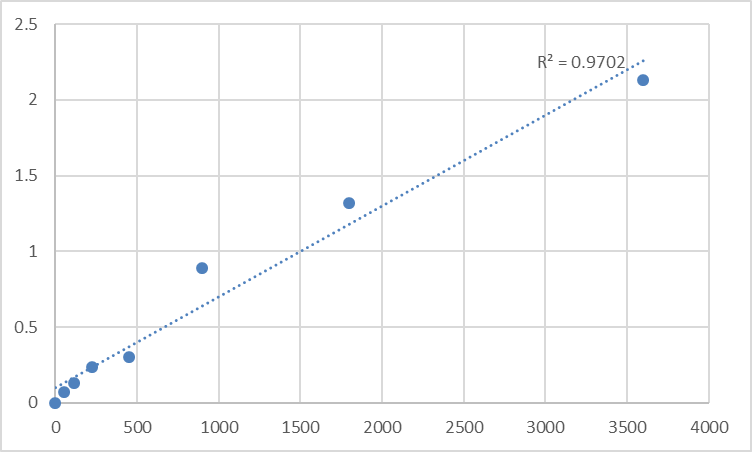
If the mitotic spindle is the railway, then the kinetochore is the coupler that keeps every chromosome safely latched to the track. And one of the most structurally underrated—yet functionally indispensable—components of that coupler is SPC24, also cataloged as NDC80 kinetochore complex component (UniProt: Q8NBT2; Gene ID: 147841). As a core member of the NDC80/Hec1 complex (Ndc80–Nuf2–Spc24–Spc25), SPC24 helps build and stabilize the microtubule-binding interface at the outer kinetochore plate, contributes to sister chromatid biorientation, spindle checkpoint (SAC) signaling, and the dynamics of metaphase–anaphase transitions, and indirectly supports the recruitment and tracking behavior of the SKA1 complex on depolymerizing MT ends. Because it is not a housekeeping filler but a mechanistically central hub, how much SPC24 is actually present—and how its levels shift under drug, RNAi/sgRNA, or cell-cycle perturbation—often matters more than a simple “band present/absent” Western. The Human Kinetochore protein Spc24 (SPC24) ELISA Kit (KTE60537) from Abbkine gives you exactly that: a sandwich ELISA framework that turns a structurally critical kinetochore subunit into a traceable, interpolatable number you can legitimately compare across conditions, replicates, and cohorts .
Why SPC24 Deserves Its Own Protein-Level Readout
SPC24 isn’t decorative. It acts as a component of the essential kinetochore-associated NDC80 complex, which is required for chromosome segregation and spindle checkpoint activity, and it is explicitly described as required for kinetochore integrity and the organization of stable microtubule binding sites in the outer plate of the kinetochore. Seen from the cell-biology angle, three things make SPC24 an unusually useful quantification target:
- It marks the business end of chromosome mechanics—the load-bearing interface where microtubules actually “grab” chromosomes.
- Its levels and assembly state correlate with NDC80-complex integrity, so changes here ripple into misalignment, lagging chromosomes, or checkpoint override.
- It is abundant enough in cycling cell lysates / mitotic extracts to quantify, yet informative enough that small shifts can be biologically meaningful (ploidy stress, aneuploidy models, or checkpoint modulations).
Too often, “kinetochore integrity” gets reduced to Hec1/Ndc1/CENP-E western blots. Adding SPC24 protein quantification lets you close the loop: you’re not just watching a motor or a checkpoint output—you’re measuring part of the scaffold itself .
Assay Principle: Two-Site Sandwich ELISA, Pre-Coated Plate, 450 nm
The KTE60537 format is the classic, high-specificity two-site sandwich ELISA that most reviewers immediately recognize as “proper quantitative”:
• A microplate is pre-coated with an anti-human SPC24 capture antibody.
• Standards and samples (serum / plasma / tissue homogenates / cell culture supernatants or other biological fluids) are added; any SPC24 present binds to the immobilized antibody.
• After washing, a biotin-conjugated anti-SPC24 detection antibody (specific for a different epitope) forms the sandwich complex.
• Streptavidin–HRP binds the biotin, TMB substrate produces color ∝ bound SPC24, the reaction is stopped (acid), and absorbance is read at 450 nm.
• The SPC24 concentration in unknowns comes from the standard curve run on the same plate.
The published performance notes you’ll commonly see echoed for this product line stress high sensitivity and no significant cross-reactivity/interference with analogues, intra-assay CVs often reported around ~4–5%, and inter-assay CVs around ~7%, with good spike-recovery behavior—useful reassurance when you’re planning replicates and stats .
What You Gain vs. “Just Doing Another Western for SPC24”
Western blots are brilliant for size, modification state (if you use Phos-tag/shift logic carefully), and spatial context (if you’re in IF). But if the scientific claim is:
“SPC24 protein changes ~2–3× under this perturbation, and it’s consistent across n=5…”
…then a plate-based sandwich ELISA is simply the more defensible tool:
• You get absolute units (ng/mL or equivalent) instead of “darker vs. lighter lane.”
• Every run carries its own standard curve, which corrects plate-to-plate drift.
• Throughput scales: 48T/96T formats let you process a time course, a dose–response, or a cohort without spending the afternoon on transfers and exposures.
• The readout is objective and digitizable straight from the plate reader (OD → curve fit → concentration), which reviewers prefer for quantitative claims .
Typical Samples This Kit Accepts (and a Couple of Guardrails)
Abbkine lists the compatible matrices broadly as serum, plasma, tissue homogenates, cell culture supernatants, and other biological fluids. Practically speaking:
• Cell/tissue work (most common): whole-cell or mitotic-arrested lysates / TBS- or PBS-based extracts clarified by centrifugation; sometimes tissue homogenates normalized to total protein (BCA first) before loading the ELISA.
• Surrogate fluids: where SPC24 is truly soluble (e.g., from over-expression / lysis spillover), it can appear in supernatants; just remember SPC24 is largely a structural chromatin-proximal protein, so “low signal” in media is often biologically correct unless you have cleavage/secretion-like biology or cell rupture.
• Guardrail 1 — matrix matching: if you dilute your standard in plain buffer, also run a blank-matrix control so you know the background baseline.
• Guardrail 2 — lysis compatibility: avoid reagents that destroy the epitope(s) used by the capture/detection pair (extreme pH, strong solvents, or overloads of incompatible detergents can hurt); keep lysates cold and clarified .
Where This Kit Earns Its Keep: 6 Research Scenarios
- Mitosis / spindle checkpoint (SAC) assays
Quantify SPC24 as a normalized NDC80-complex component alongside p-MAD2/BubR1/CENP-E outputs, so you can distinguish “checkpoint still wired, SPC24 steady” from “scaffold itself remodeled.”
- Anti-mitotic drug & targeted-kinase screens
Agents that destabilize kinetochore–MT attachments (eg. nocodazole, taxanes, KIF18A/MPS1 modulators) often produce shifts in NDC80-complex abundance or extractability. ELISA lets you score that across doses cleanly.
- Aneuploidy & chromosomal instability (CIN) models
Cells carrying supernumerary or missegregating chromosomes frequently adjust kinetochore composition. Having SPC24 in ng/mL units makes it easier to correlate with FACS, metaphase spreads, or whole-chromosome FISH.
- siRNA/sgRNA validation (CRISPR knockdowns)
Knocking SPC24 or its regulators? Great—but don’t only show a “lighter band.” Show the % remaining protein with an error bar that came from a calibrated curve, not a densitometry guess .
- Cell-cycle fractionation / synchronization studies
Compare G1 vs. mitotic extracts to confirm enrichment and to check whether SPC24 fluctuates with cycle state in your system (spoiler: it often follows the “present and assembled” logic at kinetochores in M).
- Mechanotransduction / stiffness models (where NDC80 complex “load” matters)
Because SPC24 contributes to the organization of stable MT-binding sites at the outer plate, experiments that change substrate rigidity or traction can use this ELISA to track whether the scaffold itself is rebuilt or depleted under chronic stress .
A Minimal “Best-Practice” Workflow (so your OD 450 actually means something)
- Clarify lysates (centrifuge, keep cold), quantify total protein separately (BCA), and record the dilution factor you’ll load into the ELISA.
- Bring all kit components to RT before opening; avoid condensation on pipette tips and tube walls.
- Run the full standard curve on every plate—never rely on “last Tuesday’s curve.”
- Include a no-antigen blank + a lysis-buffer blank so you can subtract background cleanly.
- Stop the TMB reaction at the recommended time, read 450 nm promptly, and fit with a sensible model (4-PL is common for sandwich ELISA).
- Convert OD → ng/mL → back-calculate to ng per µg total protein if you’re normalizing to loading .
The Bottom Line
SPC24 is one of those proteins that sits exactly where “structure” becomes “segregation fidelity.” You can keep treating it as a side-panel Western band, or you can turn it into a quantitative, plate-readable variable with the Human Kinetochore protein Spc24 (SPC24) ELISA Kit — KTE60537. That shift—from present/absent to how much, in what condition, with what CV—is usually what moves a mitosis/checkpoint story from “looks interesting” to “convincing.”
Product Reference: KTE60537 – Human Kinetochore protein Spc24 (SPC24) ELISA Kit
Learn more / order: https://www.abbkine.com/product/human-kinetochore-protein-spc24-spc24-elisa-kit-kte60537/
(For Research Use Only; not for diagnostic/therapeutic use.)





