




Malondialdehyde (MDA): The Definitive Sentinel of Oxidative Damage – A Fluorometric Breakthrough for Unparalleled Sensitivity
In the intricate landscape of cellular metabolism, oxidative stress emerges as a pervasive force, a biochemical imbalance where the production of reactive oxygen species (ROS) overwhelms the cell's antioxidant defenses. This relentless assault targets lipids within cellular membranes, initiating a destructive chain reaction known as lipid peroxidation. The breakdown of polyunsaturated fatty acids during this process yields a complex array of reactive aldehydes, among which Malondialdehyde (MDA) stands as the most prevalent and stable terminal product. Consequently, MDA has solidified its status as the gold-standard biomarker for assessing lipid peroxidation and, by extension, the degree of oxidative stress in biological systems. Its quantification is indispensable across a vast spectrum of research, from elucidating the mechanisms of neurodegenerative diseases, cardiovascular disorders, and cancer to evaluating drug toxicity, aging processes, and the efficacy of antioxidants. The CheKine™ Pro Malondialdehyde (MDA) Fluorometric Assay Kit (KTB9050) from Abbkine represents a significant leap forward, offering researchers a highly sensitive, specific, and convenient fluorometric method to accurately measure MDA levels in a diverse range of samples, including serum, plasma, tissue homogenates, and cell lysates, with exceptional precision.
The Central Role of MDA as a Biomarker: Beyond a Simple Byproduct
MDA is not merely a passive end-product of lipid damage; it is a highly reactive molecule capable of forming covalent adducts with DNA bases (creating mutagenic lesions like M1dG) and proteins (generating advanced lipoxidation end-products, ALEs), thereby propagating oxidative injury and disrupting crucial cellular functions. This dual role as both a marker and a mediator of oxidative stress underscores the critical importance of its accurate measurement. Traditional colorimetric assays, often based on the reaction of MDA with thiobarbituric acid (TBA) to form a pink chromogen (TBARS assay), are plagued by limitations. They suffer from interference by other TBA-reactive substances (like sugars and amino acids), lack absolute specificity for MDA, and generally offer lower sensitivity. The CheKine™ Pro kit addresses these challenges head-on by employing a superior fluorometric detection strategy, providing a cleaner, more reliable, and vastly more sensitive window into the oxidative status of biological samples.
Assay Principle: Harnessing Specific Chemistry for Superior Detection
This kit utilizes a proprietary, optimized chemical derivatization step that selectively reacts with MDA under controlled conditions to form a stable, fluorescent product. The core principle involves the specific condensation of MDA with a specialized reagent to generate a fluorophore. This reaction is designed to maximize specificity for MDA over other aldehydes and interfering compounds present in complex biological matrices. The intensity of the fluorescence emitted by this product is directly proportional to the concentration of MDA in the original sample. Measurement is performed using a fluorescence microplate reader or spectrophotometer with standard filter sets (typically excitation/emission maxima around 532/553 nm). This fluorometric approach typically offers a 10 to 100-fold increase in sensitivity compared to traditional colorimetric methods, enabling the detection of very low levels of MDA, which is crucial for studies involving limited sample volumes or subtle oxidative changes.
Kit Components and Hallmark Features for Robust Performance
The CheKine™ Pro Malondialdehyde (MDA) Fluorometric Assay Kit (KTB9050) is supplied as a complete set of ready-to-use or easily reconstituted reagents, typically including:
• Assay Buffer: Provides the optimal chemical environment for the derivatization reaction.
• MDA Derivative Reagent: The key component that specifically reacts with MDA to form the fluorescent adduct.
• MDA Standard: A precise, high-purity standard for constructing the calibration curve, essential for accurate quantification.
• Protein Precipitant (if required): For deproteinizing samples like serum or tissue homogenates to remove interfering substances and improve accuracy.
Key advantages of this kit include its exceptional sensitivity, with a detection range often extending down to the low nanomolar or even picomolar level. It boasts greatly enhanced specificity for MDA, minimizing artifacts from sample matrix components. The streamlined, "mix-and-measure" protocol reduces hands-on time and is adaptable to both high-throughput 96-well microplate formats and cuvette-based assays. All reagents are stable when stored properly (often at -20°C for long-term storage and 4°C for ready-to-use solutions), and the kit includes detailed protocols for sample preparation from various sources to ensure optimal results.
Optimized Workflow: From Sample to Sensitive Readout
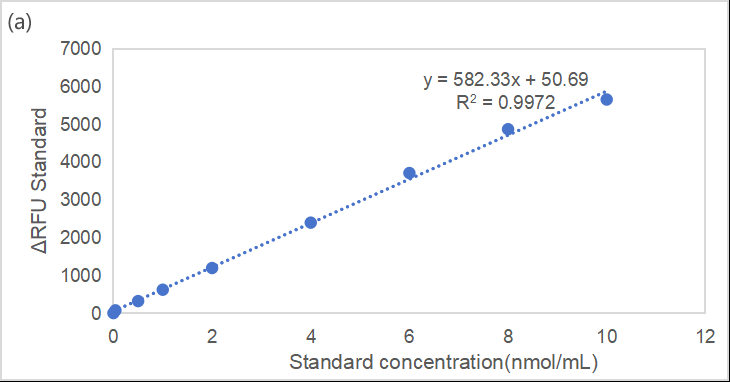
The procedure is designed for efficiency and reproducibility. Prepared samples and a series of MDA standards are incubated with the derivative reagent at a specified temperature (commonly 37°C or 45°C) for a fixed period, allowing for complete fluorophore formation. The reaction is then stopped, and the fluorescence intensity is measured. The protocol provides clear instructions for generating a standard curve and includes the calculation formula to interpolate sample MDA concentrations, with results expressible in units such as nmol/mg protein or µM, depending on the sample type.
Broad Spectrum of Applications in Biomedical and Life Science Research
- Disease Mechanism Research: Precisely quantify MDA levels in models of neurodegeneration (Alzheimer's, Parkinson's), atherosclerosis, diabetes, ischemia-reperfusion injury, and various cancers to establish correlations between oxidative damage and disease progression.
- Drug Discovery and Toxicology: Evaluate the oxidative stress-inducing potential of novel drug candidates or environmental toxins by measuring MDA elevation in treated cells or animal tissues. Conversely, assess the efficacy of antioxidant or cytoprotective compounds by their ability to suppress MDA formation.
- Nutritional Science and Antioxidant Analysis: Investigate the in vivo and in vitro antioxidant capacity of natural products, vitamins, phytochemicals, and functional foods by measuring their protective effect against lipid peroxidation and MDA generation.
- Aging and Exercise Physiology: Study the role of cumulative oxidative damage in the aging process or the acute oxidative stress induced by intense physical exercise by profiling MDA levels in relevant biological samples.
- Agricultural and Food Science: Assess lipid peroxidation and rancidity in food products or study oxidative stress responses in plants under abiotic stress conditions like drought, salinity, or heavy metal exposure.
- Clinical Research (Pre-clinical): Measure MDA as a potential prognostic or diagnostic biomarker in animal models of human diseases or in ex vivo patient-derived samples, contributing to biomarker discovery pipelines.
A Critical Tool for the Modern Redox Biologist
In the quest to decipher the complex role of oxidative stress in health and disease, the ability to measure its footprint with accuracy and sensitivity is paramount. The CheKine™ Pro Malondialdehyde (MDA) Fluorometric Assay Kit empowers researchers with a state-of-the-art tool that transcends the limitations of traditional methods. By delivering unparalleled specificity and sensitivity in a user-friendly format, this kit facilitates the generation of reliable, high-quality data, enabling deeper insights into the mechanisms of oxidative damage and the evaluation of therapeutic interventions. It is an indispensable resource for any laboratory focused on redox biology, pathophysiology, toxicology, or the search for novel antioxidants.
Product Reference: KTB9050 – CheKine™ Pro Malondialdehyde (MDA) Fluorometric Assay Kit
Learn more and order: [Product link for KTB9050 would be inserted here. For reference: https://www.abbkine.com/product/chekine-pro-malondialdehyde-mda-fluorometric-assay-kit-ktb9050/]





