




Human MMP-14/MT1-MMP ELISA Kit — Technical Comparison & Buying Guide for Cancer Invasion and ECM Remodeling Researchers
MMP-14: The Only MMP That Refuses to Leave the Membrane
If your cancer, fibrosis, or vascular-remodeling paper still treats "MMP activity" as a single gelatin-cleavage smear and calls it a day, you're measuring the symptom while ignoring the guy holding the blade. Because unlike MMP-2, MMP-9, or any of the secreted gelatinases that float into your culture supernatant and smear across a zymogram, MMP-14 — officially MT1-MMP / Membrane-Type 1 Matrix Metalloproteinase (UniProt: P50281, Gene ID: 4323) — is type I transmembrane-anchored, meaning it does its work at the cell surface, not in the medium[reference:26].
It is the only MT-MMP that efficiently converts pro-MMP-2 → active MMP-2 (gelatinase A) right at the pericellular front, and it does so as part of a TIMPs-balanced, CD44v-src-coupled nanomachining complex that literally drills through collagen I/II fibrils, basement membrane laminin, and adventitial matrix so invasive cells can advance[reference:27].
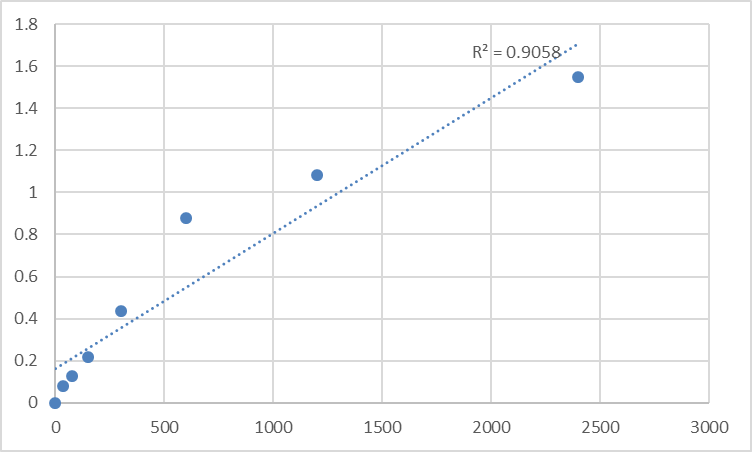
The Human Matrix Metalloproteinase 14 (MMP-14) ELISA Kit (KTE61598) from Abbkine is the tool that finally pulls this membrane-tethered enzyme out of the "we assume it's there because pro-MMP2 dropped" black hole and puts it on a calibrated, sandwich-ELISA curve (ng/mL) you can defend with CVs — not a guess[reference:28].
Why Traditional MMP-14 Detection Methods Fall Short
| Method | Limitation |
|---|---|
| Zymography | Measures gelatinolytic activity in the medium — misses membrane-bound MMP-14 entirely; cannot distinguish MMP-14 from MMP-2/MMP-9 |
| Western Blot | Semi-quantitative; membrane-bound MMP-14 requires harsh lysis for extraction; 215 kDa band transfer efficiency varies |
| Generic MMP ELISA | High structural homology across MMP family members causes cross-reactivity with MMP-2, MMP-9, and other analogues |
| qPCR | Measures mRNA, not protein — fails to capture post-translational regulation and membrane trafficking |
The MMP superfamily is full of structural lookalikes, and most off-the-shelf ELISA kits target conserved domains, meaning they cross-react with MMP-2, MMP-9, or other family members. That's a disaster for data accuracy, especially when you're studying MMP-14's unique role in activating pro-MMP2 or degrading ECM proteins like collagen[reference:29].
Abbkine KTE61598: Engineered for MMP-14-Specific Precision
The kit uses a pair of MMP-14-specific antibodies — one pre-coated onto the microplate, the other biotin-conjugated for detection — both targeting unique epitopes on human MMP-14, not the conserved regions shared with other MMPs. The manufacturer's validation confirms zero significant cross-reactivity or interference with MMP analogues — so the signal you measure is only human MMP-14, no fluff, no false positives[reference:30].
Key Specifications
| Parameter | KTE61598 |
|---|---|
| Specificity | No cross-reactivity with MMP-2, MMP-9, or other MMP family members |
| Format | Two-site sandwich ELISA |
| Sample Types | Cell culture supernatants, plasma, serum, tissue lysates, and other biological fluids |
| Target | Human MMP-14 (MT1-MMP) |
| Assay Duration | 3–5 hours |
Head-to-Head Comparison: KTE61598 vs. Legacy Methods
| Feature | Abbkine KTE61598 | Zymography | Western Blot |
|---|---|---|---|
| Membrane-Bound MMP-14 | Captures soluble fragments in biological fluids | Misses entirely | Requires harsh lysis |
| MMP-14 Specificity | Zero cross-reactivity | Cannot distinguish MMP isoforms | Antibody-dependent |
| Quantitative | Yes (standard curve) | Semi-quantitative | Semi-quantitative |
| Throughput | 96-well plate | Low (gel-based) | Low (gel-based) |
| Sample Volume | Minimal | Moderate | Large |
| Clinical Translation | Yes (plasma/serum) | No | No |
Why Choose Abbkine KTE61598?
- MMP-14-Specific Detection: Unique epitope targeting eliminates cross-reactivity with MMP-2, MMP-9, and other family members
- Captures Soluble MMP-14 Fragments: The form found in biological fluids — the only detectable form in plasma and serum
- Quantitative Readout: Converts the most famous membrane-tethered MMP into ng/mL with a standard curve
- Clinical Translation Ready: Validated for plasma and serum — enables biomarker studies in patient cohorts
- Broad Sample Versatility: Works with cell culture supernatants, plasma, serum, tissue lysates, and other biological fluids[reference:31]
- Complete Kit: Pre-coated plate, standards, detection antibodies, all buffers included
Who Should Buy This Kit?
✅ Buy KTE61598 if you:
- Study cancer invasion, metastasis, or tumor microenvironment
- Research ECM remodeling and collagen degradation
- Investigate angiogenesis and vascular remodeling
- Work on arthritis and inflammatory joint disease
- Study developmental biology and tissue morphogenesis
- Need to quantify human MMP-14 in plasma, serum, or cell culture supernatants
- Require specificity — no cross-reactivity with MMP-2/MMP-9
- Want a complete, ready-to-use kit for translational research
❌ Consider alternatives if you:
- Only need to measure total gelatinolytic activity (zymography)
- Work with non-human samples (mouse, rat) — check Abbkine's other offerings
- Require a faster assay (<3 hours)
📌 Reference Link: Human Matrix Metalloproteinase 14 (MMP-14) ELISA Kit — KTE61598





