




Human Melatonin (MT) ELISA Kit — FAQ for Circadian Rhythm and Sleep Researchers
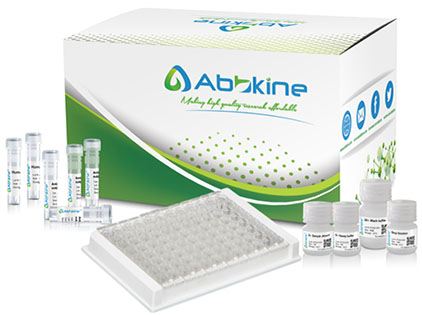
Human Melatonin ELISA Kit: Your Questions Answered
Melatonin (MT, N-acetyl-5-methoxytryptamine, CAS 73-31-4) is a 232-dalton indoleamine synthesized from tryptophan → serotonin → N-acetylserotonin → melatonin by arylalkylamine N-acetyltransferase (AA-NAT, the "timezyme") in the pineal gland. Its entire physiological job description can be written in one sentence: it tells every tissue in your body what time it is. Plasma levels are vanishingly low — < 10 pg/mL during the day, rising to 10–80 pg/mL (occasionally touching ~200 pg/mL) at the nocturnal peak (2–4 AM) — and its half-life is only ~35–50 minutes because hepatic CYP1A2 obliterates it into 6-hydroxymelatonin → 6-sulfatoxymelatonin within minutes[reference:0].
Abbkine's Human Melatonin (MT) ELISA Kit (KTE61518) is the analytical tool built for exactly this extreme low-mass, low-concentration regime: a competitive hapten immunoassay (the only architecture that works for a 232 Da molecule with no two independent protein epitopes) that turns the world's most famous circadian signal into a plate-readable concentration (pg/mL) you can actually put error bars on[reference:1].
What is the detection principle of this melatonin ELISA kit?
This kit employs a competitive hapten immunoassay format. A melatonin-specific antibody is immobilized on the microplate. Sample melatonin and a fixed amount of HRP-labeled melatonin tracer compete for binding to the antibody. After washing, a substrate solution is added and color develops inversely proportional to the melatonin concentration in the sample. The color development is stopped and the intensity is measured at the appropriate wavelength.
Why not a sandwich ELISA? A true two-site sandwich needs two distinct, non-overlapping epitopes on the same analyte. Melatonin has no protein structure — it's a hapten. The only viable immunoassay architecture for this 232-Da molecule is a competitive format[reference:2].
What sample types can I use?
The kit is validated for serum, plasma, saliva, urine, and cell culture supernatants. This flexibility makes it suitable for circadian rhythm studies, sleep research, and clinical translational studies.
What is the sensitivity and detection range?
| Parameter | KTE61518 |
|---|---|
| Limit of Detection | 0.1 ng/L |
| Calibration Range | 2 ng/L – 32 ng/L |
That's sub-picomolar sensitivity — critical because basal serum and plasma melatonin concentrations sit right in the 2–32 ng/L range, the exact calibration window of this kit. Most generic MT ELISA kits have a much higher LOD (often 1 ng/L or more) and broader calibration ranges that start at 10 ng/L or above, meaning they can't detect low basal MT levels at all[reference:3][reference:4].
Does this kit cross-react with melatonin metabolites?
No significant cross-reactivity or interference with melatonin metabolites (like 6-hydroxymelatonin) or structural analogs has been observed, thanks to its pair of highly specific anti-human MT antibodies — one pre-coated on the microplate for capture, one HRP-conjugated for detection[reference:5].
How should I store and handle the kit?
- Unopened kit: Store at 2–8°C
- Opened kit: Follow protocol-specific storage instructions
- Shipping: Gel pack with blue ice
Critical handling tips:
- Melatonin degrades rapidly at room temperature and is light-sensitive — protect samples from light at all times
- Process samples promptly and avoid repeated freeze-thaw cycles
- Allow all reagents to warm to room temperature for at least 30 minutes before opening
- Run samples and standards in duplicate or triplicate
What applications is this kit suitable for?
This kit is designed for research use only — not for human or clinical diagnosis. Applications include:
- Circadian rhythm research (phase shifts, light exposure effects)
- Sleep disorder studies (insomnia, sleep apnea, shift work)
- Neurological disease research (multiple sclerosis, Alzheimer's disease)
- Oxidative stress and antioxidant defense studies
- Oncology research (melatonin's oncostatic effects)
- Metabolic health (melatonin's role in glucose homeostasis)
Has this kit been validated in publications?
Yes — this kit has been cited in 2 publications, including research in Neurological Sciences on serum orexin-A levels and multiple sclerosis progression, and in International Ophthalmology on sleep disturbance and cognitive decline in multiple sclerosis patients[reference:6].
What's included in the kit?
| Component | Included |
|---|---|
| Human Melatonin microplate | ✅ |
| Human Melatonin standard | ✅ |
| Human Melatonin detect antibody (HRP-conjugated) | ✅ |
| Assay buffer | ✅ |
| HRP substrate | ✅ |
| Stop solution | ✅ |
| Wash buffer | ✅ |
| Plate covers | ✅ |
A complete, ready-to-use kit.
📌 Reference Link: Human Melatonin (MT) ELISA Kit — KTE61518





