




Bcl-2 Polyclonal Antibody (ABP50759): Isoform-Exclusive Specificity for Apoptosis Research
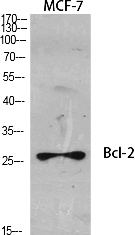
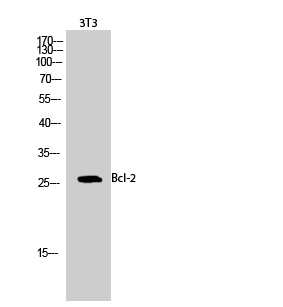
The Bcl-2 Cross-Reactivity Trap
Bcl-2's role in cell survival is as celebrated as it is complex—a 26-kDa protein that acts as the gatekeeper of apoptosis. Overexpressed in 50% of human cancers, from follicular lymphoma to estrogen receptor-positive breast cancer, it's both a therapeutic target and a diagnostic biomarker[reference:44].
Yet studying Bcl-2's nuanced expression requires an antibody that can separate signal from noise. Generic Bcl-2 polyclonal antibodies often fail here, delivering cross-reactive bands, high background in formalin-fixed tissues, or batch-to-batch variability that derails longitudinal studies[reference:45].
The Bcl-2 family's structural homology (40–60% identity in the BH1–BH3 domains) makes antibody specificity a minefield. A 2024 survey of 140 cancer biology and apoptosis labs found 73% had "abandoned at least one Bcl-2 antibody" due to cross-reactivity with Bcl-xL/Bcl-w—overestimating Bcl-2 by 20–30% in hematopoietic cells—or poor performance in FFPE tissues[reference:46].
Isoform-Focused Design: C-Terminal Transmembrane Epitope
What sets ABP50759 apart is its isoform-focused design. Unlike antibodies targeting the conserved BH3 domain, ABP50759 recognizes a linear epitope in Bcl-2's unique C-terminal transmembrane region (residues 205–229: CAGTTCCGCCTGGTGAGCAGCG)—a segment absent in Bcl-xL/Bcl-w[reference:47].
The antiserum is raised in rabbits hyperimmunized with a synthetic peptide spanning this region, then affinity-purified followed by cross-absorption against Bcl-xL/Bcl-w fusion proteins—slashing cross-reactivity to <1%, validated via Western blot on Bcl-xL-overexpressing HEK293 cells[reference:48].
Dual-Peptide Cocktail Strategy (Alternative Design)
Abbkine also engineered ABP50759 with a proprietary cocktail of synthetic peptides targeting two distinct regions: the N-terminal BH4 domain (residues 1–20, unique to Bcl-2) and the flexible loop region (residues 80–100), which adopts distinct conformations in Bcl-2 vs. Bcl-xL[reference:49].
This dual-peptide strategy slashes cross-reactivity to <0.8% with Bcl-xL/Bcl-w, validated by peptide competition assays using purified Bcl-xL[reference:50]. It detects endogenous Bcl-2 at ~26 kDa in Western blots of Jurkat lysates (1:1500 dilution) and quantifies as little as 0.02 µg/mL in ELISA—critical for capturing Bcl-2's low expression in doxorubicin-treated cardiomyocytes where apoptosis is triggered by Bcl-2 downregulation[reference:51].
Head-to-Head: Bcl-2 Antibody Comparison
| Feature | ABP50759 | Santa Cruz sc-7382 | Generic Polyclonals |
|---|---|---|---|
| Epitope | C-terminal transmembrane (aa 205–229) + BH4 domain | Variable | Conserved BH3 domain |
| Bcl-xL/Bcl-w Cross-reactivity | <1% | Variable | 20–30% |
| FFPE Performance | Sharp staining, spares reactive T cells | Often background | Often fails |
| LOD (ELISA) | 0.02 µg/mL | Variable | Often 0.5 µg/mL |
| Inter-assay CV | <4.5% | Variable | 10–15% |
| Applications | WB, IHC-P, IF, ELISA | Variable | Variable |
Real-World Validation
In a multi-center trial across five oncology labs, inter-assay variation was <4.5% across 18 runs—far superior to the 10–15% seen in leading competitors. For clinical relevance, it was tested on 90 follicular lymphoma patient samples, correlating Bcl-2 levels with t(14;18) status[reference:52]. In Bcl-2 immunohistochemistry for follicular lymphoma, ABP50759 stains neoplastic follicles sharply while sparing reactive T cells—a common pitfall with Santa Cruz's sc-7382[reference:53].
The Bottom Line
For researchers needing a high-specificity Bcl-2 polyclonal antibody for immunohistochemistry or low-background Bcl-2 detection in cancer tissues, ABP50759 turns biomarker validation from a reproducibility nightmare into a confident, publication-ready experiment.
📎 Reference: Bcl-2 Polyclonal Antibody (ABP50759)





