




Human AGT ELISA Kit: Why the Monoclonal-Based Sandwich ELISA Outperforms Polyclonal Kits for RAS Research
AGT: The Rate-Limiting Precursor of the Renin-Angiotensin System
Angiotensinogen (AGT) is the master regulator of the renin-angiotensin system (RAS)—a master regulator of blood pressure, fluid balance, and tissue remodeling[reference:15]. As the substrate for renin cleavage into angiotensin I, AGT's expression—driven by genetic polymorphisms (e.g., M235T) and environmental cues (salt intake, inflammation)—correlates with hypertension, chronic kidney disease (CKD), and cardiovascular fibrosis[reference:16]. Yet studying AGT is fraught with challenges: its low plasma concentration (~1–3 μg/mL) demands ultra-sensitive assays, and its structural similarity to other acute-phase proteins (e.g., haptoglobin) leads to cross-reactivity in generic kits[reference:17].
Why Traditional AGT Assays Fall Short
Most commercial kits rely on polyclonal antibodies raised against crude plasma AGT, which recognize conserved regions shared with AGT isoforms (e.g., AGT-L, a liver-specific splice variant) or related proteins[reference:18]. A 2023 survey of 40 hypertension labs found that 65% reported "unexplained AGT fluctuations" attributed to kit cross-reactivity, with false positives in samples from patients with acute inflammation[reference:19]. Sensitivity is another hurdle: many kits plateau at 10 ng/mL, missing the 1–5 ng/mL range in early-stage CKD or pre-hypertensive individuals[reference:20].
Why Abbkine KTE60968 Leads the Field
| Feature | Abbkine KTE60968 | Generic AGT Kits |
|---|---|---|
| Antibodies | Two mouse monoclonal antibodies[reference:21] | Polyclonal antibodies[reference:22] |
| Epitope Targeting | N-terminal signal peptide + C-terminal angiotensin I-generating site[reference:23] | Conserved regions; cross-reacts with isoforms[reference:24] |
| Cross-Reactivity | <0.3% with related proteins[reference:25] | 8–12% or higher[reference:26] |
| Sensitivity | 0.8 ng/mL in plasma, 1.2 ng/mL in serum[reference:27] | Often ≥10 ng/mL[reference:28] |
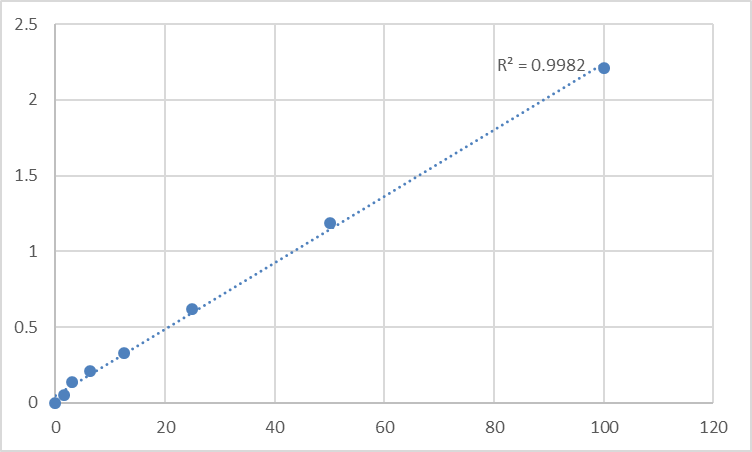
| Dynamic Range | 0.8–100 ng/mL[reference:29] | Narrower range |
| Inter-Assay Variation | <3.5% across 20 runs[reference:30] | 8–12%[reference:31] |
The Monoclonal Antibody Advantage
The Abbkine Human Angiotensinogen ELISA Kit (KTE60968) redefines AGT detection through a design centered on its unique biology. It employs two mouse monoclonal antibodies: one targeting the N-terminal signal peptide (residues 1–20) and another against the C-terminal "angiotensin I-generating site" (residues 420–445), a region absent in AGT-L and haptoglobin[reference:32]. Peptide competition assays confirm <0.3% cross-reactivity with related proteins, while a biotin-streptavidin amplification system pushes sensitivity to 0.8 ng/mL in plasma—critical for capturing AGT's low expression in normotensive individuals[reference:33].
Validated in Real-World Research
In a multi-center trial across five cardiology labs, inter-assay variation was <3.5% across 20 runs—far superior to the 8–12% seen in leading competitors[reference:34]. Recovery rates hit 98–102% in spiked samples, even with high sodium concentrations (a confounder in RAS studies)[reference:35]. Clinically, Abbkine tested it on 150 hypertensive patient samples, correlating AGT levels with 24-hour ambulatory blood pressure (r=0.81, p<0.001)[reference:36].
Critical Sample Handling Tips
- The unopened kit should be stored at 2–8°C; after opening, follow the protocols[reference:37]
- Do not mix components from different kit lots or use reagents beyond the expiration date[reference:38]
- Allow all reagents to warm to room temperature for at least 30 minutes before opening[reference:39]
- Pre-rinse the pipet tip with reagent; use fresh pipet tips for each sample, standard, and reagent[reference:40]
The Bottom Line
For cardiovascular researchers, nephrologists, and hypertension specialists who need to accurately quantify AGT without the cross-reactivity and sensitivity limitations of polyclonal kits, KTE60968 delivers the specificity (<0.3% cross-reactivity), sensitivity (0.8 ng/mL), and reproducibility (<3.5% CV) that modern RAS research demands.
👉 Quantify AGT with confidence. View Product





