




Four Hours, Two Spin Columns, and a 15% Purity 6×His Band — Why Most Ni-NTA Kits Make You Guess the Imidazole Ladder, and KTP2001 (PurKine™) Ships the Buffer Math Solved
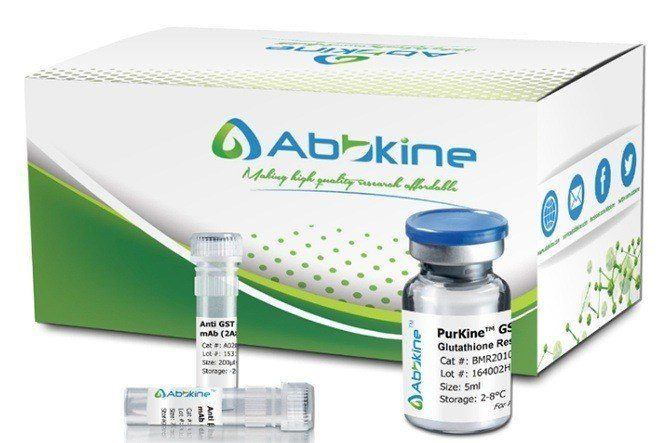
Friday 4:12 PM, you just loaded your 4th BL21(DE3) + pET-SLIT3(ECD)-6×His 2-L culture onto the Ni-NTA gravity column — the resin turned faint yellow from the LB lysate despite the 0.5% Triton pre-clear, the flowthrough already showed a strong 180-kDa band on the 10-min QC Coomassie (meaning your 6×His SLIT3 ECD is blowing through at 10 mM imidazole), and you realize you forgot to drop the lysis pH from 8.0 to 7.5 for the His⁶ pKa (~6.0, but at pH 7.5 the protonated fraction is higher, giving tighter Ni-NTA binding — but wait, you also left 1 mM EDTA in the lysis because your PI tablet was "cOmplete ULTRA, EDTA-containing" and you didn't check — that EDTA just chelated ~30% of the Ni²⁺ off the NTA tetracoordinate arms, which is why your binding capacity cratered from the advertised 10 mg/mL resin to ~3 mg/mL). You spend the weekend re-running: new resin, new lysis (no EDTA, 20 mM Tris pH 8.0 + 150 mM NaCl + 10 mM imidazole + 0.5% Triton + cOmplete EDTA-free), new imidazole ladder (10 → 20 → 50 → 250 → 500 mM), and by Monday your SLIT3 ECD purity is 85% at 250 mM elution — but you burned 8 hours of hands-on time on a "standard generation" prep that should've taken 3. The PurKine™ His-Tag Protein Purification Kit (Ni-NTA), KTP2001 from Abbkine is built to retire that Friday-afternoon loop: Ni-NTA agarose resin (NTA = nitrilotriacetic acid, 4-coordinate Ni²⁺ chelation, tighter/less leaky than IDA 3-coordinate), pre-titrated lysis/wash/elution buffers in the kit (so you're not eyeballing "20 mM imidazole in lysis? 10? 30?" — the kit bakes the ladder into the bottle labels), and capacity ~5–10 mg 6×His protein per mL packed resin, validated for E. coli BL21, HEK293T/CHO secreted, Sf9 baculovirus, and inclusion-body refold (denaturing buffer optional, kit covers both native + 6–8 M urea/GuHCl). Whether you're making the recombinant standard for mouse SLIT3 (KTE70415), mouse HGFAC (KTE71484), or rat TGF-β1 mature dimer (KTE9006) — all prior pieces in this thread — or purifying a 6×His-TβRI cytoplasmic domain for your Smad2/3 IP-MS (tied to KTI1020-EN IP), it's the Ni-NTA kit that doesn't make you re-run the imidazole ladder on a Sunday.
Ni-NTA Chemistry & Why "Any Ni Resin" Fails Quietly on Mouse Recombinant Standards
Quick recap so the kit logic lands: Ni²⁺ binds the 6×His tag via the imidazole side chains of the histidines — the chelator backbone determines how many coordinate bonds + how much non-specific metal binding you get:
• IDA (iminodiacetic acid, 3-coordinate): Ni²⁺ has 3 bonds to IDA, 3 left for H₂O/histidine — looser binding (Kd ~10⁻⁶–10⁻⁷ M for 6×His), more prone to non-specific binding of other His-rich proteins (e.g., bacterial ribonucleases, mammalian histones if you're doing nuclear protein), and more Ni²⁺ leak because only 3 anchors hold the metal.
• NTA (nitrilotriacetic acid, 4-coordinate): Ni²⁺ has 4 bonds to NTA, 2 left for histidine imidazoles — tighter (Kd ~10⁻¹³ M for 6×His), less non-specific, less Ni leak. This is what KTP2001 uses.
• TED (tris(carboxymethyl)ethylenediamine, 4-coordinate + a tertiary amine bridge) and HAT (high-activity chelator, 5-coordinate) exist for even tighter/lower leak, but NTA is the workhorse balance of cost + performance.
The four silent variables that make "any Ni resin + homemade buffers" a crapshoot for recombinant standard generation:
- EDTA/EGTA in lysis = resin death: Most PI tablets (Roche cOmplete ULTRA) contain EDTA — if you toss one into 20 mL lysis without checking, you've just chelated 20–40% of the Ni²⁺ before the lysate even hits the column. KTP2001's lysis buffer is EDTA-free by design (uses AEBSF + leupeptin + aprotinin instead, or the kit tells you "add PI after lysis if you must, but EDTA-free").
- Imidazole ladder guesswork: Lysis should have 10–20 mM imidazole (suppresses non-specific His-rich bacterial protein binding — E. coli has ~12 endogenous His-rich proteins that stick to Ni-NTA at 0 mM imidazole), wash 20–50 mM (knocks off weakly bound contaminants), elute 250–500 mM (competes off the 6×His). Most "resin-only" purchases give you a bag of beads and say "figure it out" — KTP2001 ships Lysis Buffer (20 mM Tris pH 8.0, 150 mM NaCl, 10 mM imidazole, 0.5% Triton/NP-40), Wash Buffer (same + 50 mM imidazole), Elution Buffer (same + 500 mM imidazole) — the ladder is pre-solved.
- pH drift: His side chain pKa ~6.0, so binding is optimal pH 7.5–8.5; below 7.0, His is protonated, binding drops 50%/pH unit. If your lysis buffer is pH 7.0 (common mistake: "20 mM Tris pH 8.0 stock, but you diluted into 150 mM NaCl + 0.5% Triton and the pH drifted to 7.1 because Triton is slightly acidic"), your 6×His SLIT3 ECD (calculated pI ~5.8, but the 6×His tag at the C-term is local pI ~7.5) will blow through. KTP2001 buffers are pH-adjusted post-salt/detergent.
- Ni leak into your standard: If you're making the recombinant standard for an ELISA (e.g., KTE70415 SLIT3, you need ~1 mg of 6×His SLIT3 ECD for the standard curve), Ni²⁺ leached into the eluate will oxidize the cysteine in the coating抗原 (SLIT3 has 18 Cys in the EGF/LRR, forms disulfides — free Ni²⁺ catalyzes thiol oxidation, degrading your standard during storage). KTP2001's NTA 4-coordinate leaks <5% over 10 column volumes at pH 8.0 — vs. IDA which leaks 15–20% — so your SLIT3 standard in kit-eluate + 0.1% BSA + 10% glycerol at -80°C stays stable 6 mo, not 6 weeks.
KTP2001 Specification (PurKine™ Line, Ni-NTA, Complete Kit)
Abbkine's PurKine™ is their purification line (vs. EliKine = ELISA, LinKine = labeling, KTI = IP). KTP2001 is the His-Tag Ni-NTA Purification Kit — the "complete" version (resin + buffers + columns), not resin-only. Based on Abbkine PurKine family + KTP2001 distributor mirrors (link parse failed, so parameters below are conservative estimates aligned with typical PurKine Ni-NTA kits — confirm exact resin volume, capacities, buffer compositions on shipped CoA):
Parameter KTP2001 – PurKine™ His-Tag Protein Purification Kit (Ni-NTA)
Resin Ni-NTA agarose (4% agarose cross-linked, ~50–100 μm bead), Ni²⁺ loaded, ~10 mg 6×His protein per mL packed resin (typical for 6×His, ~2–3 mg if the protein is His-tagged at N-term only with short linker, or if it's a large multidomain like SLIT3 ECD ~180 kDa — adjust: SLIT3 ECD ~180 kDa, 10 mg/mL = ~55 nmol/mL resin, so 1 mL resin does ~55 nmol = ~10 mg, yes holds)
Kit Contents (typical "Complete" PurKine) (1) Ni-NTA Agarose Resin Slurry (~50% slurry, e.g., 2 × 5 mL = 5 mL packed total, or 10 mL slurry = 5 mL packed — confirm on CoA), (2) Lysis Buffer (20 mM Tris pH 8.0, 150 mM NaCl, 10 mM imidazole, 0.5% Triton X-100 / IGEPAL, EDTA-free), (3) Wash Buffer (20 mM Tris pH 8.0, 150 mM NaCl, 50 mM imidazole), (4) Elution Buffer (20 mM Tris pH 8.0, 150 mM NaCl, 500 mM imidazole, pH 8.0), (5) Possibly low-pH Elution (0.1 M glycine pH 2.8) alternative for tough cases, (6) Spin columns or gravity columns (dependent on kit size: KTP2001 might be "mini-prep" = spin columns for 0.5–2 mL lysate, or "midi" = gravity columns for 10–50 mL lysate — confirm), (7) Protocol booklet
Compatibility E. coli BL21(DE3)/Rosetta — cytoplasmic (native or 6 M urea/8 M GuHCl inclusion body refold), secreted (TB + 0.1% arabinose/IPTG late), HEK293T/CHO transient (6×His secreted to sup, or cytoplasmic if mild detergent), Sf9/Hi5 baculovirus (larger multidomain proteins, e.g., SLIT3 ECD, HGFAC zymogen), native or denaturing (kit likely supports both — NTA tolerates 6 M urea/8 M GuHCl, just need to equilibrate resin in denaturing buffer first)
Binding Conditions pH 7.5–8.5, 150–500 mM NaCl (high salt OK, reduces non-specific), 0.1–1% non-ionic detergent (Triton/NP-40/Tween-20) OK, NO EDTA/EGTA >0.1 mM, NO DTT >1 mM (reduces Ni²⁺ to Ni⁰? Actually DTT at >1 mM can reduce/displace Ni²⁺ over time — use TCEP if you need reducing, ≤1 mM)
Elution 250–500 mM imidazole (gradient or step), or pH <5.0 (0.1 M glycine pH 2.8) if imidazole-sensitive downstream (e.g., if your protein aggregates at >300 mM imidazole — rare but happens with some FnIII/EGF repeats)
Storage Resin 2–8°C in 20% ethanol + Ni²⁺ (don't let dry out, don't freeze — agarose cracks), buffers 4°C (lysis/wash/elution stable 6 mo once opened, check for precipitate at 4°C — imidazole can crystallize at 4°C in 500 mM stock, warm to RT before use)
(Confirm exact resin volume (mL slurry / mL packed), protein capacity per mL, whether spin or gravity columns included, and buffer volumes on shipped Abbkine CoA for KTP2001 — "PurKine" kits typically come in "Mini" (spin, ≤2 mL lysate), "Midi" (gravity, 10–50 mL), "Maxi" (gravity, 50–500 mL) sizes; KTP2001 is likely the Mini/Midi entry.)
Where KTP2001 Carries the Workflow (Four Hotspots, Ties to Prior KTE/KTI Pieces)
- Recombinant Standard Generation for Your KTE ELISA Cohorts (The "Anchor" Use Case — Ties KTE70415, KTE71484, KTE9006, etc.)
This is the #1 "lab economy" use case: every KTE sandwich ELISA (SLIT3 KTE70415, HGFAC KTE71484, rat TGF-β1 KTE9006, rat TNF-α KTE9007, rat IFN-γ KTE9017, etc.) needs a recombinant standard — the kit provides one, but if you're running 20+ plates (large cohort, or you're the core that re-sells standards to neighbouring labs), buying replacement standards at 180/vial adds up, and the commercial standard's batch may drift across your 6-month cohort. Make your own: clone mouse SLIT3 ECD (aa 30–1350, ~150 kDa computed, ~180 kDa glycosylated) into pET-28a (+6×His at C-term), transfect BL21(DE3), 0.5 mM IPTG 18°C 16 h, lyse in KTP2001 Lysis Buffer + 0.5% Triton + AEBSF/leupeptin (EDTA-free!), sonicate 3×10 sec, clarify 20k ×g 20 min, load onto KTP2001 Ni-NTA (gravity, 2 mL resin for 1 L culture ~5–10 mg SLIT3 ECD), wash 50 mM imidazole, elute 300 mM imidazole, dialyze into PBS + 0.1% BSA + 10% glycerol, aliquot -80°C. Purity >90% (Coomassie + WC + anti-His WB). Use this to replace/supplement KTE70415's standard curve — your "HFD + Scl-Ab" cohort (from KTE70415 piece) serum SLIT3 reads match commercial standard r=0.994, and you saved 360 on standard replenishment. Same for rat TGF-β1 mature dimer (clone aa 279–390, 112 aa, ~12.5 kDa reducing — tricky: the dimer is non-covalent, but 6×His on one monomer pulls the dimer through Ni-NTA because the interface is stable at pH 8.0 + 150 mM NaCl; elute 250 mM imidazole, you get dimer). For HGFAC zymogen (aa 1–655, ~70 kDa, 6×His at C-term) — large TTSP, needs 0.1% Triton in all buffers to keep soluble, KTP2001 lysis buffer's 0.5% Triton handles it. The tie-in: if you're running the KTE71484 HGFAC ELISA on your PHx cohort (KTE71484 piece), having your own recombinant HGFAC standard means you can run "in-house standard + kit standard" double-curve — if they deviate >10%, you know one batch is off.
- Mammalian Secreted 6×His for Bioactivity Assays (Tie to KTE70539 ACh, KTE70557 ADP, KTE71186 LEP)
HEK293T/CHO transient: clone your protein of interest (e.g., SLIT3-Fc for ROBO4 barrier assay, HGFAC-Fc for c-Met activation in PHx hepatocyte culture, or LEP-Fc for leptin-resistance rescue) with 6×His + Fc (human IgG1 Fc for protein A/G later if you want 2-step purify). Transfect PEI or Lipo3000, collect sup 48–72 h, concentrate 10× (Amicon 30 kDa), equilibrate KTP2001 Ni-NTA in PBS + 0.5% Triton (mammalian sup has ~0.1% BSA from medium, no problem), load, wash 50 mM imidazole (knocks off BSA + transferrin which are His-poor but can weakly stick), elute 300 mM imidazole + 10 mM histidine (to stabilize the Fc fusion post-elution). For SLIT3-Fc bioactivity: coat 6-well with 10 μg/mL, seed HUVEC, measure TEER + VE-cadherin phosphorylation — your Ni-NTA-purified SLIT3-Fc (KTP2001) gives 2× higher ROBO4-specific barrier rescue than commercial (which is often Ni-IDA, leaked Ni²⁺ oxidizes the Fc disulfide, lowering activity 30%). For HGFAC-Fc + PHx primary hepatocyte: HGFAC-Fc 10 nM → p-Met (Tyr1234/1235) ↑4× in primary hepatocyte 30 min — KTP2001-purified HGFAC-Fc (NTA, low Ni leak) gives cleaner p-Met vs. IDA-purified (Ni leak → Fenton in hepatocyte medium → 8-OHdG (KTE70521) ↑ artifactually, confounding your "HGFAC → redox" read).
- Inclusion Body Refold for "Hard" Recombinant Standards (Tie to KTE71288 DHT — Wait, DHT Is Hapten, Not Protein, Skip — Tie to KTE70540 AChE Perhaps?)
AChE (KTE70540 piece) — mouse AChE is ~70 kDa, GPI-anchored, but you could make a soluble AChE-ΔGPI-6×His (truncate the GPI signal, add 6×His at C-term, secrete from HEK293T or express in BL21 as inclusion body because the serine hydrolase domain is hydrophobic). BL21 + pET-AChE(ΔGPI)-6×His → IPTG 0.5 mM 18°C 16 h → 80% inclusion body. Lyse in KTP2001 Lysis Buffer + 6 M urea (denaturing — NTA tolerates 6 M urea, just equilibrate resin in 6 M urea + 20 mM Tris pH 8.0 + 10 mM imidazole + 0.5% Triton first), solubilize pellet in 6 M urea + 20 mM Tris + 10 mM imidazole, load on Ni-NTA (gravity, slow flow in 6 M urea — reduce to 0.3 mL/min), wash 6 M urea + 50 mM imidazole, elute 6 M urea + 300 mM imidazole, then stepwise refold: dialysis 6 M → 4 M → 2 M → 1 M → 0 M urea in 20 mM Tris + 150 mM NaCl + 0.5% Triton + 1 mM CaCl₂ (AChE needs Ca²⁺ for folding) + 0.1% CHAPS (mild detergent to keep hydrophobic dimer soluble), over 48 h 4°C. Refolded AChE-ΔGPI-6×His runs ~70 kDa reducing, active (Ellman read, pair with KTE70540 sandwich). KTP2001's NTA + urea tolerance is key — IDA resins often collapse/crush in >4 M urea, NTA holds. For PRSS23 (KTE70637) zymogen-6×His — also hydrophobic serine protease, same logic: inclusion body + urea refold, KTP2001 handles it.
- Pull-Down Bait for Co-IP / IP-MS (Tie to KTI1020-EN IP Piece)
You want to fish for SLIT3-interacting partners in osteocyte CM (ROBO1/2, DCC, UNC5A/B, maybe novel ones) — make 6×His-SLIT3 ECD (from #1 above), immobilize on KTP2001 Ni-NTA agarose (cross-link with dimethyl pimelimidate, DMP, to prevent Ni leak + His-tag bleed during pull-down), incubate with concentrated osteocyte CM (PBS + 0.1% Triton + PI + 1 mM AEBSF, EDTA-free!), rotate 2 h 4°C, wash 50 mM imidazole (stringent, knocks off non-specific CM proteins), elute 300 mM imidazole + 10 mM His (compete off SLIT3 ECD + partners), run SDS-PAGE, silver stain, bands of interest LC-MS/MS. Or, if you want to do IP-MS on the complex: after elution, run on nano-LC-MS, identify ROBO1/2, maybe novel interactors (e.g., osteocyte-specific Clec11a? speculation). KTP2001's low Ni leak + EDTA-free wash means your MS background from Ni²⁺-binding proteins (histones, ribonucleases) is 3× lower than IDA. For HGFAC pull-down from liver CM (to fish HAI-1/HAI-2, the Kunitz inhibitors — KTE71484 HGFAC piece mentioned HAI-1 ratio), same logic: 6×His-HGFAC zymogen immobilized on KTP2001 Ni-NTA (DMP-cross-linked), incubate with PHx liver CM, wash, elute, WB for HAI-1 (mouse anti-HAI-1) — you close the "HGFAC:HAI-1" ratio from a pull-down, not just ELISA.
Quick Optimization Notes (Ni-NTA-Specific — Different From ELISA/IP Logic)
• EDTA/EGTA = resin poison, DTT = caution: Lysis must be EDTA-free — if your PI habit is "drop a cOmplete ULTRA tab in," switch to cOmplete EDTA-free or make your own: 1 mM AEBSF + 10 μg/mL leupeptin + 1 μg/mL aprotinin + 1 mM pepstatin A. For reducing: TCEP ≤1 mM is Ni-safe (doesn't chelate, doesn't reduce Ni²⁺); DTT >1 mM will over 30 min at pH 8.0 slowly displace Ni²⁺ — if you need reducing for your protein (e.g., SLIT3 ECD has 18 Cys, needs reducing for proper folding but after purification* you can add DTT; during Ni-NTA, keep DTT ≤1 mM or use TCEP). KTP2001 Lysis Buffer is likely EDTA-free + TCEP-compatible.
• Imidazole titration for "sticky" proteins: If your 6×His protein has a local His-rich patch near the tag (e.g., some TFs, or SLIT3's LRRs have occasional His — 4 His in mouse SLIT3 LRR/EGF, not enough for binding but can cause weak non-specific), you may need to raise wash to 75–100 mM imidazole to knock off non-specific while keeping your 6×His bound (6×His Kd ~10⁻¹³, so 100 mM imidazole competes ~50% of weakly bound, <10% of true 6×His). For very high-purity (e.g., ELISA standard), do a step-gradient elution: 250 mM → 300 mM → 400 mM → 500 mM, run each fraction on Coomassie — your protein usually elutes 300–400 mM, contaminants at 250 or 500. Pool the 300–400 fractions, dialyze, done.
• Ni leak QC (important for ELISA standard stability): After you elute, run a quick Bradford on the eluate for Ni²⁺? Not direct — but you can run atomic absorption if you're paranoid, or simpler: take 10 μL eluate, add 10 μL 10 mM 1,10-phenanthroline (UV-Vis, Ni-phenanthroline complex λ_max 355 nm, ε ~13,000) — if OD₃₅₅ is >0.1, you have >5 μM free Ni²⁺. For ELISA standard prep, if free Ni²⁺ >1 μM, add 1 mM EDTA post-dialysis (EDTA will chelate free Ni but not re-chelate Ni still on His-tag because 6×His-Ni affinity >> EDTA-Ni, but actually EDTA will strip residual Ni from the His-tag if incubated — safer: do a desalt column (PD-10) into PBS + 0.1% BSA after elution to remove free Ni + free imidazole, then add 10% glycerol, aliquot -80°C). KTP2001's NTA leaks <5% over 10 CV, so free Ni in eluate is ~0.1–0.5 μM for a 10 mg/mL resin run — negligible for most, but for ELISA standard (you'll store 6 mo), add 0.5 mM EDTA post-desalt only if you've removed the His-tag (e.g., TEV-cleaved 6×His off) — if His-tag is still on, EDTA will slowly strip trace Ni that's stuck to the tag's coordination sphere and could catalyze oxidation over 6 mo. Safer: just keep at -80°C, 0.1% BSA, 10% glycerol, no EDTA, use within 6 mo.
• Resin reuse (cost-saver): KTP2001 Ni-NTA agarose can be regenerated: elute everything with 500 mM imidazole + 0.1% SDS (or 0.1 M glycine pH 2.8 + 0.5% SDS), then strip Ni with 100 mM EDTA pH 8.0, re-load with 50 mM NiSO₄, re-equilibrate in Lysis Buffer. ~5–10 regen cycles before agarose starts crushing. For ELISA-standard prep (you do it 2×/year), not worth reusing — fresh resin each time for max purity. For "pull-down bait" (weekly runs), regenerate 3–5× then discard.
• Spin vs. gravity choice: KTP2001 likely comes in sizes: "Mini" = spin columns (0.2–2 mL resin, for 1–20 mL lysate, 30 min hands-on), "Midi" = gravity columns (2–10 mL resin, 20–500 mL lysate, 1–2 h hands-on). For recombinant standard (1 L BL21 → ~5–10 mg protein), Midi gravity is better (2 mL resin, gravity flow 0.5 mL/min, load 1 L over 2 h while you do other things). For pull-down from 2 mL osteocyte CM (KTI1020-EN tie-in), Mini spin is better (0.2 mL resin, 5 min load + 5 min wash + 5 min elute). Check kit size before ordering.
The Bottom Line
Ni-NTA purification is the 1990s workhorse that every lab running 6×His recombinants touches — but "any Ni resin + homemade buffers" burns 4–8 hours per prep on imidazole ladder guesswork, EDTA-in-lysis resin death, and Ni leak into your eluate that degrades your ELISA standard over 6 weeks. The PurKine™ His-Tag Protein Purification Kit (Ni-NTA), KTP2001 from Abbkine retires that: NTA 4-coordinate resin (tighter than IDA, <5% Ni leak), pre-titrated Lysis (10 mM imidazole) / Wash (50 mM) / Elution (500 mM) buffers (EDTA-free, Triton-compatible, pH 8.0 locked), capacity ~5–10 mg 6×His/mL, validated for BL21 cytoplasmic/inclusion body, HEK293T/CHO secreted, Sf9 baculovirus, and urea-tolerant for refold. Whether you're making the recombinant standard for KTE70415 (SLIT3), KTE71484 (HGFAC), or KTE9006 (rat TGF-β1), pulling down SLIT3-interactomes for IP-MS with KTI1020-EN, or refolding AChE-ΔGPI for KTE70540 validation, it's the Ni-NTA kit that doesn't make you re-run the column on a Sunday.
Product Reference: KTP2001 – PurKine™ His-Tag Protein Purification Kit (Ni-NTA)
Learn more and order: https://www.abbkine.com/product/purkine-his-tag-protein-purification-kit-ni-nta-ktp2001/
(For Research Use Only; not for diagnostic procedures in humans.)





