




CheKine™ Micro Total Antioxidant Capacity Assay Kit: Your Buyer's Guide for Reliable Antioxidant Measurement
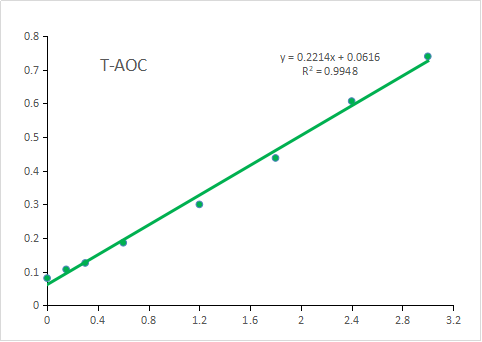
The 30-Second Verdict
Abbkine's CheKine™ Micro Total Antioxidant Capacity (TAC) Assay Kit (KTB1500) is a simple, easy colorimetric assay for measuring total antioxidant capacity in serum, plasma, cell culture supernatants, urine, tissue/cell lysates, and other biological fluids[reference:50][reference:51]. Based on the Fe³⁺-TPTZ reduction principle, it delivers reliable antioxidant data in a microscale format[reference:52].
Pros
✅ FRAP-based principle — Fe³⁺-TPTZ is reduced by antioxidants to blue Fe²⁺-TPTZ, measured at 593 nm[reference:53]
✅ Broad sample compatibility — serum, plasma, animal/plant tissues, cells, bacteria, urine[reference:54]
✅ Stronger positive control — uses ascorbic acid instead of the frequently-used Trolox[reference:55]
✅ Anti-interference design — acidic conditions inhibit endogenous interference factors[reference:56]
✅ Microscale format — minimizes precious sample consumption
✅ Validated in high-impact publications — including Environmental Science & Technology (IF: 11.3)[reference:57], Ecotoxicology and Environmental Safety (IF: 6)[reference:58], and Cell Proliferation (IF: 5.6)[reference:59]
✅ Long shelf life — 12 months at -20°C, protected from light[reference:60]
Cons
❌ Cannot use EDTA as anticoagulant for serum/plasma samples[reference:61]
❌ Samples cannot contain DTT, Mercaptoethanol, Tween, Triton, or NP-40[reference:62]
❌ Not for clinical diagnosis (research use only)
Who Should Buy This Kit?
Ideal for:
- Researchers studying oxidative stress in Alzheimer's, Parkinson's, diabetes, rheumatoid arthritis, and neurodegeneration[reference:63]
- Cardiovascular researchers investigating antioxidant defense mechanisms
- Plant scientists evaluating stress responses
- Environmental toxicologists assessing pollutant-induced oxidative damage
- Drug discovery teams screening antioxidant compounds
- Labs working with limited sample volumes
Skip this if:
- You lack a microplate reader or spectrophotometer capable of 593 nm absorbance[reference:64]
- You're working with samples containing DTT, Mercaptoethanol, or detergents
Critical Tips for Success
- Fresh samples are necessary for good results; if not assayed immediately, store at -80°C for one month[reference:65]
- It is recommended to perform several dilutions to ensure readings are within the standard value range[reference:66]
- Perform a pre-experiment with 2-3 samples with large expected differences before formal testing[reference:67]
The Bottom Line
With validation in multiple high-impact publications—including an Environmental Science & Technology paper with an impact factor of 11.3—KTB1500 delivers the reliability, sensitivity, and ease of use that modern oxidative stress research demands[reference:68].
👉 Measure total antioxidant capacity with confidence. View Product





