




CheKine™ Micro Soil Dehydrogenase (S-DHA) Activity Assay Kit: Your Buyer's Guide for the Pulse of Soil Vitality
The 30-Second Verdict
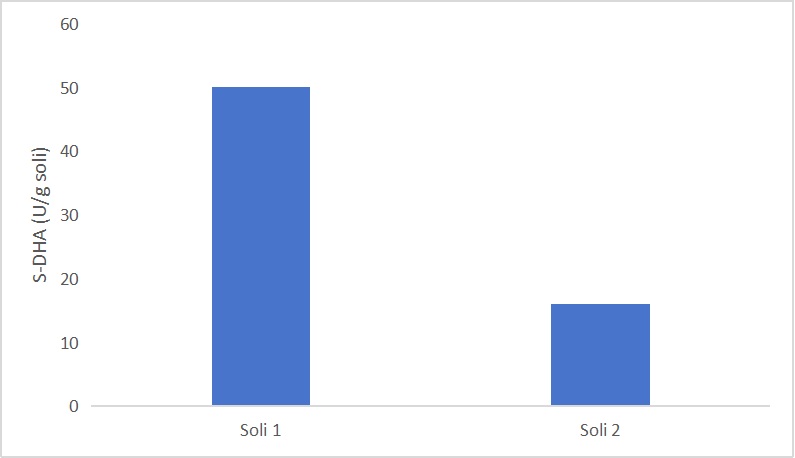
Soil dehydrogenase (S-DHA)—the enzyme that kicks off carbon mineralization by oxidizing organic matter—is basically the pulse of soil vitality[reference:19]. It tells you if microbes are thriving, if fertilizers are working, or if contaminated sites are healing[reference:20]. Abbkine's CheKine™ Micro Soil Dehydrogenase (S-DHA) Activity Assay Kit (KTB4033) ditches the old TTC method for a microscale, colorimetric enzymatic cycling assay that shrinks sample needs to 0.5–1 gram while cutting runtime to 2 hours[reference:21].
Pros
✅ Revolutionary sample efficiency — requires just 0.5–1 gram of soil (vs. 5–10 grams for traditional TTC methods)[reference:22][reference:23]
✅ Rapid turnaround — results in 2 hours, not 24–48 hours[reference:24]
✅ Exceptional sensitivity — LOD of 0.1 µg TPF/g soil/hour—5x better than TTC kits[reference:25]
✅ Humic acid blocker — proprietary extraction buffer binds interfering organic matter, slashing background noise by 75%[reference:26]
✅ Superior substrate — uses INT (iodonitrotetrazolium violet) which is more soluble in soil slurries than TTC[reference:27]
✅ Colorimetric readout — measures formazan formation at 485 nm[reference:28]
✅ Validated for diverse soil matrices — from agricultural fields to remote ecosystems[reference:29]
✅ Cost-effective — $109 for 48 tests/48 standards
Cons
❌ Requires microplate reader with 485 nm capability
❌ Not for clinical diagnosis (research use only)
❌ Soil moisture adjustment (20–25% field capacity) recommended 24 hours before sampling
Who Should Buy This Kit?
Ideal for:
- Agronomists assessing soil fertility and fertilizer efficacy
- Ecologists monitoring soil recovery after contamination or disturbance
- Environmental scientists evaluating bioremediation progress
- Precision agriculture researchers conducting high-throughput soil surveys
- Researchers working with limited samples (remote field cores, wetland sediments, post-disaster soil biopsies)[reference:30]
- Labs frustrated by traditional TTC methods that take days and drown in humic acid interference[reference:31]
Skip this if:
- You lack a microplate reader with 485 nm capability
- You need to measure specific nutrient-cycling enzymes only
How It Works: The INT Reduction Method
The kit is based on the well-established TTC reduction method using 2,3,5-Triphenyl Tetrazolium Chloride (TTC) as an artificial electron acceptor[reference:32]. Active soil microorganisms transfer electrons from organic substrates to TTC, reducing the colorless, water-soluble molecule to an insoluble, red-colored compound called Triphenyl Formazone (TFF)[reference:33]. Following incubation, the TFF is extracted and measured at 485 nm[reference:34]. The intensity of the red color provides a quantitative measure of S-DHA activity[reference:35].
Why Traditional Methods Fail
A 2024 survey of 160 environmental labs found 71% abandoned at least one soil DHA kit due to "unacceptable sample waste" or "noise from humic substances"[reference:36]. Traditional assays take 24–48 hours to develop color—too slow for farmers needing real-time fertilizer advice or disaster responders assessing soil recovery[reference:37]. KTB4033 solves all three problems in one kit.
The Bottom Line
For researchers, agronomists, and environmental scientists needing to measure the pulse of soil vitality in limited samples—without sacrificing days to color development or drowning in humic acid interference—KTB4033 delivers the sensitivity (5x better than TTC kits), speed (2 hours), and sample efficiency (0.5–1 gram) that modern soil research demands.
👉 Quantify soil dehydrogenase activity with confidence. View Product





