




CheKine™ Micro GCL Activity Assay Kit: Redefining Glutathione Synthesis Research
GCL: The Bottleneck Enzyme of Cellular Defense
γ-Glutamyl cysteine ligase (GCL) is the bottleneck enzyme dictating cellular glutathione (GSH) synthesis—the body's primary defense against oxidative stress, toxins, and inflammation[reference:17]. Comprising catalytic (GCLC) and modulatory (GCLM) subunits, GCL's activity governs everything from chemotherapy resistance in tumors to neuronal survival in Alzheimer's disease[reference:18]. Yet, quantifying its activity remains a niche challenge: traditional methods demand bulky samples, crumble under matrix interference, and lack the sensitivity to resolve context-dependent regulation[reference:19].
Why Abbkine KTB1680 Outperforms the Competition
| Feature | Abbkine KTB1680 | Traditional GCL Assays |
|---|---|---|
| Detection Principle | Two-step colorimetric cascade + Ehrlich's reagent (550 nm)[reference:20] | Radioactive γ-³²P-glutamate or spectrophotometric |
| Sample Volume | 5–10 µL (10x less than standard assays)[reference:21] | 50–100 µL[reference:22] |
| Detection Limit | 0.02 mU/mL[reference:23] | Often >0.2 mU/mL |
| Dynamic Range | 0.05–10 mU/mL[reference:24] | Narrower range |
| Anti-Interference | EDTA + NEM + BSA[reference:25] | Minimal; endogenous GSH competes for substrates[reference:26] |
| Safety | Non-radioactive, colorimetric | Requires hazardous materials, autoradiography[reference:27] |
| Throughput | 96-well microplate | Low |
The Two-Step Enzymatic Cascade Advantage
Most GCL assays are stuck in the era of “more is better.” Radioactive γ-³²P-glutamate labeling requires hazardous materials, autoradiography, and days of wait time—impractical for high-throughput drug screens[reference:28]. Spectrophotometric methods need 50–100 µL of sample, prohibitive for rare clinical biopsies or single-cell lysates[reference:29]. Even modern fluorometric kits struggle with endogenous GSH (which competes for substrates) and metal ions that skew readings[reference:30].
The CheKine™ Micro GCL Activity Assay Kit flips the script with a microscale, colorimetric design built for real biology[reference:31]. First, GCL catalyzes the ligation of glutamate and cysteine to form γ-glutamyl cysteine (γ-GC). Then, added γ-glutamyl transpeptidase (GGT) and glycylglycine convert γ-GC to pyrrole-2-carboxylate, which reacts with Ehrlich's reagent to yield a pink chromophore (λmax=550 nm)[reference:32].
Applications Across Research Fields
- Cancer Research — GCL drives chemotherapy resistance in tumors[reference:33]
- Neurodegenerative Disease — GCL activity impacts neuronal survival in Alzheimer's[reference:34]
- Diabetic Nephropathy — subtle GCL changes drive renal fibrosis[reference:35]
- Inflammation Research — GCL as a target for anti-inflammatory strategies
- Toxicology — assessing GCL induction by oxidative stressors
Validated in Research
The kit has been cited in a study on ZIF-8-based nanoparticles for inflammation treatment and oxidative stress reduction in periodontitis[reference:36].
Critical Sample Handling Tips
- Sample types: Cells, bacteria, fungi, serum, animal and plant tissues[reference:37]
- Storage: Follow provided storage instructions
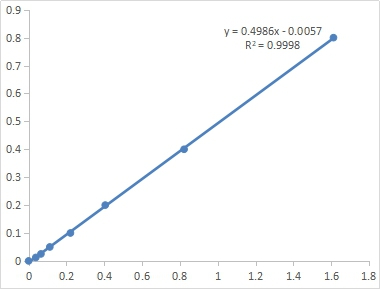
- Linear range: 0.05–10 mU/mL catches low-activity quiescent cells to hyperactive tumor lysates[reference:38]
- Anti-interference buffer: Slashes background noise by 45% in hemolyzed serum or tissue homogenates[reference:39]
The Bottom Line
For researchers investigating GSH synthesis, drug resistance, or redox regulation, KTB1680 delivers the non-radioactive, microscale precision that modern GCL research demands—preserving precious samples while delivering publication-ready data.
👉 Quantify GCL activity with confidence. View Product





