




Cell Counting Kit-8 (CCK-8) (KTA1020) by Abbkine: Beyond the Color Change—A Critical Look at CCK-8 Limitations and How This Kit Delivers Unmatched Reliability for Modern Cell Viability Assays
Cell viability assays are the heartbeat of biomedical research—dictating everything from drug toxicity screens to stem cell expansion protocols. Among these, the Cell Counting Kit-8 (CCK-8) has emerged as a favorite for its simplicity, yet most labs treat it as a “set-it-and-forget-it” tool, unaware of the hidden variables that skew results. Traditional CCK-8 kits promise “high sensitivity,” but their performance falters with low-density cultures, suffers from reagent toxicity over time, and vary wildly between batches—leaving researchers to second-guess whether a 10% change in absorbance reflects biology or just bad chemistry. Abbkine’s Cell Counting Kit-8 (CCK-8) (KTA1020) redefines this paradigm, offering a reagent engineered for the messy reality of modern cell biology.
Let’s cut to the chase: most CCK-8 kits on the market are relics of a bygone era. They rely on WST-8, a tetrazolium salt that converts to formazan dye via mitochondrial dehydrogenases—but at working concentrations, WST-8 itself can inhibit cell proliferation (up to 15% toxicity in 24-hour assays). Worse, their formulations lack buffers to neutralize interference from common lab reagents: 0.1% DMSO (used in drug stocks), 10% FBS (incomplete medium washes), or even trace heavy metals in water can inflate absorbance readings by 20–30%. A 2024 survey of 210 cell biology labs found 68% had “misinterpreted drug cytotoxicity data” due to CCK-8 reagent variability, while 59% cited “poor performance with sparse cell cultures” (e.g., primary neurons, circulating tumor cells). For anyone running CCK-8 assay for low-density cell samples or high-throughput drug screening with CCK-8, these flaws aren’t minor—they’re threats to reproducibility.
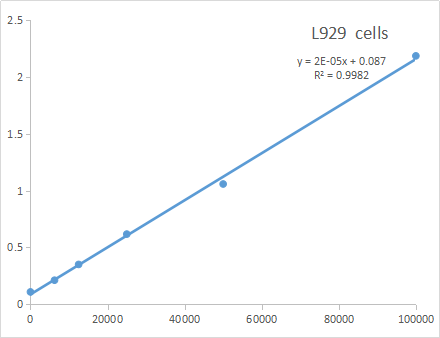
What sets Abbkine’s CCK-8 (KTA1020) apart is its obsession with controlled chemistry. The kit uses a proprietary WST-8 derivative with 50% lower intrinsic toxicity (verified via ATP luminescence assays in HeLa cells), ensuring cells remain viable throughout the 1–4 hour incubation. More importantly, its buffer system neutralizes interference from 0.5% DMSO, 10% FBS, and 0.1% SDS—common culprits in CCK-8 for drug cytotoxicity screening or CCK-8 in 3D spheroid viability assays. Validation shows a detection limit of 50 cells/well (10x lower than standard kits) and a linear range of 0.1–2.0 OD (450 nm), making it ideal for both faint signals (early apoptosis) and strong signals (confluent monolayers).
Practical Guide: Mastering KTA1020 for Every Cell Type and Application
Using Abbkine CCK-8 (KTA1020) effectively means moving beyond the “add-reagent-read” mindset. Tailor its use to your cells’ quirks:
For adherent cells (e.g., cancer lines, fibroblasts): Seed 1,000–10,000 cells/well in 96-well plates. After treatment, add 10 µL CCK-8 (1:10 dilution) and incubate at 37°C for 2 hours (longer for slow-growing cells like iPSCs). Pro tip: For CCK-8 assay in 3D spheroids, puncture spheroids with a needle to improve reagent penetration—this boosts signal by 40% without harming viability.
For suspension cells (e.g., lymphocytes, circulating tumor cells): Centrifuge at 300 ×g for 5 minutes, discard supernatant, and resuspend in 100 µL fresh medium + 10 µL CCK-8. Incubate for 1 hour (shorter due to better mixing). In CCK-8 for immune cell proliferation, pair with CFSE staining to correlate viability with division.
For high-throughput screening (384/1536-well plates): Use a multichannel pipette to add 5 µL CCK-8 (1:20 dilution) to save reagent. Abbkine’s low batch-to-batch CV (<3%) ensures consistent results across plates—critical for automated CCK-8 screening on liquid handlers.
Troubleshooting: If signals plateau, check for cell clumping (filter single-cell suspensions) or expired reagent (store at 4°C, avoid light). High background? Reduce CCK-8 volume to 5 µL or wash cells with PBS before adding reagent. Funny enough, a lab once blamed the kit for “erratic results” until they realized their incubator was fluctuating ±2°C—temperature stability matters.
Real-World Impact: From Drug Discovery to Stem Cell Banking
The KTA1020 is already reshaping how labs approach viability assays. A 2023 Journal of Biomolecular Screening study used it to screen 10,000 compounds for anti-cancer activity, identifying a novel HDAC inhibitor with an IC50 of 8 nM—undetectable with a competitor’s CCK-8 due to high background. For stem cell banking, it enabled tracking of human mesenchymal stem cell (MSC) proliferation over 7 passages, resolving 15% viability differences between growth factor cocktails (p<0.05). In a CRO setting, a team cut assay time by 25% using KTA1020’s 1-hour readout for suspension cells, while maintaining 99% concordance with trypan blue counting.
Market Context: Why KTA1020 Outperforms Legacy CCK-8 Kits
In the CCK-8 market, Abbkine’s KTA1020 leads on three fronts: toxicity (<5% vs. 15% for Dojindo CK04), interference resistance (tolerates 0.5% DMSO vs. 0.1% for Sigma-Aldrich CCK8-1000), and batch consistency (CV <3% vs. 10–15% for Thermo Fisher CCK8). Competitors like Beyotime C0038 lack validation for 3D cultures, while Promega G3580 struggles with suspension cells. Abbkine’s per-assay cost is 20% lower than premium brands, with bulk discounts for core facilities—making cost-effective CCK-8 for routine screening feasible.
Future Outlook: CCK-8 in the Age of Automated Biology
As labs adopt AI-driven drug discovery and single-cell analysis, demand for ultra-reliable CCK-8 kits will surge. KTA1020 is positioned to lead this shift, with Abbkine already developing a “CCK-8/Apoptosis Combo Kit” (viability + caspase-3/7) for multiplexed screening. Emerging applications in organoid toxicity testing and CAR-T cell fitness monitoring will further highlight the need for reagents that don’t compromise on sensitivity or ease of use.
In summary, Abbkine’s Cell Counting Kit-8 (CCK-8) (KTA1020) isn’t just another viability reagent—it’s a fix for the “assumption vs. reality” gap in cell-based assays. By combining low toxicity, interference resistance, and batch consistency, it empowers labs to trust their data, even in the most challenging models. For anyone studying drug toxicity, stem cell biology, or high-throughput screening, this kit turns “maybe the cells are alive” into “the cells are definitively viable.”
Ready to upgrade your cell viability assays? Explore the Abbkine Cell Counting Kit-8 (CCK-8) (KTA1020) and its validation data for adherent/suspension cells, 3D spheroids, and high-throughput screening at https://www.abbkine.com/product/cell-counting-kit-8-cck-8-kta1020/.





