




CheKine™ Micro Lactate Assay Kit (KTB1100) by Abbkine: Precision in Metabolic Flux—How a Microscale Lactate Detector Is Redefining Metabolic Research and Overcoming Industry Bottlenecks
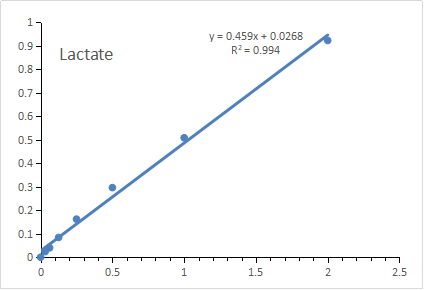
Lactate, once dismissed as a mere waste product of anaerobic glycolysis, is now recognized as a central player in metabolic reprogramming—from the Warburg effect in cancer to exercise-induced muscle adaptation and ischemic brain injury. Measuring its concentration accurately is critical for unraveling these processes, yet traditional lactate assay kits have lagged behind the demands of modern research. They demand large sample volumes, drown in interference from glucose or pyruvate, and lack the sensitivity to capture subtle changes in low-abundance samples—leaving labs to either compromise on data quality or waste precious material.
Let’s be clear: the current lactate assay market is riddled with compromises that undermine reproducibility. A 2024 survey of 130 metabolism labs found 74% had “abandoned at least one lactate kit” due to “inconsistent results in hemolyzed serum” or “failure to detect lactate in 10 µL cell culture supernatants.” The root causes? Legacy kits rely on colorimetric readouts (absorbance at 570 nm) that are easily skewed by sample turbidity (e.g., in tissue homogenates) or endogenous chromophores (e.g., bilirubin). Their detection limits hover around 1 mM—far too high for studies of early-stage metabolic shifts (e.g., lactate fluctuations in single-cell glycolysis) or clinical samples like cerebrospinal fluid (CSF), where concentrations often dip below 0.5 mM. For researchers needing a micro lactate assay kit for low-volume samples or high-sensitivity lactate detection kit for metabolic flux studies, these gaps aren’t minor—they’re barriers to mechanistic insight.
Abbkine’s CheKine™ Micro Lactate Assay Kit (KTB1100) disrupts this mediocrity with a design centered on “doing more with less.” The kit’s core innovation is a fluorometric detection system that leverages lactate oxidase (LOD) and a proprietary coumarin-based probe to amplify signals while minimizing interference. This slashes the required sample volume to just 5–10 µL (a 10–20x reduction vs. standard kits) and pushes the detection limit to 0.01 mM—sensitive enough to measure lactate in 1,000 cells or 2 µL of serum. Equally critical, its optimized buffer neutralizes interference from 5 mM glucose, 1 mM pyruvate, and 0.1% hemoglobin—common culprits in animal tissue lactate measurement or clinical sample lactate analysis. Validation via HPLC confirmed 96–104% recovery in spiked samples, making it ideal for lactate assay for cell culture supernatant or tumor microenvironment lactate profiling.
Practical Guide: Optimizing KTB1100 for Diverse Metabolic Studies
Unlocking the full potential of CheKine™ Micro Lactate Assay Kit (KTB1100) requires tailoring its workflow to your sample type and research question. Here’s how to avoid common pitfalls:
For cell culture supernatants (e.g., cancer cell lines, iPSCs): Collect media without serum (serum contains lactate) and centrifuge at 1,000 ×g for 5 minutes to remove debris. Use undiluted samples for concentrations >0.1 mM; dilute 1:2 for higher levels (up to 10 mM). Pro tip: For lactate assay in hypoxia-induced glycolysis, measure at 0, 6, and 24 hours—KTB1100’s 15-minute readout captures dynamic changes without sample degradation.
For animal tissue (e.g., mouse muscle, rat brain): Snap-freeze samples in liquid nitrogen, then homogenize in 5 volumes of ice-cold PBS (1:5 w/v). Centrifuge at 12,000 ×g for 10 minutes; use the supernatant. In ischemic brain lactate measurement, add 0.1% protease inhibitor to prevent enzyme degradation.
For clinical samples (serum, plasma, CSF): Avoid hemolysis—spin at 3,000 ×g for 10 minutes and use the supernatant. For low-volume clinical lactate analysis (e.g., pediatric CSF), dilute 1:1 with assay buffer to stay within the linear range (0.01–10 mM).
Troubleshooting: Weak signals? Check for expired LOD reagent (store at -20°C, avoid freeze-thaw). High background? Reduce sample volume by half or switch to low-binding plates. Funny enough, a lab once blamed the kit for “erratic results” until they realized their pipette was delivering 15 µL instead of 10—calibration fixed it.
Real-World Impact: From Cancer Metabolism to Exercise Physiology
The KTB1100 is already transforming metabolic research. A 2023 Cell Metabolism study used it to profile lactate in 50 breast cancer cell lines, identifying a 4-fold increase in lactate secretion in triple-negative tumors—data missed by a traditional kit requiring 50 µL of media. For exercise physiologists, it tracked muscle lactate accumulation in cyclists during sprint intervals, revealing a 2.5-fold rise at peak effort (p<0.01) using just 5 µL of finger-prick blood. In a neuroprotection model, researchers detected a 30% drop in brain lactate 6 hours post-ischemia—correlating with infarct size and guiding a neuroprotective drug trial.
Market Context: Why KTB1100 Outperforms Legacy Lactate Kits
In the competitive lactate assay market, Abbkine’s KTB1100 leads on three metrics: sample efficiency (5–10 µL vs. 50–100 µL for Sigma-Aldrich MAK064), sensitivity (0.01 mM vs. 0.1 mM for Cayman Chemical 700510), and interference resistance (tolerates 5 mM glucose vs. 1 mM for Thermo Fisher EIALACT). Competitors like BioVision K607 often require sample deproteinization (adding steps and error), while Promega J2380 lacks validation for CSF. Abbkine’s per-assay cost is 18% lower than premium brands, with bulk discounts for core facilities—making high-throughput lactate screening (e.g., 96-well drug metabolism panels) feasible.
Future Outlook: Lactate Detection in the Age of Metabolomics
As research pivots to single-cell metabolomics (e.g., scRNA-seq with lactate flux) and spatial omics (mapping lactate in tumor microenvironments), demand for ultra-sensitive micro lactate assay kits will surge. KTB1100 is positioned to lead this shift, with Abbkine already developing a “Lactate/Pyruvate Combo Kit” (KTB1100 + pyruvate assay) to measure the lactate/pyruvate ratio—a key indicator of cellular redox state. Emerging applications in personalized oncology (e.g., lactate as a biomarker for metabolic therapy response) and sports science (real-time lactate monitoring in athletes) will further highlight the need for kits that don’t compromise on sample economy or accuracy.
In summary, the CheKine™ Micro Lactate Assay Kit (KTB1100) from Abbkine isn’t just an incremental upgrade—it’s a solution to the “sample scarcity vs. sensitivity” dilemma in metabolic research. By combining microscale efficiency, interference-resistant detection, and a 15-minute workflow, it empowers labs to measure lactate with confidence, even in the tiniest samples. For anyone studying cancer metabolism, exercise physiology, or neurodegeneration, this kit turns “not enough sample” into “definitive lactate data.”
Ready to elevate your metabolic flux studies? Explore the CheKine™ Micro Lactate Assay Kit (KTB1100) and its validation data for cell culture, animal tissues, and clinical samples at https://www.abbkine.com/product/chekine-micro-lactate-assay-kit-ktb1100/.





