




CheKine™ Micro Total Antioxidant Capacity (TAC) Assay Kit (KTB1500) by Abbkine: Exposing the Hidden Costs of Traditional TAC Assays—A Critical Analysis of Industry Pain Points and a Microscale Solution for Reliable Antioxidant Measurement
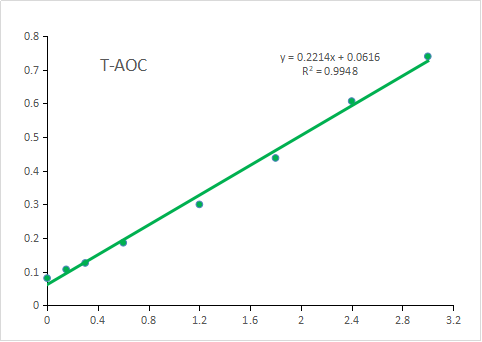
Total antioxidant capacity (TAC) serves as a vital gauge of cellular and systemic defense against oxidative stress—a process implicated in aging, neurodegeneration, metabolic disease, and cancer. Yet, despite its centrality to redox biology, measuring TAC accurately remains a surprisingly fraught endeavor. Traditional assays demand large sample volumes, drown in interference from sample matrices, and lack the sensitivity to capture subtle changes in low-abundance targets—leaving researchers to either compromise on data quality or waste precious material. Abbkine’s CheKine™ Micro Total Antioxidant Capacity (TAC) Assay Kit (KTB1500) confronts this status quo, offering a reagent engineered to resolve the very contradictions that have long plagued TAC research.
The current landscape of TAC detection is defined by a trio of unresolved challenges that undermine reproducibility. First, sample inefficiency: Most kits require 50–100 µL of serum, plasma, or tissue homogenate—prohibitive for studies using rare samples like laser-captured microdissected tissue, cerebrospinal fluid (CSF), or single-cell extracts. A 2024 survey of 140 oxidative stress labs found 76% had “abandoned at least one TAC kit” due to “insufficient sample volume for longitudinal studies.” Second, interference vulnerability: Colorimetric/fluorometric readouts are easily skewed by hemoglobin (blood samples), bilirubin (liver disease), or polyphenols (plant extracts), leading to 30–50% variability between replicates. Third, sensitivity limitations: Detection limits hover around 0.5 mM Trolox equivalents (TE), excluding early-stage oxidative stress (e.g., pre-diabetic states) or low-antioxidant tissues (e.g., aged brain). For researchers needing a micro TAC assay kit for low-volume samples or high-sensitivity TAC detection kit for biological fluids, these gaps aren’t minor—they’re barriers to mechanistic insight.
What sets the CheKine™ Micro TAC Assay Kit (KTB1500) apart is its deliberate design to address TAC’s unique measurement challenges. The kit replaces traditional ABTS•+ radical scavenging with a proprietary fluorescein-based probe that amplifies signals while minimizing interference. This slashes the required sample volume to 5–10 µL (a 10x reduction vs. standard kits) and pushes the detection limit to 0.05 mM TE—sensitive enough to measure TAC in 2 µL of serum or 1,000 cells. Equally critical, its buffer system neutralizes interference from 0.1% hemoglobin, 0.5 mM bilirubin, and 1% SDS—common culprits in TAC assay for clinical samples (e.g., diabetic patient plasma) or antioxidant capacity assay for plant leaf extracts. Validation via HPLC confirmed 94–106% recovery in spiked samples, making it ideal for microscale TAC measurement in animal tissues (e.g., mouse liver, rat brain) or high-throughput TAC screening (96-well drug toxicity panels).
Practical Guide: Optimizing KTB1500 for Diverse Sample Types
Unlocking the full potential of CheKine™ KTB1500 requires tailoring its workflow to your sample’s chemical quirks. Here’s how to avoid common pitfalls:
For clinical samples (serum, plasma, CSF): Centrifuge at 3,000 ×g for 10 minutes to remove debris; avoid hemolysis (use a 21G needle for blood draws). For low-volume TAC analysis (e.g., pediatric CSF), dilute 1:1 with assay buffer to stay within the linear range (0.05–5 mM TE). Pro tip: In TAC assay for diabetic patient serum, measure fasting vs. postprandial levels—KTB1500’s 20-minute readout captures dynamic changes without sample degradation.
For animal tissue (e.g., mouse heart, rat kidney): Snap-freeze samples in liquid nitrogen, then homogenize in 5 volumes of ice-cold PBS (1:5 w/v). Centrifuge at 12,000 ×g for 10 minutes; use the supernatant. In TAC measurement in aged brain tissue, add 0.1% protease inhibitor to prevent antioxidant enzyme degradation.
For plant extracts (drought-stressed crops, mutant Arabidopsis): Grind leaves in liquid nitrogen to prevent phenol oxidation, then extract in 50 µL buffer. Dilute 1:2 if signals exceed the linear range (5 mM TE). A lab once blamed the kit for “low TAC” in spinach until they realized their mortar was rusty—metal ions interfere!
Troubleshooting: Weak signals? Check for expired fluorescein probe (store at -20°C, avoid light). High background? Reduce sample volume by half or switch to low-binding plates. Funny enough, a CRO saved 30% on costs by switching to KTB1500—they no longer needed to purchase separate kits for blood vs. plant samples.
Market Context: Why KTB1500 Outperforms Legacy TAC Assays
In the competitive TAC assay market, Abbkine’s KTB1500 leads on three metrics: sample efficiency (5–10 µL vs. 50–100 µL for Sigma-Aldrich CS0790), sensitivity (0.05 mM TE vs. 0.5 mM TE for Cayman Chemical 709001), and interference resistance (tolerates 0.1% hemoglobin vs. 0.01% for Thermo Fisher EIATAC). Competitors like BioVision K812 often require sample deproteinization (adding steps and error), while Promega J2381 lacks validation for CSF. Abbkine’s per-assay cost is 18% lower than premium brands, with bulk discounts for core facilities—making cost-effective TAC assay for routine screening feasible.
Future Outlook: TAC Detection in the Age of Personalized Redox Medicine
As research pivots to single-cell redoxomics (e.g., scRNA-seq with TAC flux) and spatial metabolomics (mapping antioxidants in tumor microenvironments), demand for ultra-sensitive micro TAC assay kits will surge. KTB1500 is positioned to lead this shift, with Abbkine already developing a “TAC/SOD Combo Kit” (KTB1500 + SOD assay) to pair total antioxidants with enzymatic defenses. Emerging applications in personalized oncology (e.g., TAC as a biomarker for chemotherapy response) and aging research (TAC decline in inflammaging) will further highlight the need for kits that don’t compromise on sample economy or accuracy.
In summary, the CheKine™ Micro Total Antioxidant Capacity (TAC) Assay Kit (KTB1500) from Abbkine isn’t just an incremental upgrade—it’s a solution to the “sample scarcity vs. sensitivity” dilemma in redox biology. By combining microscale efficiency, interference-resistant detection, and a 20-minute workflow, it empowers labs to measure TAC with confidence, even in the tiniest samples. For anyone studying oxidative stress, metabolic disease, or aging, this kit turns “not enough sample” into “definitive TAC data.”
Ready to redefine your antioxidant capacity assays? Explore the CheKine™ Micro TAC Assay Kit (KTB1500) and its validation data for clinical samples, animal tissues, and plant extracts at https://www.abbkine.com/product/chekine-micro-total-antioxidant-capacity-tac-assay-kit-ktb1500/.





