




Before Every Western, IP, or Shotgun Proteomics Run: Why Your Entire Experiment Lives or Dies by the BCA Step (and How KTD3001 Gets It Right)
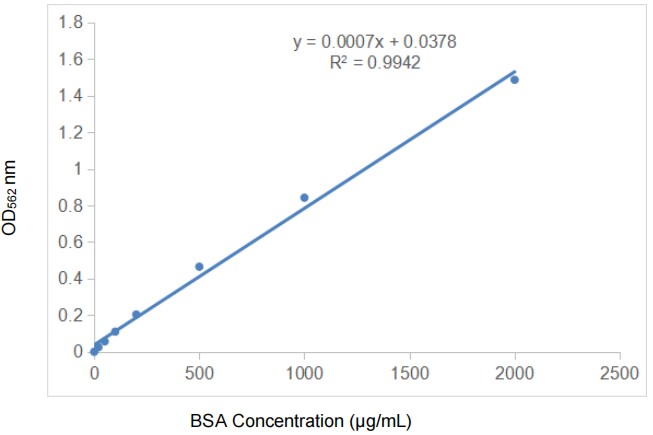
There is one unwritten rule in every protein biochemistry lab that separates publishable data from "we need to repeat three months of work": your protein quantification has to be bulletproof. Before a single lane is loaded, before a single bead is pulled, before a single mass-spec injection fires, you need to know—precisely—how much protein you actually have. Get that number wrong, and every normalization, every fold-change, every phospho-band intensity becomes a house of cards. The BCA (Bicinchoninic Acid) Assay is the field's default answer to that problem, and the Protein Quantification Kit (BCA Assay) – KTD3001 from Abbkine packages that answer into a stable, high-sensitivity, microplate-ready format that works across the detergent and buffer conditions real labs actually use, not just the idealized ones in textbooks.
Why "Just Run a Bradford" Isn't Always the Smart Call
We all learned the Coomassie-based Bradford assay first because it's fast. But anyone who's quantified protein out of a RIPA lysate with 1% Triton X-100 or NP-40, or a urea/guanidine solubilization buffer, or a CHAPS-based membrane prep knows the dark side: Bradford's response is famously uneven across protein composition (arginine-rich vs. lysine-rich vs. acidic proteins), and many common reagents—detergents, EDTA at higher levels, certain chaotropes—can skew the dye-binding curve in ways that aren't always obvious until your loading lanes tell the story.
The BCA Assay flips the chemistry to copper reduction, which is fundamentally more tolerant of the messy stuff you actually have in lysates. Here's the core reaction in plain terms: under alkaline conditions (pH > 11, maintained by the kit's working reagent), peptide bonds reduce Cu²⁺ → Cu⁺, and the resulting Cu⁺ is then chelated by two molecules of bicinchoninic acid to form a purple-colored complex with a sharp absorbance peak at ~562 nm. The intensity of that purple color? Directly proportional to protein concentration. And unlike Bradford's dye, the BCA complex is thermally stable, which means you can push incubations to 37 °C–60 °C to drive stronger signals from low-input samples without the color falling apart on you.
What Makes a Good BCA Kit Different from "Just Mixing BCA Reagents"
You could buy BCA Solution A and CuSO₄ separately, weigh out bicinchoninic acid powder, adjust pH, and spend a Friday afternoon calibrating your own working reagent. But the labs that standardize fastest are the ones that stop reinventing the wheel and switch to a formulation that's already solved the stability, ratio, and interference profile:
• Working Reagent (WR) consistency: KTD3001 supplies a pre-optimized Solution A (BCA + Na₂CO₃ + NaHCO₃ + sodium tartrate in strong alkali) + Solution B (CuSO₄) system where you simply make the WR at a defined ratio (commonly 50 parts A : 1 part B) and it stays homogeneous, low-precipitate, and ready to use.
• Linear range that actually matches your loader: Typical BCA performance sits around 20 µg/mL (0.2 µg) up to 2000 µg/mL (20 µg) depending on format (microplate vs. cuvette, pathlength, incubation), which comfortably covers everything from a pale RIPA supernatant to a concentrated urea fraction.
• Detergent tolerance that matters: Moderate levels of nonionic detergents (Triton X-100, Tween-20, NP-40 up to ~1–2%) and low concentrations of ionic detergents (SDS up to ~0.1–0.5% depending on setup) are tolerated—critical because your lysis buffer is never just water and salt.
• Room-temp or accelerated warm incubation: Standard read = 30 min at 37 °C, or room temp for 2 h, or even 60 °C for 30 min if you're squeezing signal out of low-yield precious samples (just let it cool before reading if you go hot).
The 20-Minute Bench Rhythm (Cuvette & 96-Well Plate Versions)
The workflow is deliberately stupid-simple—because at 9 a.m. when you're surrounded by ten lysates on ice, simple wins:
- Thaw & prep WR: Mix Solution A + Solution B (50:1) fresh-ish (it's stable for a working day once mixed; many labs prep it in bulk and store dark at 4 °C for a week if validated).
- Build your BSA standard curve: Serial dilute the provided BSA Standard (often 2 mg/mL or 5 mg/mL depending on kit batch) across your plate or tubes so your curve brackets your unknowns. Never skip the standard on the same plate you read—your eye can't normalize across plates.
- Add lysate (or buffer blank) + WR: Typical ratio is 1 part sample : 20–25 parts WR (e.g., 10 µL lysate + 200 µL WR in a 96-well plate).
- Incubate: 37 °C for 30 min (or RT 2 h / 60 °C 30 min for boost). Cool if heated.
- Read Abs₅₆₂ nm on a microplate reader (or cuvette spectrophotometer). Plot standards → fit a 4-PL or linear curve → interpolate samples → multiply by any dilution factors → report µg/µL. Done.
Total hands-on? Usually under 15 minutes of pipetting; the rest is incubation you can walk away from.
Where KTD3001 Saves You (vs. Where It Can Still Bite You)
✓ What it handles beautifully
Condition Why BCA KTD3001 Shrugs It Off
RIPA / NP-40 / Triton lysates Alkali-driven Cu-reduction is far less sensitive to nonionic detergent micelles than dye-binding
Moderate salts & buffers Up to ~1 M NaCl and moderate phosphate are fine; the assay chemistry dominates
Low-input preps needing a boost Warm incubation (37–60 °C) pushes sensitivity into the sub-µg/µL range
⚠ What you still have to watch
• Chelators (EDTA > ~1–10 mM range) and reducing agents (DTT > ~1 mM, β-ME > ~0.1%) can suppress the Cu²⁺/Cu⁺ cycle → if your lysis buffer is heavy on those, either (a) dialyze/desalt first, (b) dilute the lysate into the WR so the final chelator/reducer is below threshold, or (c) validate a corrected standard curve in matrix.
• Very high lipid/cell debris turbidity → clarify by centrifugation + consider a clear-supernatant-only read (or a background-correction at 650 nm if your reader allows it).
• Urea/guanidine at very high % w/v → can contribute baseline absorbance; always run a lysate-blank corrected curve rather than a naked buffer blank.
The Applications That Make This Kit a Daily Driver
• Western Blot normalization (the #1 use case): Equal mass, not equal volume, is what keeps reviewers from asking for the raw files.
• IP / Co-IP input loading: Before you bead-up, you need to know what you're giving the beads.
• Protein fractionation & purification tracking: Column fractions, membrane vs. soluble splits, ammonium sulfate cuts—BCA is the quick read that tells you where your protein went.
• Cell surface protein biotinylation / membrane prep yields: Low-volume, detergent-rich, and often precious—BCA's sensitivity + detergent tolerance = the right tool.
• Comparative studies across treatment groups: Treated vs. control lysates must be loaded by mass, or your "fold-change" is really a "protein-concentration artifact."
Why Abbkine KTD3001, Specifically
It comes down to three boring-but-critical things that labs care about once they've been burned:
- Batch-consistent WR chemistry so your standard curves don't drift between shipments.
- Clear documentation (ratio A:B, incubation conditions, linear range, interference table) so you can write a defensible Methods section without reverse-engineering a recipe from a grad student's notebook.
- A format that supports both cuvette spectrometers and 96-well plate readers, so you can run 4 samples or 96 samples with the same underlying chemistry.
The Bottom Line
Every glamour technique in your paper—the phospho-Western, the Co-IP, the proteomics LFQ—rests on one unglamorous number: how much protein did you actually put in? The Protein Quantification Kit (BCA Assay) – KTD3001 from Abbkine gives you a fast, stable, detergent-tolerant way to get that number right the first time, in a format that scales from a single prep to a 96-well plate of fractions. It's not flashy. It's foundational. And in a well-run lab, that's exactly the point.
Product Reference: KTD3001 – Protein Quantification Kit (BCA Assay)
Learn more and order: https://www.abbkine.com/product/protein-quantification-kit-bca-assay-ktd3001/





